This post may contain affiliate links. Please read our disclosure policy.
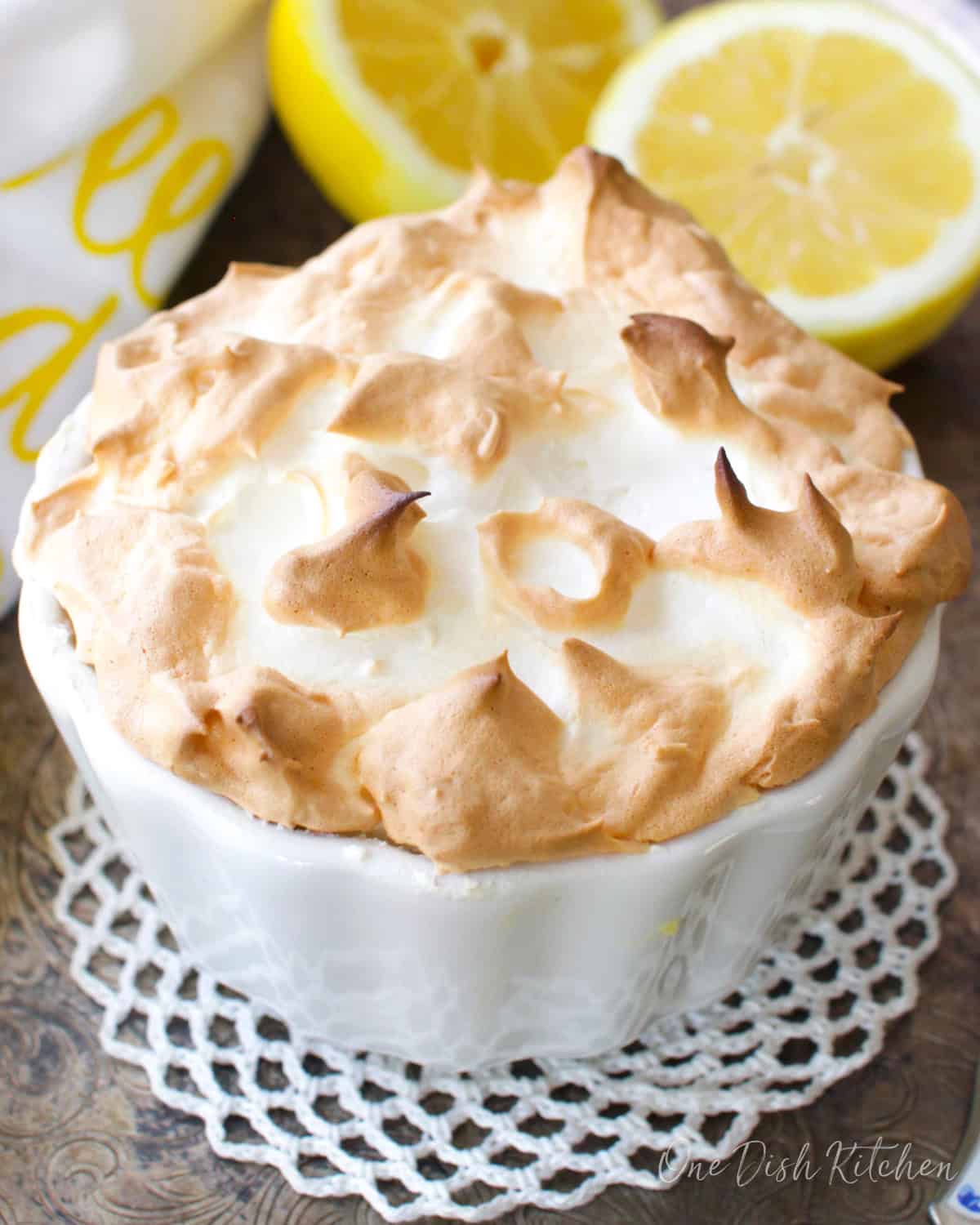
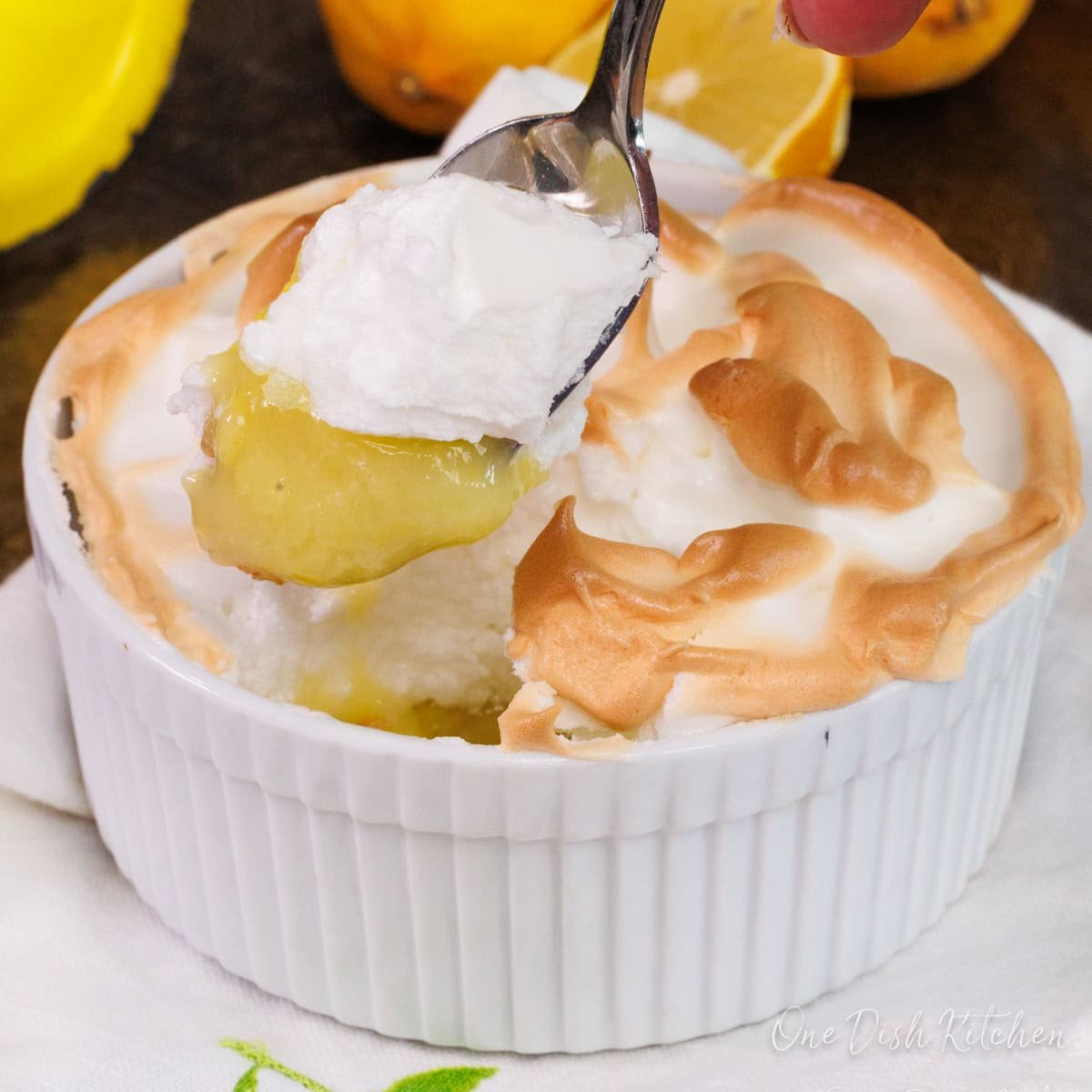
This single serving lemon meringue pie is made with a buttery graham cracker crust, tangy lemon filling, and a tall, golden meringue topping baked in a single ramekin.
Featured Comment
“I absolutely loved it! I have made many lemon meringue pies but this was the best for sure. I loved it being a single dish…”
– Donald
Quick Look
- Prep Time: 20 minutes
- Cook Time: 25 minutes
- Cooling Time: 1 hour
- Total Time: 1 hour 45 minutes
- Equipment: 10-ounce ramekin, 1-quart saucepan, electric hand mixer
- Cook Method: Oven
- Servings: 1
- Difficulty: Intermediate
- Flavor Profile: Bright and tart from fresh lemon, balanced by sweet, airy meringue over a buttery graham cracker crust.
This recipe builds the pie in three stages: a baked graham cracker crust, a stovetop lemon filling, and a whipped meringue browned in the oven.
Why This Single Serving Lemon Meringue Pie Recipe Works

Lemon meringue pie is one of those desserts that looks like it took all afternoon. The tall meringue, the glossy filling, the golden top. But this version comes together in about 45 minutes of active time, all in a single 10-ounce ramekin.
I built this recipe around one egg. The yolk goes into the lemon filling, the white becomes the meringue. No leftover egg halves, no waste. The filling is made from scratch on the stovetop with fresh lemon juice, cornstarch, and butter, so it sets up firm with a clean, tart flavor.
The ratio that worked best is 2 tablespoons of lemon juice to 3 tablespoons of sugar. Tart enough to taste like real lemon, sweet enough that the filling doesn’t pucker.
I tested this in both a 10-ounce ramekin and smaller dishes, and the 10-ounce size gives you the best balance of crust, filling, and meringue in every bite. To make a lemon meringue pie for two, double the ingredients and bake in two ramekins or one 5×5-inch baking dish with the same timing.
If you like this one, try our key lime pie for one, coconut cream pie for one, or mini chess pie. And for more single serving and small batch desserts, browse our full mini pie collection.
Ingredient Notes
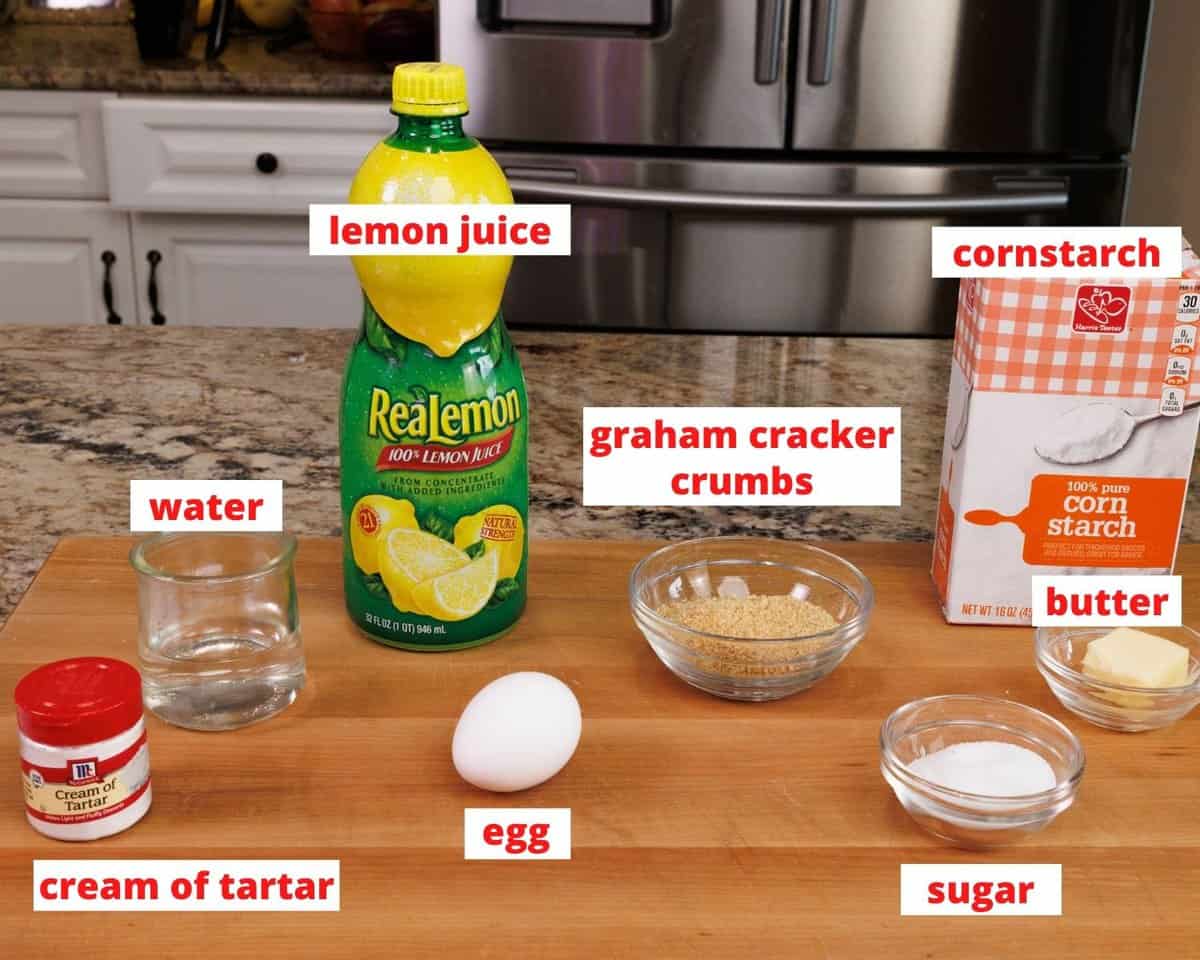
Here are the ingredients you’ll need for this mini lemon meringue pie recipe. If you have any ingredients left over, check out our Leftover Ingredients Recipe Finder.
Graham Cracker Crumbs: Two full sheets crushed into fine crumbs (about 1/4 cup) make the crust. Crush them in a ziplock bag with a rolling pin or pulse in a food processor. Packaged pre-crushed crumbs work too. Ginger snaps, vanilla wafers, digestive biscuits (UK), or Arnott’s Granita biscuits (Australia) are all good substitutes.
Leftover graham crackers? Use them in small strawberry icebox cake, single serving peanut butter pie, or a single serving no-bake cheesecake.
Sugar: Sugar goes into all three components: the crust, the lemon filling, and the meringue. It sweetens the crust, balances the tartness of the lemon juice, and dissolves into the egg white for a stable, glossy meringue.
Butter: Melted salted butter binds the graham cracker crumbs into a firm crust. A small amount also gets stirred into the lemon filling after it comes off the heat, which rounds out the tartness and adds body.
Cornstarch: This is what thickens the lemon filling. Cornstarch mixed with water gives you a filling that sets up firm and holds its shape when you spoon into it.
Egg: This recipe uses one whole egg, split. The yolk goes into the lemon filling for richness and body. The white becomes the meringue.
Lemon Juice and Zest: Fresh lemon juice gives you the brightest flavor. One small lemon or half of a medium lemon is enough. Bottled works but fresh is noticeably better here. Zest is optional but adds lemon flavor without extra liquid.
Leftover lemons? Make small batch lemon curd, small batch lemon bars, or a mini lemon cake.
Recipe Variations
This small lemon meringue pie is easy to customize with a few simple changes.
Lime Meringue Pie: Swap the lemon juice and zest for lime juice and zest. Everything else stays the same.
Orange Meringue Pie: Use orange juice and zest for a sweeter, milder citrus filling. You may want to reduce the sugar in the filling by about a teaspoon since orange juice is less tart than lemon.
Lemon Pie Without Meringue: Skip the meringue and top with a spoonful of homemade whipped cream instead. The filling and graham cracker crust work on their own as a simple lemon pie.
Crustless Lemon Meringue Pie: Skip the graham cracker crust and pour the filling directly into a buttered ramekin. This cuts prep time and works well if you want a lighter dessert.
How To Make Lemon Meringue Pie For One
These step-by-step photos show how to make an individual lemon meringue pie. For exact measurements, see the recipe card below.
Before you start: Cold eggs separate easier, so separate the egg while it’s cold. And make sure no egg yolk is in the white or the meringue won’t whip. Put the yolk in the refrigerator so it stays fresh until you’re ready for the filling. Leave the egg white out on the counter so it can come to room temperature, which helps it whip to full volume.
Make the crust
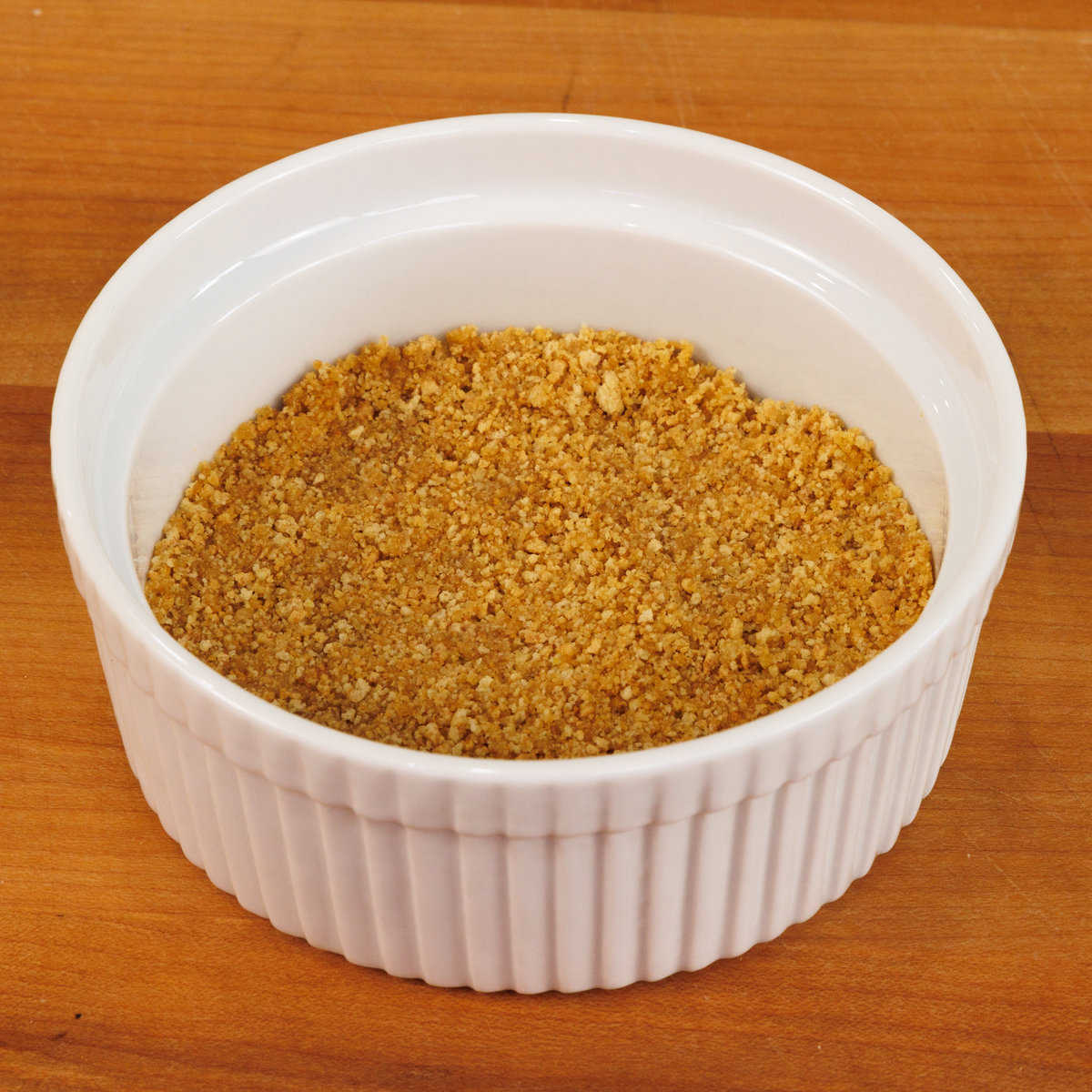
Preheat the oven to 350°F (177°C). Crush 2 sheets of graham crackers into fine crumbs (about 1/4 cup) using a ziplock bag and rolling pin or a food processor.
In a small bowl, mix the crumbs, sugar, and melted butter until combined. Press the mixture firmly into the bottom of a 10-ounce ramekin using your fingers or the back of a spoon.
Bake for 15 minutes, then set aside to cool while you make the filling.
Make the filling
Increase the oven temperature to 400°F (200°C). Whisk the egg yolk in a small bowl and set aside.
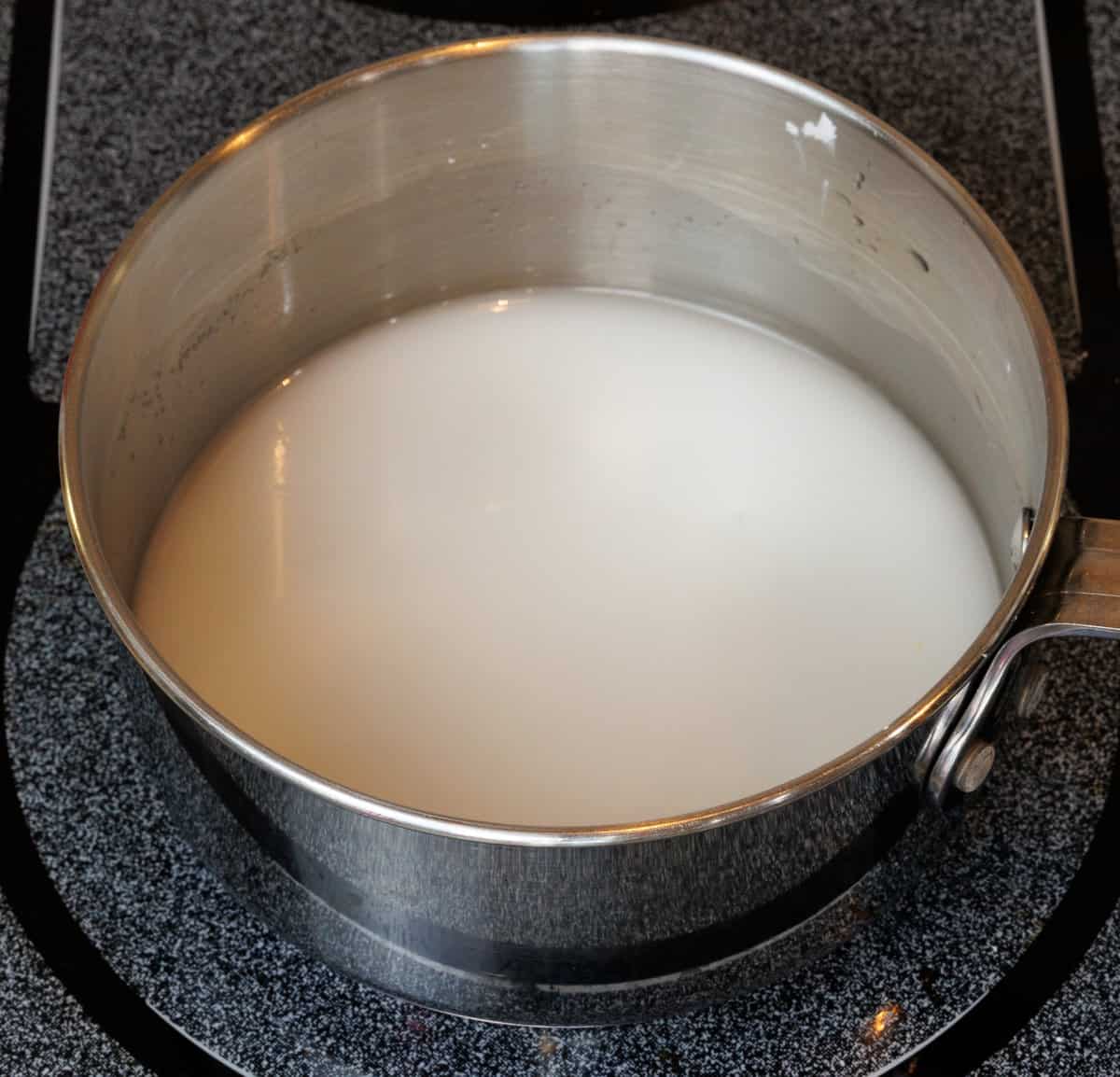
In a 1-quart saucepan, combine the sugar and cornstarch. Gradually add the water, stirring constantly over medium heat until the mixture thickens and starts to boil. Reduce the heat to low.
Temper the egg yolk by slowly spooning about a tablespoon of the hot mixture into the yolk while stirring. This warms the yolk gradually so it doesn’t scramble when it hits the hot liquid. Repeat a few times more, then gradually whisk the warmed yolk back into the saucepan.
Cook over medium heat, stirring continuously, until the filling has thickened and is bubbling. Remove from heat and stir in the butter, lemon juice, and zest.
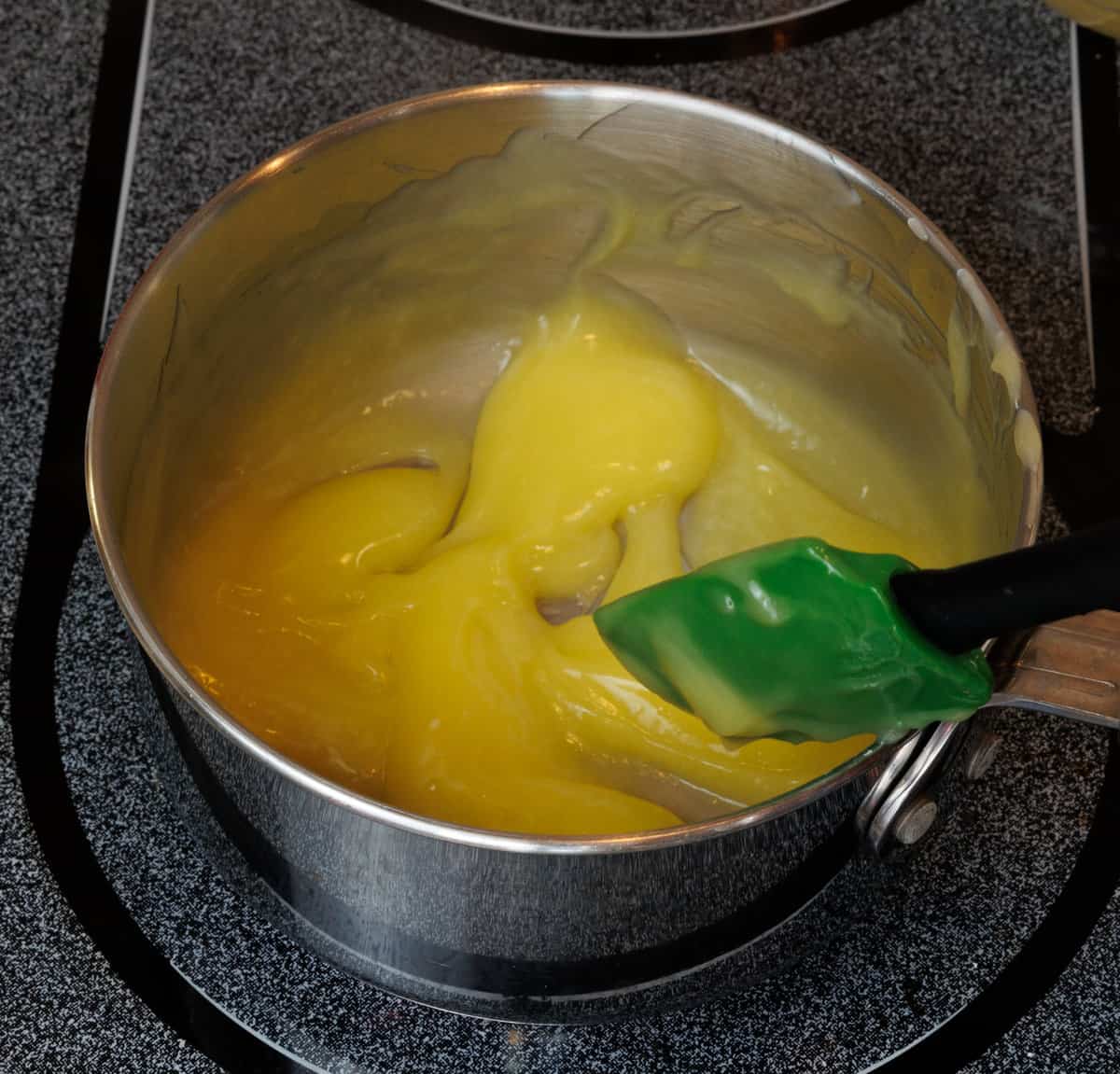
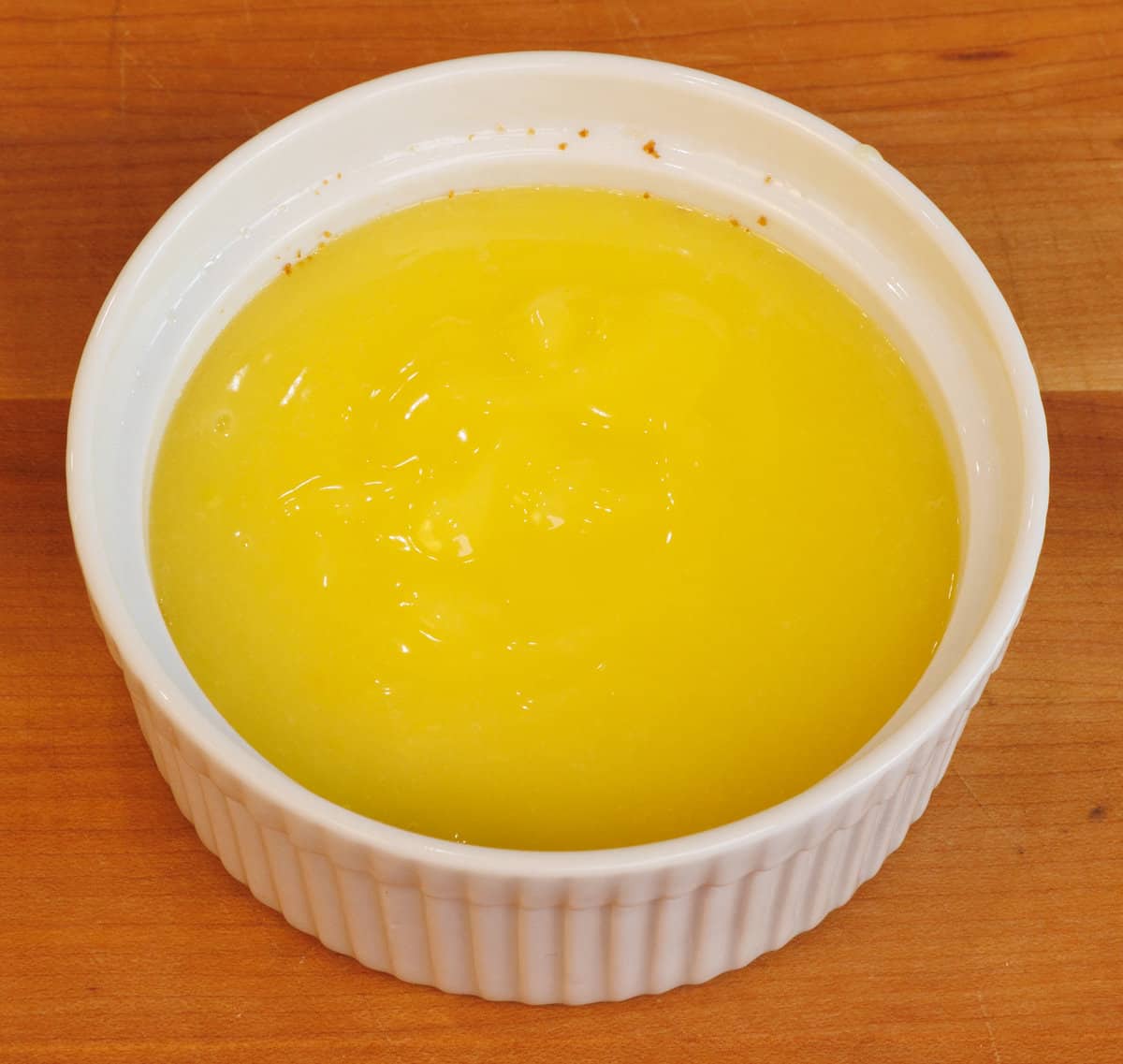
Pour the filling over the baked crust.
Make the meringue
In a clean, dry bowl, beat the egg white and cream of tartar with an electric mixer on medium-high speed until foamy, about 2 minutes.
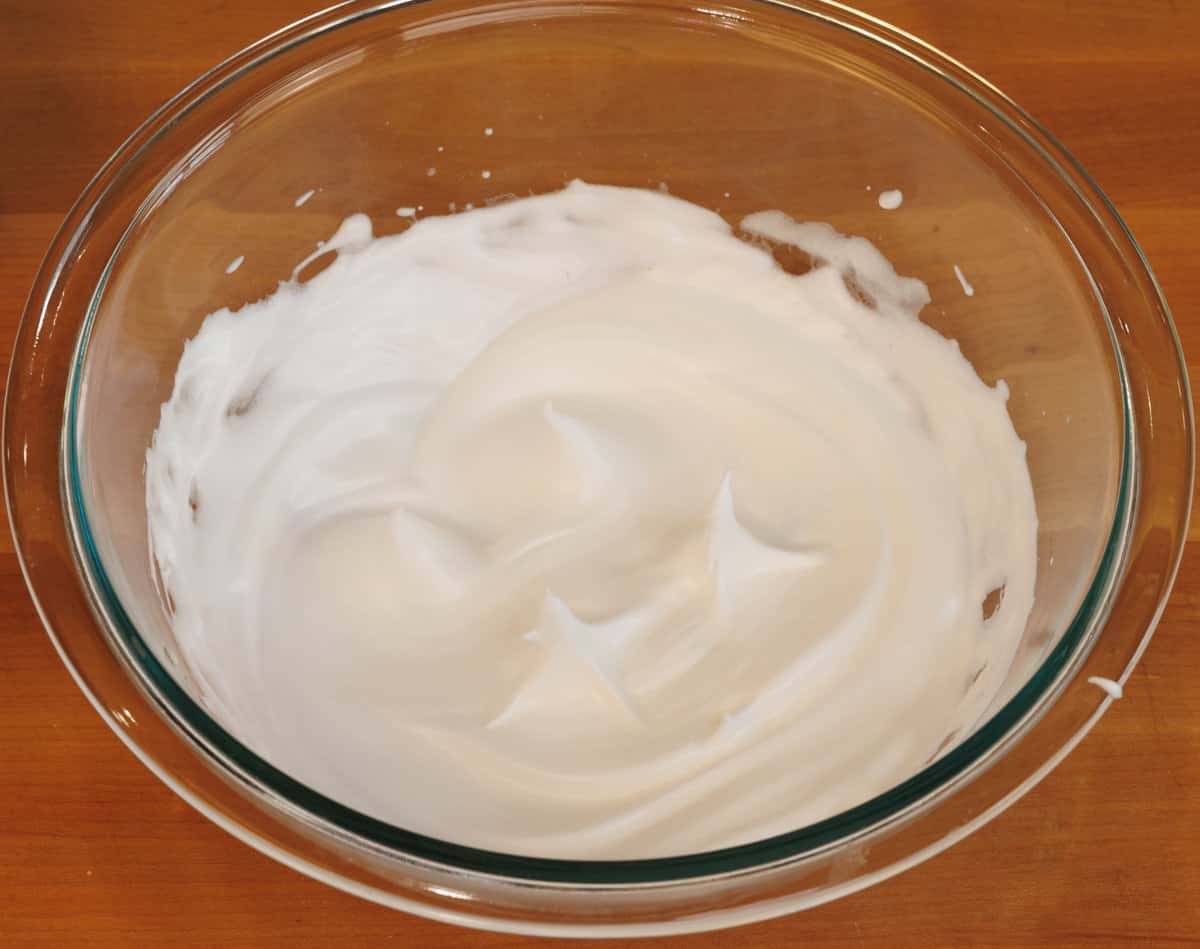
Gradually add the sugar, about half a tablespoon at a time, and continue beating. The meringue is ready when you lift the beaters and the peaks stand straight up without folding over. They should look glossy and smooth. If the peaks flop to one side, keep beating. If the meringue starts to look dry or grainy, you’ve gone too far.
Top and bake
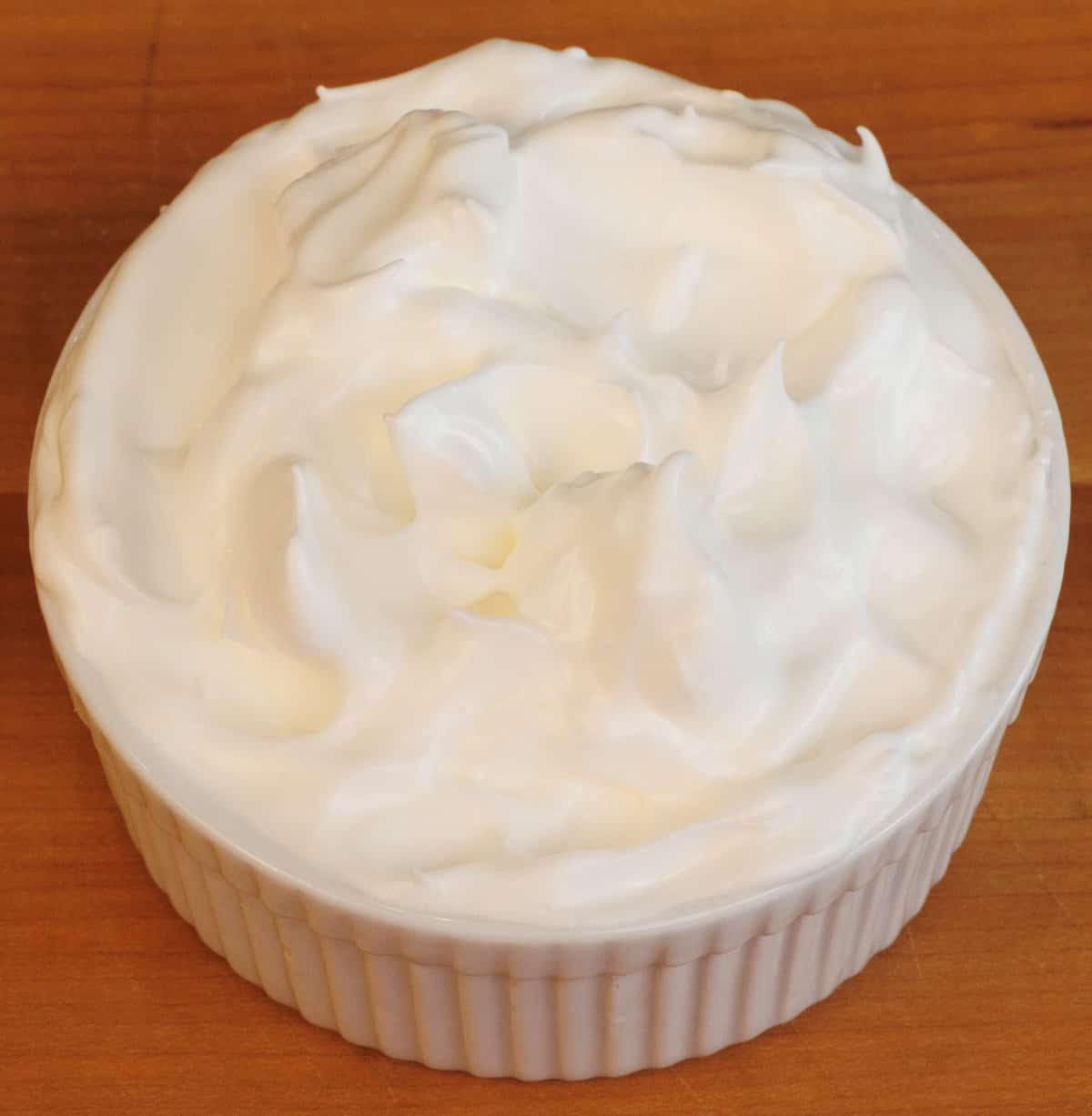
Spoon the meringue over the filling, spreading it all the way to the edges of the ramekin to seal completely. Use the back of a spoon to create peaks. Sealing the edges prevents the meringue from shrinking away from the sides as it bakes.
Bake for 8 to 10 minutes, or until the meringue is golden brown.
Cool and serve
Place the ramekin on a wire rack and let it cool to room temperature so the filling can set. Once cooled, cover and refrigerate until ready to serve.
Expert Tips
Use a 10-ounce ramekin. A smaller dish will overflow during baking.
Make sure your bowl and beaters are completely clean and dry. Any trace of fat, moisture, or egg yolk will prevent the egg white from whipping into stiff peaks.
Avoid making this pie on a humid day. Humidity causes meringue to weep and become soggy. If it’s rainy or very humid, save this recipe for a drier day.
Best if served the same day you make it. The meringue holds its shape best within a few hours of baking. Overnight refrigeration can cause it to deflate and release moisture.
Troubleshooting
If your lemon meringue pie isn’t turning out quite right, here is how to fix common issues like weeping meringue, runny filling, or meringue that shrinks.
Why is my meringue weeping?
Meringue weeps when it is overbaked, when sugar is not fully dissolved into the egg white, or when moisture gets trapped between the filling and the meringue. Seal the meringue to the edges of the ramekin and bake no longer than 10 minutes. If you notice droplets on the surface, gently dab them with a paper towel before serving.
Why is my lemon pie filling runny?
The filling was not cooked long enough. It needs to reach a full boil after the egg yolk is added so the cornstarch can fully activate. Cook until large, slow bubbles break the surface and the filling coats the back of a spoon thickly. If the filling is already in the ramekin, refrigerate for several hours and it may firm up.
Why did my meringue shrink away from the edges?
The meringue was not sealed to the rim of the ramekin before baking. When meringue has gaps at the edges, it pulls inward as it cools. Spread meringue all the way to the rim so it grips the sides of the ramekin.
Why won’t my meringue whip to stiff peaks?
The most common cause is grease, water, or egg yolk on the bowl or beaters. Even a small amount of fat prevents the egg white from whipping. Make sure the egg white is at room temperature and that your equipment is completely clean and dry. Old eggs can also be the problem. Fresh eggs whip better.
Frequently Asked Questions
No. Meringue does not freeze well. It deflates and becomes watery when thawed, and the filling can change texture. This pie is best served the same day it is made.
Up to 2 days, loosely covered with plastic wrap or aluminum foil. The meringue will start to soften and release moisture the longer it sits. For the best texture, serve within a few hours of baking.
Yes, but fresh lemon juice gives a noticeably brighter flavor. One small lemon or half of a medium lemon is enough for this recipe.
This recipe uses French meringue, which is a raw egg white whipped with sugar and then baked. It is the most common type for pie topping because it is quick and creates tall, golden peaks. Swiss meringue, where the egg whites and sugar are heated together before whipping, is more stable but takes longer and has a denser texture.
You can bake the graham cracker crust up to a day ahead and store it covered at room temperature. The lemon filling and meringue should be made the same day you plan to serve the pie. Once assembled, the meringue begins to soften within a few hours.
Yes. Lemon meringue pie contains egg yolk in the filling and should be refrigerated after it cools to room temperature. Let it cool on a wire rack first, then cover loosely and store in the refrigerator.
Double all the ingredients and use a 2-quart saucepan for the filling. Divide the crust, filling, and meringue between two 10-ounce ramekins or bake in one 5×5-inch baking dish. The bake times stay the same.
Ways To Use Leftover Ingredients
If you have any ingredients leftover from this recipe, check out our Leftover Ingredients Recipe Finder or you might like to consider using them in any of these single serving and small batch recipes:
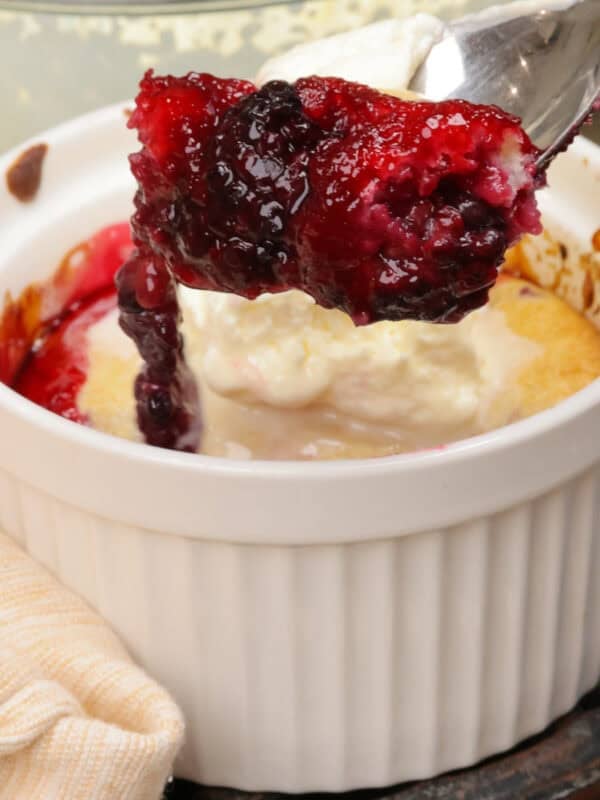
RELATED: 15 Easy Single Serving Dessert Recipes
If you’ve tried this single serve lemon meringue pie or any recipe on One Dish Kitchen please let me know how you liked it by rating the recipe and telling me about it in the comment section below.
If you take a picture please tag us on Instagram (@onedishkitchen) we’d love to see it!
Lemon Meringue Pie For One

Ingredients
For the crust
- ¼ cup graham cracker crumbs (Two full graham cracker sheets crushed into fine crumbs or use pre-packaged crushed crumbs)
- ¼ teaspoon sugar
- 1 tablespoon salted butter – melted
For the filling
- 3 tablespoons sugar
- 1 tablespoon cornstarch
- ⅓ cup water
- 1 large egg yolk
- ½ tablespoon salted butter
- 2 tablespoons lemon juice
- ½ teaspoon lemon zest (optional)
For the meringue
- 1 large egg white
- ⅛ teaspoon cream of tartar
- 1 ½ tablespoons sugar
Instructions
Make the crust
- Preheat the oven to 350°F (177°C).
- If using whole graham crackers, crush them into fine crumbs using a ziplock bag and rolling pin or a food processor.
- In a small bowl, mix the graham cracker crumbs, sugar, and melted butter until evenly combined.
- Press the mixture firmly and evenly into the bottom of a 10-ounce ramekin using your fingers or the back of a spoon.
- Bake for 15 minutes until the crust is set and lightly golden. Set aside to cool while you make the filling.
Make the filling
- Increase the oven temperature to 400°F (200°C).
- Whisk the egg yolk in a small bowl and set aside.
- In a 1-quart saucepan, combine the sugar and cornstarch. Gradually stir in the water over medium heat, stirring constantly until the mixture thickens and begins to boil. Reduce the heat to low.
- Temper the egg yolk by slowly spooning about a tablespoon of the hot mixture into the yolk while stirring. This warms the yolk gradually so it won't scramble. Repeat a few times more, then gradually whisk the warmed yolk back into the saucepan.
- Cook over medium heat, stirring continuously, until the filling is thick enough to coat the back of a spoon and large, slow bubbles break the surface.
- Remove from heat and stir in the butter, lemon juice, and zest until the butter is fully melted.
- Pour the filling over the baked crust.
Make the meringue
- In a clean, dry bowl, beat the egg white and cream of tartar with an electric mixer on medium-high speed until foamy, about 2 minutes.
- Gradually add the sugar about half a tablespoon at a time, beating until the meringue forms stiff, glossy peaks that stand straight up when you lift the beaters. If the peaks flop to one side, keep beating. If the meringue looks dry or grainy, stop.
Top and bake
- Spoon the meringue over the filling, spreading it all the way to the edges of the ramekin so it touches the rim on all sides. This prevents the meringue from shrinking as it bakes. Use the back of a spoon to create peaks.
- Bake for 8 to 10 minutes, or until the meringue is golden.
Cool and serve
- Cool the ramekin on a wire rack to room temperature so the filling can set, then cover and refrigerate until ready to serve.
Notes
Nutrition
The information shown is an estimate provided by an online nutrition calculator. It should not be considered a substitute for a professional nutritionist’s advice.




Followed the recipe exactly as written and it turned out just like the picture. Your lemon/sugar ratio is perfect with the perfect amount of tangy lemon. This is another recipe I will add to the rotation.
Thank you so much! That lemon to sugar ratio took some tinkering to get right, I’m happy you enjoyed it.
Looks gorgeous but still cooling. Can’t wait to dig in
I hope it was worth the wait. Enjoy every bite.
I made this today. Absolutely delicious! Thank you so much for sharing your recipes. As a widow, I have wasted so much food because I just could not eat it for days. I now double your recipes so I have dinner and lunch next day.
Thank you!!
Delicious! I’m a rebel and mixed all the filling ingredients together and cooked until thickened. Came out perfectly! And I made a small pie crust recipe instead of the graham cracker crust. The end result was amazing!
So delicious! As I was making the filling, I was skeptical about the taste and texture. But it turned out so well!
Excellent! The filling is thick, smooth, tart and lemony. It slices beautifully. I doubled the crust and filling ingredients for a 10 oz. baking dish, and cooked the filling using a different method. Instead of the meringue posted I made one that I’ve found to be foolproof.
Perfect.
I confess I have a new addiction, this site! I did your mini lemon meringue pie with graham cracker crust and it turned out picture perfect! I think next time I’ll try it with the regular mini or shortbread piecrust but it was still good. I miss my mother around Easter and Christmas as she’d make lemon meringue pie but my husband hates it. Thanks for bringing back wonderful memories!
I made this in two smaller ramekins. Omg so good I armor the whole remekin at one sitting. Thank you
I absolutely loved it! I have made many lemon meringue pies but this was the best for sure. I loved it being a single dish the best. Love the website and new ideas!
Thank you! I’m so happy you enjoyed the pie.
You can substitute an equal amount of orange juice and orange zest for the lemon juice and lemon zest to have an orange meringue pie. Keep all the rest of the ingredients the same amount.
Love all your recipes and great ideas.
Terrific recipe.
Where does the lemon zest get added?
Add lemon zest in Step 3 when making the filling.
Any substitute for cream of tartar?
Usually substituting 1/4 teaspoon of lemon juice for 1/8 teaspoon of cream of tartar can do the trick for meringue.
I have a 6 inch pie pan. Could that be used instead of the ramekin? If so do I need to double the recipe? I have been looking and keeping your recipes for some time now and I appreciate your hard work fixing all these different recipes.
Hi Rebecca, a 6-inch pie pan would be too large. You would need to double the ingredients to make a larger pie that would fit in a 6-inch pan.
My mother made the most beautiful lemon meringue pie, meringue to the sky and lightly browned. I being the family philistine and not a great fan of food as art at the time scraped this egg white sculpture on to my plate. I did this to get to the real prize-the golden, smooth, heavenly, delicious lemon curd and my mother’s perfect flakey crust. I still don’t like meringue at all (although I love meringue cookies. Go figure). I’ve never been able to duplicate her flakey melt in your mouth crust. But your easy to follow lemon curd recipe resulted in perfection. Thank you for taking me back to a delicious memory of my childhood.
Terrific recipe.
Lemon Merignue is my favorite pie. I made this one for one and used pie crust instead and prebaked the crust and it was delicious.
I have some spiced ginger cookies. Could they replace graham crackers?
I think they would make a delicious substitution.
Turned out beautifully. Thanks for a nice Mother’s Day gift! Took a photo but not sure where to send it!
Terrific recipe.
My 15 year old daughter has never tried lemon meringue pie before so I decided to make this (because I love lemon meringue). She was a little hesitant to try it but once she did – she ate half and I ate the other half. Yum! I would definitely make this again!
I made this 2 days ago, ate 1/2 the first night and the other 1/2 last night. The ONLY reason I did not eat the WHOLE thing in one setting was I just wanted to spread the enjoyment out! SO GOOD. So good in fact I’m making it again right now for another 2-day enjoyment. Thank you Joanie so much. I can now enjoy my favorite lemon dessert. In fact, I just love being able to have desserts I can eat up before they spoil!
I’m so happy you enjoyed the lemon meringue pie. Thank you so much for taking the time to let me know.
One large egg white is approximately 2 tablespoons (30 ml). Another option would be to pour the egg whites you have into a measuring cup and use a quarter of the total volume (assuming you have the whites from 4 eggs).
How do you cut into this pie so that it looks pretty on a plate?
Since the pie is baked in a ramekin, it’s a little hard to cut it into wedges.
Can lemon curd be used?
Yes.
I made this for my 61st birthday pie! My husband and son wanted me to make a traditional chocolate cake but since it is my b-day, I get to do something unorthodox, and delicious. Thanks for the recipe.
Happy Birthday!! I agree – you definitely should decide what to eat for your special day!! I’m so happy you enjoyed the pie. Thank you for taking the time to let me know.
Awesome recipe! I can never make a whole pie because I’m the only one in my family who likes lemon meringue. Now I can! Thank you ❤
I’ve added several of your recipes to my to do list!
I’m so glad you enjoyed the recipe! Thank you for taking the time to let me know.
Hi Joaine made the Lemon pie today first time ever making from scratch and it was to die for I will never buy another package of Lemon pie filling again,Thank you so much first time trying your receipts and it won’t be the last for sure.
I’m so happy you enjoyed the pie, Donalda. Thank you so much for taking the time to let me know.
For little pies you make home made gram cracker crust for… I have bought little individual gram cracker pie crusts pre made in little tin pans. Not all store sell them. I think they come maybe 6 in a pack.
I like to have them on hand.
What a great idea! Thank you for the suggestion.
Mary do you have to pre bake them ( with a little butter brushed onto them before the lemon goes in ?? ). Thanks in advance
I made this in my air fryer. About 4 minutes for the crust and 2 or a little less for the meringue. It was very good and just enough for 2. Thanks
I’m so happy to hear that this recipe worked in the air fryer. Thank you so much for letting us know.
Would you be able to cook it in an oven safe mug instead?
Hi Alice,
I don’t see why you couldn’t use an oven-safe mug. Just make sure it’s large enough to hold an 8 to 10-ounce dessert. You may not have room for all of the meringue but it will still be delicious.
Have a great week!
Joanie
This sounds so yummy – well except the graham cracker crust, just not a fan. Wonder if it would work/still be good with a cookie crust (Nilla Wafers?) instead. Or any ideas you have to offer would be MOST welcome!
Hi Jacki,
Yes, try a different cookie for the crust. I bet Nilla Wafers would be perfect! Also, lemon cookies or shortbread cookies would be nice.
It looks delicious, I will definitely have to try it.
This little lemon meringue is perfect! It’s sweet and satisfying and easy! Love it
Thank you, Amanda!
The topping on this is divine! Sending this to my daughter who is away at college and loves to cook!
That’s so sweet of you Marjory, thank you so much for sharing our recipe with your daughter. I hope she loves it!
I love this! Lemons are life. Yum.
I couldn’t agree more, thanks April!