This post may contain affiliate links. Please read our disclosure policy.
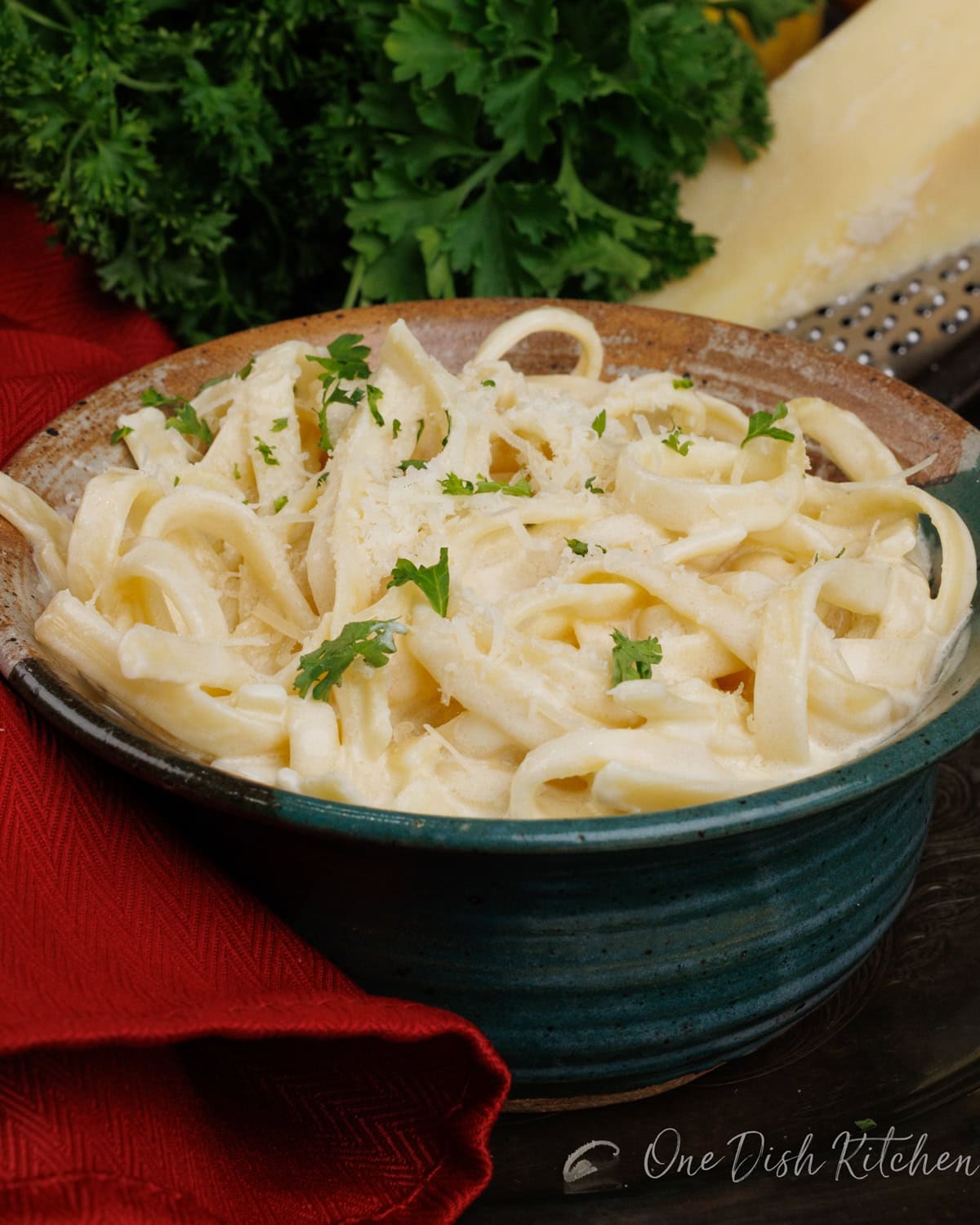
This Fettuccine Alfredo for One is a single serving pasta in a thick, silky sauce made with butter, heavy cream, and freshly grated Parmesan. Ready in 15 minutes on the stovetop.
Featured Comment
“Absolutely delicious! Fantastic! I treated myself to this dish for lunch today. Best decision.”
– Lisa
Quick Look
- Prep Time: 5 minutes
- Cook Time: 10 minutes
- Total Time: 15 minutes
- Equipment: 1-quart saucepan
- Cook Method: Stovetop
- Servings: 1 serving
- Difficulty: Easy
- Flavor Profile: Buttery and rich, with a sharp Parmesan finish and a touch of lemon brightness that keeps it from tasting heavy.
Why You’ll Love This Single Serving Fettuccine Alfredo
Making fettuccine Alfredo for one means you sit down to a tangle of wide, flat noodles while the Parmesan cream sauce is still buttery, smooth, and clinging to every strand.
I’ve made this recipe dozens of times and it comes out right every time. You boil 2 ounces of fettuccine while the sauce reduces right next to it. Both finish in about the same time, so the hot pasta goes straight into the sauce.
The secret ingredient is a small splash of lemon juice. The acid cuts through the rich cream and Parmesan so it tastes lighter without tasting like lemon, and it gently thickens the cream as it cooks. I explain the full science behind it below.
Of all the pasta recipes I’ve developed, this is one of my favorite ways to put a from-scratch dinner on the table fast.

Looking for more single serving dinner recipes? Try my single serving shrimp fettuccine, pasta carbonara for one, single serve lasagna soup, and creamy mustard chicken.
If you just need the sauce to use on pizza or as a dip, check out my small batch Alfredo sauce.
Table of Contents
- Quick Look
- Why You’ll Love This Single Serving Fettuccine Alfredo
- Ingredient Notes
- Recipe Variations
- Why Add Lemon Juice To Fettuccine Alfredo?
- How To Make Fettuccine Alfredo For One
- Expert Tips
- Troubleshooting
- Serving Suggestions
- Frequently Asked Questions
- Ways To Use Leftover Ingredients
- Fettuccine Alfredo For One Recipe
Ingredient Notes
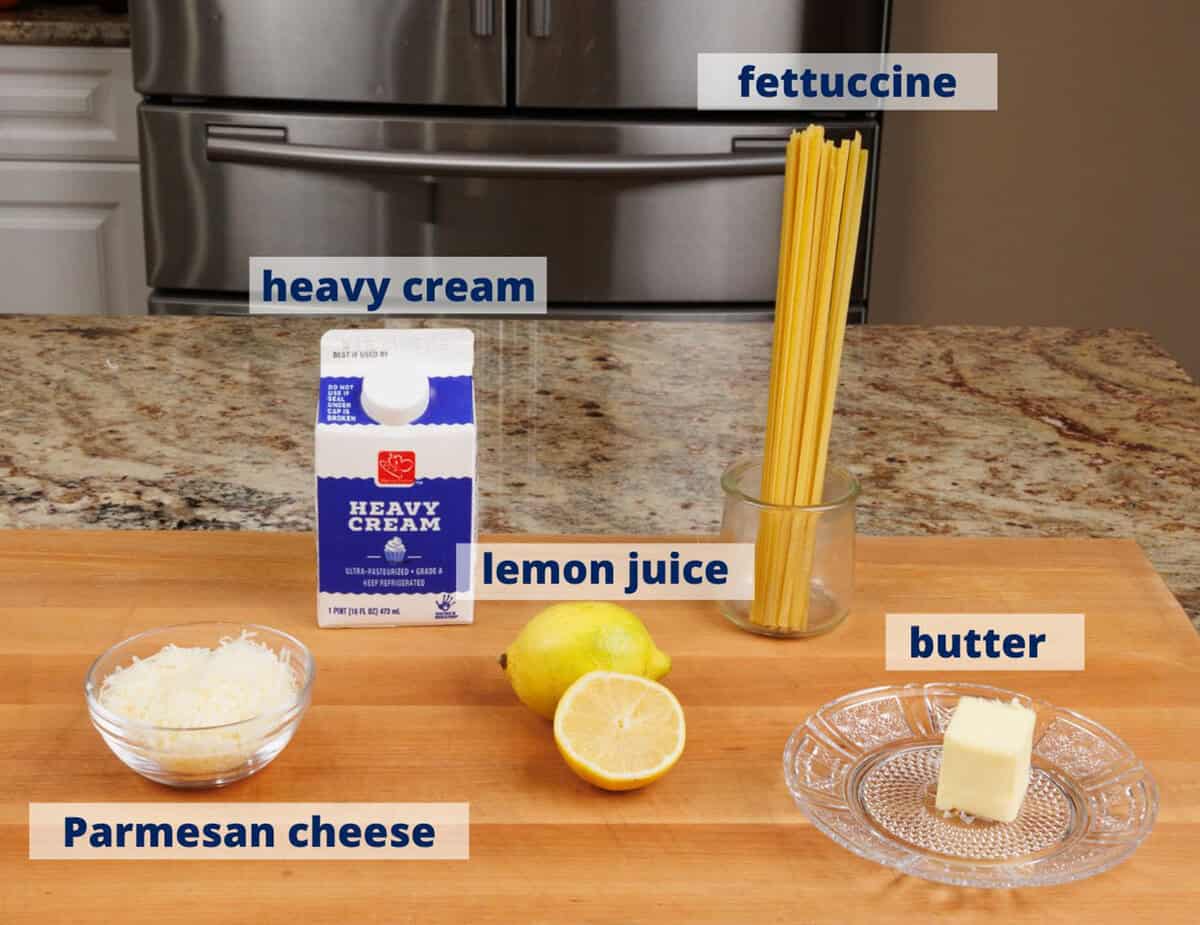
This single serving fettuccine Alfredo uses five ingredients you probably already have. Here’s what each one does and why it matters. If you have any ingredients leftover, check out our Leftover Ingredients Recipe Finder.
Fettuccine: Use 2 ounces of dry pasta, which is about the size of a quarter when you grip it in a bundle. It cooks down to roughly 1 cup. Fettuccine is the classic choice because its flat, wide shape holds onto the cream sauce better than round pasta like spaghetti. If you can’t find fettuccine, linguine works as a substitute.
Butter: Use salted butter. It adds richness and helps the cream and Parmesan come together into a smooth sauce.
Heavy cream: Use heavy cream or heavy whipping cream with at least 36% milk fat. I tried making this with half-and-half once to save calories, but the sauce didn’t cling to the pasta nearly as well. Whole milk won’t thicken properly. Give the carton a shake before measuring if it’s been in the fridge a few days.
Leftover cream is great in chicken divan for one, single serve pear clafoutis, and mini German chocolate cake.
Lemon juice: A small splash of lemon juice brightens the rich cream and Parmesan and helps the sauce thicken as it simmers. Use fresh lemon juice if you can. I explain how the lemon thickens the cream in the section below. Use the rest of the lemon in my small batch lemon bars.
Parmesan cheese: Always grate your Parmesan fresh from a block. Pre-grated Parmesan is coated in cellulose, an anti-caking powder that prevents it from melting smoothly. That’s the number one reason Alfredo sauce turns grainy.
Use extra Parmesan is in my Tuscan chicken for one and baked Parmesan chicken tenders.
Recipe Variations
You can add protein or a vegetable, cook garlic into the sauce, or double this Alfredo pasta so it serves two.
Chicken Fettuccine Alfredo
To make chicken fettuccine Alfredo, cut a 6-ounce boneless skinless chicken breast into 1-inch pieces and season it with ¼ teaspoon kosher salt and ⅛ teaspoon black pepper. Cook it in 1 tablespoon of butter in a 10-inch skillet over medium heat for about 6 minutes, turning halfway, until browned and cooked through. Stir the chicken into the finished sauce, then toss in the fettuccine. Leftover or rotisserie chicken also works; use about ¾ cup, chopped. For the full recipe, see my Chicken Alfredo For One.
Shrimp Fettuccine Alfredo
To make shrimp fettuccine Alfredo, cook 6 to 8 medium shrimp (about 4 ounces), peeled and deveined, in 1 tablespoon of butter in a 10-inch skillet over medium heat. Give them 1 to 2 minutes per side, until pink and opaque. Toss the shrimp with the finished pasta right before serving. You can also top the bowl with a single serving of baked shrimp.
Fettuccine Alfredo With Broccoli
To make fettuccine Alfredo with broccoli, add ½ cup of small broccoli florets to the pasta water during the last 3 minutes of cooking. Drain the broccoli with the fettuccine and toss both into the sauce. The broccoli adds color and holds up well in the cream sauce.
Garlic Fettuccine Alfredo
To make garlic fettuccine Alfredo, melt the butter in the saucepan first and cook 1 small clove of minced garlic in it for about 30 seconds, until fragrant. Then add the cream and lemon juice and continue with the recipe. Most Alfredo recipes call for garlic, but I leave it out of the base recipe so the Parmesan flavor stays front and center.
Fettuccine Alfredo For Two
To make fettuccine Alfredo for two, double every ingredient: 4 ounces of fettuccine, 1 cup of heavy cream, 1 teaspoon of lemon juice, 2 tablespoons of salted butter and 1 cup of grated Parmesan. Make the sauce in a 2-quart saucepan so it has room to reduce, and keep the same cook times.
Why Add Lemon Juice To Fettuccine Alfredo?
Lemon juice does two jobs in this fettuccine Alfredo. Its acidity cuts through the richness of the heavy cream and Parmesan, so the sauce tastes lighter and brighter with no noticeable lemon flavor. It also thickens the sauce slightly as it simmers.
The thickening comes from a reaction between the acid and casein, the main protein in dairy. As the acid lowers the cream’s pH, the casein proteins link together and the cream gets thicker, the same way a lemon posset sets. Heavy cream’s fat (at least 36%) keeps those proteins from clumping into curds, which is why this recipe calls for heavy cream rather than half-and-half or milk.
Keep to the small amount in the recipe. Too much acid can push the cream past thickening and into curdling.
How To Make Fettuccine Alfredo For One
This fettuccine Alfredo recipe for one is ready in about 15 minutes when you start the sauce as soon as the pasta goes into the water. See the recipe card below for ingredient amounts.
- Cook the fettuccine. Bring a small pot of water to a boil over medium-high heat. Add the fettuccine and cook for 7 to 8 minutes, or until al dente. Save about 2 tablespoons of the pasta cooking water before draining. Toss the drained pasta with a small drizzle of olive oil or butter to keep the noodles noodles from sticking while the sauce finishes.
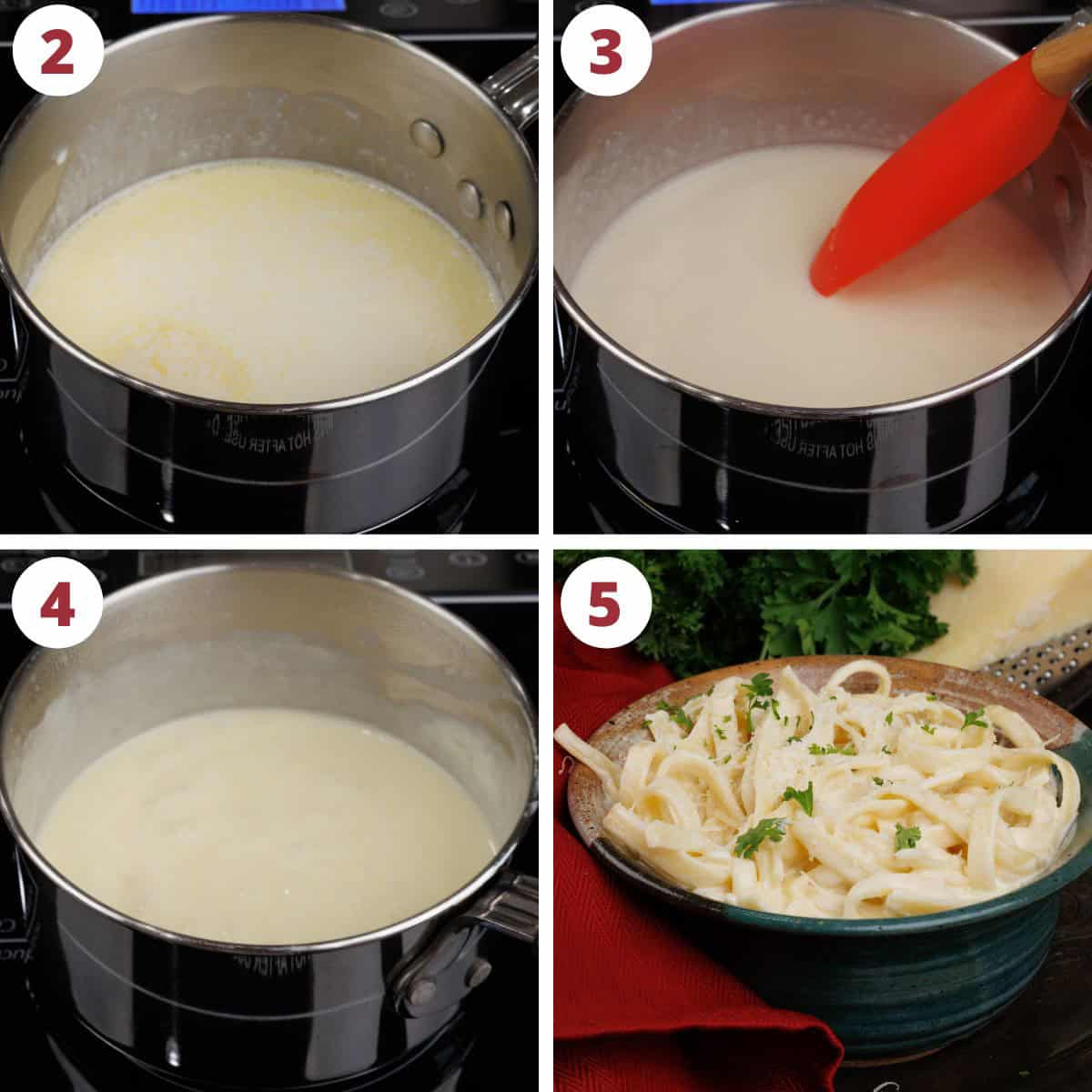
- Make the sauce. In a 1-quart saucepan, combine the heavy cream and lemon juice over medium heat. Add the butter and stir until fully melted.
- Thicken the sauce. Reduce the heat to medium-low and stir continuously for about 3 minutes until the sauce starts to thicken. Keep it moving so it doesn’t catch on the bottom of the pan.
- Add the Parmesan: Stir in the freshly grated Parmesan and keep stirring as it melts into the sauce. Let the sauce simmer on medium-low heat for 5 to 10 minutes, stirring often, until it reduces by about a third and turns thick and creamy. Keep the heat at medium-low, since high heat can make the sauce break.
Note: Don’t rush this step by turning up the heat. Medium-low is what allows the cream to reduce slowly and become velvety. High heat can cause the sauce to break.
- Combine and serve: Add the cooked fettuccine to the sauce and toss gently for about 30 seconds until every strand is coated. If the sauce feels too thick, loosen it with a splash of the reserved pasta water. Serve right away, topped with extra Parmesan.
Expert Tips
Use Parmigiano-Reggiano if you can. With only five ingredients, the cheese carries most of the flavor in this fettuccine Alfredo, so imported Parmigiano-Reggiano is worth buying here. A small wedge is plenty for one serving, and it keeps well in the fridge.
Grate your Parmesan on a microplane. A microplane creates fine, wispy shreds that melt into the sauce almost instantly. A box grater works but produces thicker pieces that take longer to incorporate and can leave small lumps.
Use a 1-quart saucepan. A smaller pan helps the sauce reduce evenly at the right pace for a single serving. A larger pan spreads the sauce too thin.
Keep the heat at medium-low and keep stirring. Medium-low heat lets the cream reduce slowly and thicken into a velvety sauce. Stir often, especially along the bottom and sides of the pan, so the sauce doesn’t scorch. High heat can make it break.
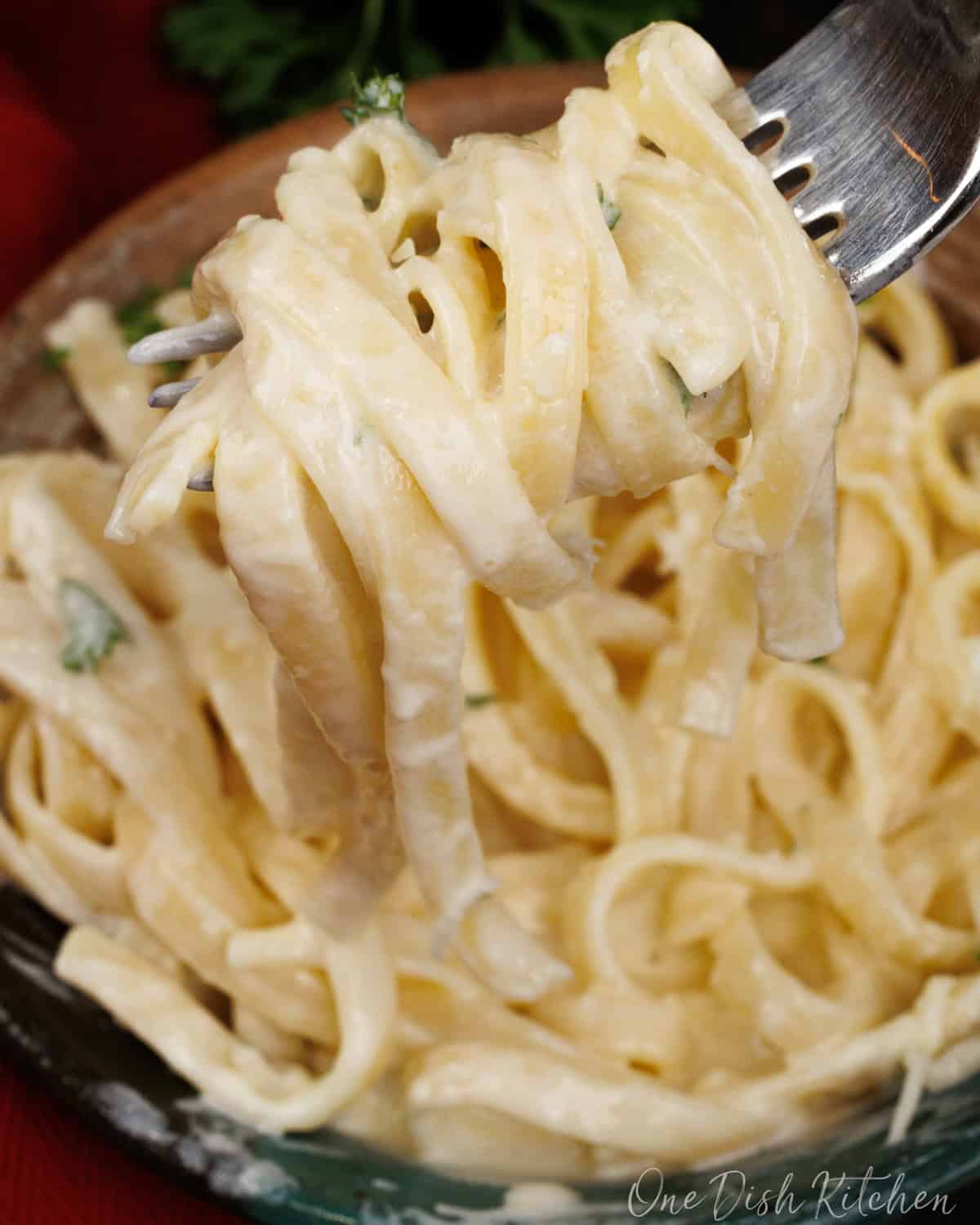
Don’t rinse the pasta after draining. The starch on the surface of the noodles is what helps the sauce grip and cling. Rinsing washes it away and you’ll end up with sauce sliding off the pasta.
Troubleshooting
Here’s how to get a smooth, creamy sauce on your fettuccine Alfredo for one.
Why Did My Fettuccine Alfredo Separate?
Fettuccine Alfredo separates when the sauce gets too hot, which pulls the butterfat away from the cream and leaves the pasta greasy instead of coated. If the sauce is just starting to look oily, take the pan off the heat and whisk in a splash of cold heavy cream to bring it back together. A fully separated sauce is hard to rescue, so start the sauce fresh and turn the heat down to medium-low as soon as the butter melts.
How Do I Thicken Fettuccine Alfredo?
To thicken fettuccine Alfredo, keep the sauce simmering on medium-low and stir until it reduces by about a third before you add the pasta. Thin sauce usually means it hasn’t simmered long enough yet, or the lemon juice was left out. If it’s still too thin after reducing, stir in another tablespoon or two of grated Parmesan.
Why Is My Fettuccine Alfredo Too Thick?
Fettuccine Alfredo gets too thick when the sauce reduces too long or sits off the heat, because Alfredo keeps thickening as it cools. Whisk in warm heavy cream 1 tablespoon at a time, or add a splash of the reserved pasta water, until the sauce loosens enough to coat the fettuccine without clumping. Toss and serve right away so it doesn’t tighten up again.
Why Is My Fettuccine Alfredo Grainy?
Grainy fettuccine Alfredo is usually caused by pre-grated Parmesan or by adding the cheese over heat that’s too high. Bagged Parmesan is coated with anti-caking agents that keep it from melting smoothly, and high heat makes the cheese seize into small clumps. Grate Parmesan fresh from a block and stir it in over medium-low heat until it melts completely.
Why Won’t The Sauce Stick To My Fettuccine?
Sauce won’t stick to fettuccine that is wet, rinsed, or cold, because water and rinsing wash off the surface starch that helps the sauce grip, and cold noodles cool the sauce before it can coat them. Drain the pasta well, skip rinsing, and keep it in the warm pot with the lid on while the sauce finishes. Add it to the sauce as soon as the sauce is ready and toss gently for a full 30 seconds so every strand gets coated.
Serving Suggestions
A crisp salad or a green vegetable balances a rich bowl of fettuccine Alfredo, and these single serving sides are sized to match.
- Small Caesar Salad: Crisp romaine and a tangy dressing cut through the cream sauce.
- Homemade French Bread: A slice of crusty bread is the best way to get the last of the sauce off the plate.
- Roasted Brussels Sprouts: The roasted, slightly bitter edges of the sprouts stand up to the Parmesan.
- Air Fryer Asparagus: Tender asparagus is a quick green side that’s ready by the time the pasta is.
For dessert, try my single serving tiramisu, or a lemon posset for one, which thickens the same way the lemon and cream do in this sauce.
Frequently Asked Questions
One serving of fettuccine for 1 person is 2 ounces of dry pasta, about the size of a quarter when you hold it in a bundle, and it cooks to about 1 cup. For 2 people, use 4 ounces.
You can make fettuccine Alfredo with half-and-half, but the sauce will be noticeably thinner and won’t cling to the pasta as well. Heavy cream with at least 36% milk fat is what allows the sauce to thicken properly on the stovetop. I’ve tested this recipe with half-and-half and the difference was significant.
Leftover fettuccine Alfredo keeps in an airtight container in the refrigerator for up to 3 days. The sauce thickens as it chills, so loosen it with a little heavy cream when you reheat it.
To reheat fettuccine Alfredo without separating, warm it in a small saucepan over low heat with a splash of heavy cream, stirring gently until it’s heated through. The microwave and high heat can both make the sauce separate.
Fettuccine Alfredo doesn’t freeze well, because the cream sauce can separate in the freezer and turn grainy when it thaws. It’s best eaten fresh or kept in the refrigerator for up to 3 days.
Linguine, pappardelle, and tagliatelle can all replace fettuccine in this recipe because their flat shape holds the cream sauce. Thin, round pasta like spaghetti or angel hair gets weighed down by a sauce this rich.
Ways To Use Leftover Ingredients
If you have any ingredients leftover from this recipe, check out our Leftover Ingredients Recipe Finder or you might like to consider using them in any of these single serving and small batch recipes:


If you’ve made this easy fettuccine Alfredo recipe, I’d love to hear how it turned out for you. Please rate the recipe and share your thoughts in the comments below.
Fettuccine Alfredo For One

Equipment
Ingredients
- 2 ounces uncooked fettuccine (2 ⅛ inches in circumference) = 1 cup cooked
- ½ cup heavy cream
- ½ teaspoon lemon juice
- 1 tablespoon salted butter
- ½ cup grated Parmesan cheese , plus more for topping
Instructions
- Bring a small pot of water to a boil over medium-high heat. Add the fettuccine and cook for 7 to 8 minutes, or until al dente. Drain the pasta and toss it with a small drizzle of olive oil or butter to keep the noodles from sticking while the sauce finishes.
- In a 1-quart saucepan, combine the heavy cream and lemon juice over medium heat. Add the butter and stir until fully melted.
- Reduce the heat to medium-low and stir continuously for about 3 minutes until the sauce starts to thicken.
- Stir in the freshly grated Parmesan and keep stirring as it melts into the sauce. Let the sauce simmer on medium-low heat for 5 to 10 minutes, stirring often, until it reduces by about a third and turns thick and creamy. Higher heat can make the sauce break.
- Add the cooked fettuccine to the sauce and toss gently for about 30 seconds until every strand is coated. Serve right away, topped with extra Parmesan.
Notes
Nutrition
The information shown is an estimate provided by an online nutrition calculator. It should not be considered a substitute for a professional nutritionist’s advice.




so simple, so good, thank you for all your delicious practical recipes. I was having lack of pasta withdrawal symptoms and your recipe showed me the way to use what I had in the fridge. I always use sour cream instead of regular cream or milk, I had just a couple tablespoons of leftover cream cheese and used gouda Chase and headed garlic. the touch of lemon is a great idea I’ll use again and again.
Came out Amazing! One pot wonder. my little market didn’t have fettucini, so I went for egg noodles, which worked out well. Thank you for this yumminess!
I’m so glad you enjoyed it! Egg noodles are a great choice — they work wonderfully in this recipe.
Delicious, creamy, oh so good! I loved every morsel! There are about 3 tablespoons sauce leftover in my bowl — so next time I will meaure out 3 ounces pasta (thin spaghetti because it’s what I had on hand). I’ll save this wee bit and stir into a bowl of instant grits tomorrow morning. — Thank you for sharing this recipe! ❤️
Yaaaaaassssss! This is the recipe I was hoping for! I added a dash of salt, nutmeg and Malaysian pepper. It truly made the entire dish into a delicious meal!
Joanie, this isn’t really a cooking question, but I thought anyone would know the answer, it would be you. I find a lot of recipes call for nutmeg. I hate nutmeg! My tongue hates nutmeg! What can I use instead, or could I leave it out entirely?
If a recipe calls for nutmeg and you don’t like it, you can often leave it out entirely, especially in savory dishes, as it’s usually used in small amounts to add warmth. If you’d like to replace it, consider using a small pinch of cinnamon, allspice, or white pepper, depending on the recipe. For sweet dishes, cinnamon is a great substitute, while white pepper works well in creamy or savory dishes for a hint of spice without overpowering the other flavors. I hope this helps!
I made it exactly like the recipe. I highly recommend leaving out the lemon juice. Lemon juice curdles milk so it doesn’t work in this recipe.
Thank you for your feedback. I’m sorry to hear the recipe didn’t turn out as expected for you. The lemon juice is actually an important part of this recipe—it interacts with the cream to help thicken the sauce without curdling when balanced by the butter and cream’s fat content. This is a common technique used to achieve the creamy texture in Alfredo sauce.
If your sauce curdled, it could be due to overheating. Cream-based sauces should be cooked gently over medium low to medium heat, as high heat can cause the cream to separate. Stirring constantly and maintaining a moderate temperature is key. I hope this explanation helps, and I appreciate you taking the time to share your experience.
I am surprised about the lemon juice helping to prevent curdling because of it’s play in balancing ingredients. That is because I never in my 85 years have used lemon juice in a recipe, unless it is a salad dressing – then I use it rarely preferring to use a wine vinegar. But, to the point, I have never had a cream sauce like the alfredo to curdle. And, honestly, I don’t know anyone who has had a sauce to curdle for not using lemon juice. Did I misunderstand what was being said by you?
You didn’t misunderstand what I was saying. Cream sauces don’t automatically curdle without lemon juice, and many people, like yourself, have never had that happen. In this recipe, the small amount of lemon juice helps the cream thicken smoothly as it heats and as the Parmesan is added, without separating or becoming grainy. In a small batch, where temperature changes happen more quickly, that gentle acidity helps keep the sauce cohesive and consistently creamy.
You won’t taste lemon in the finished sauce, and it isn’t there because the sauce would fail without it. It’s simply a technique I use in this recipe to help everything come together smoothly.
Absolutely delicious! Fantastic!
I treated myself to this dish for lunch today. Best decision. This is one of those simple recipes that when done right can make your eyes roll in the back of your head. In fact, my eyes continue to roll as I attempt to eat and type this review.
I contemplated just buying a frozen, prepackaged version or even lowering my standards and purchasing a shelf-stable jar of that gelatinous stuff that has way too many ingredients I can’t pronounce. Gross 🤢 So glad I didn’t.
Once again Joanie, you’ve brought the enjoyment of restaurant quality dishes right into my kitchen and my hands. No exaggerating, this fettuccine Alfredo rivals the last one I had from a higher end Italian restaurant. Kudos to you 👏🏼👏🏼👏🏼
I just came back to say that my boss ordered Olive Garden for our team lunch meeting today. I had the fettuccine Alfredo. At the risk of sounding ungrateful, I kept thinking how disappointed I was that it didn’t taste nearly as good as the ODK version I’ve come to know and love. Now I’m going to have to make some to restore my faith in great fettuccine Alfredo 😁
This made me smile! I love that our fettuccine Alfredo has earned a spot in your kitchen favorites. Sounds like a batch at home is just what you need to bring it back to the flavor you love.
I was so surprised. I’m a hopeless cook, and mostly just hope that everything isn’t so awful I have to throw it out and fry myself an egg. But this was so simple and so elegant and had such a smooth texture and subtle that I had to email fifteen or sixteen of my closest chums and boast a little.
They didn’t believe me, but I was so chuffed! Thank you!
I’m thrilled to hear you had such a great experience with the fettuccine alfredo recipe! Cooking doesn’t have to be complicated to be delicious, and I’m so glad you were able to impress yourself and your friends. Keep up the good work, and thanks for spreading the word!
I love Fettuccine Alfredo. I made this one time when I didn’t have heavy cream and didn’t want to go to the store for just that. I did, however, have a can of evaporated milk. It worked like a charm! It was creamy and smooth.
The sauce separated and never thickened much. The taste was ok, but it just didn’t hold together. (I used medium heat as suggested)
I’m sorry to hear the sauce didn’t meet your expectations. If the sauce didn’t achieve the right thickness, a couple of things could be the cause. First, using heavy cream is crucial for the texture, so if you used something else, that could be the issue. Accurate measurements are also essential for a consistent result, so double-checking that could help for next time.
To give you a better visual guide, don’t forget to check out the step-by-step images included in the blog post; they show precisely how the sauce should look at different stages. We’ve also detailed the unique interaction between lemon juice and heavy cream in the post, explaining how they work in synergy to create a perfectly thickened sauce. This information should set you up for success on your next try!
Terrific recipe.
Thank you!