This post may contain affiliate links. Please read our disclosure policy.
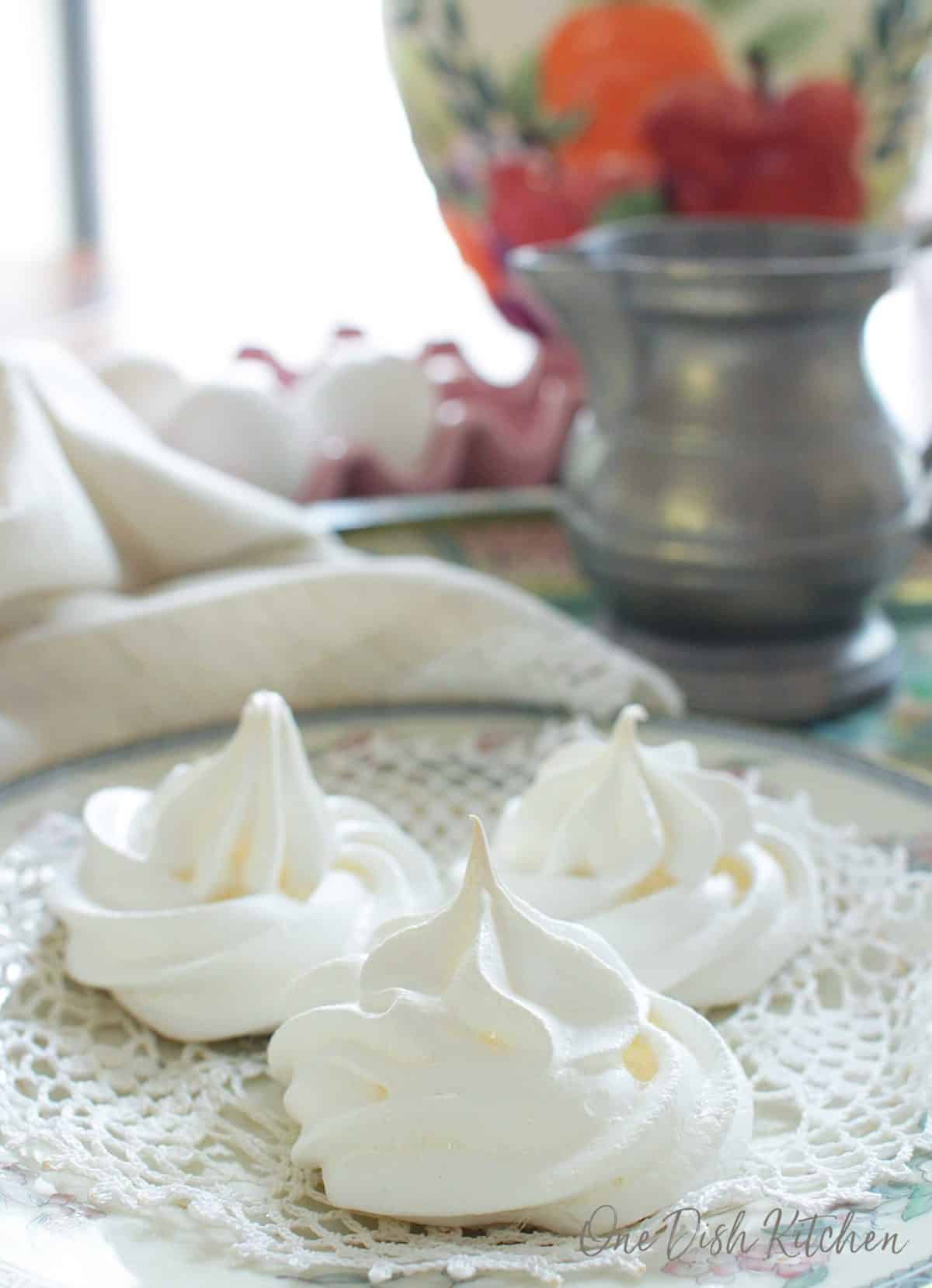
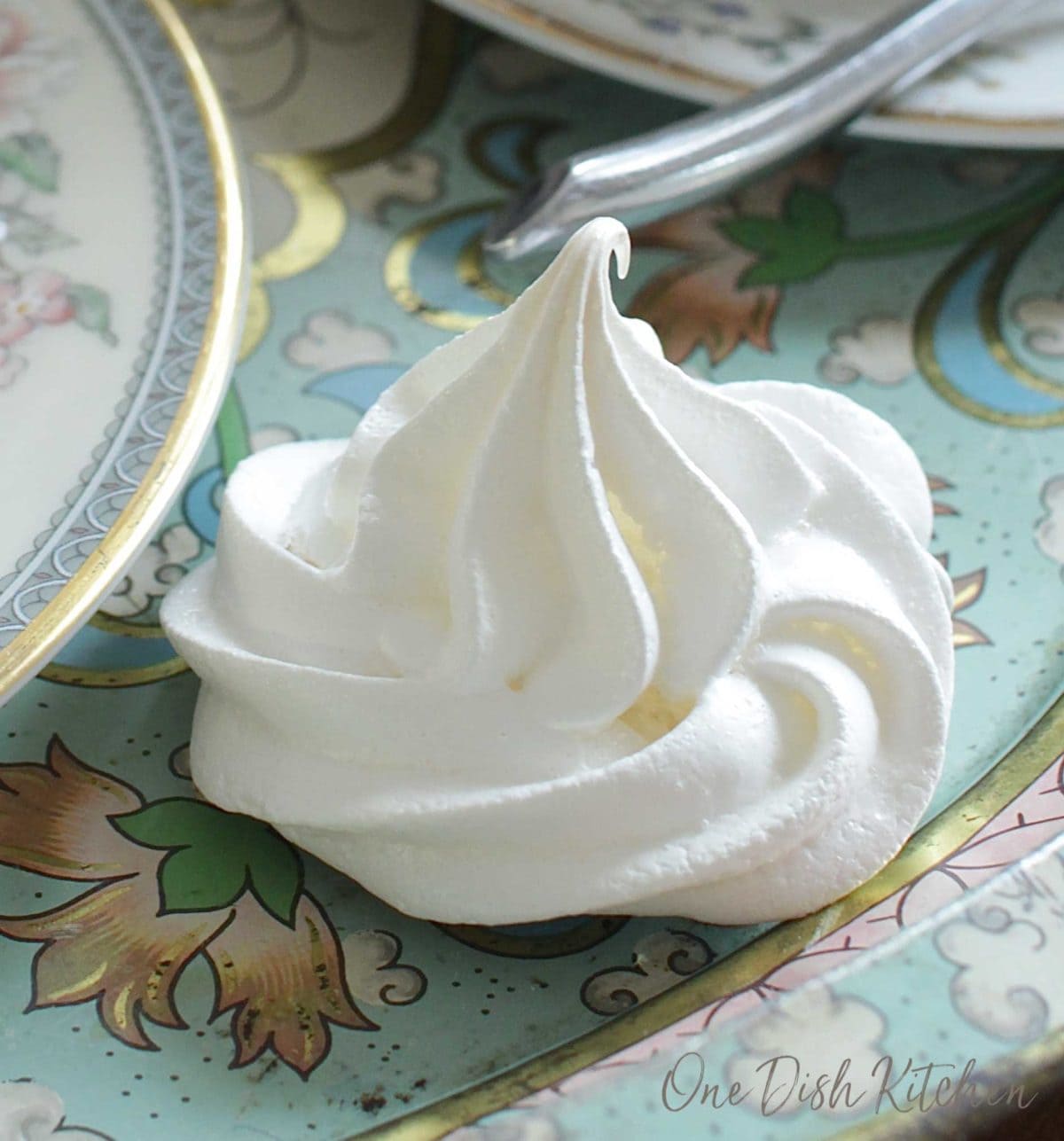
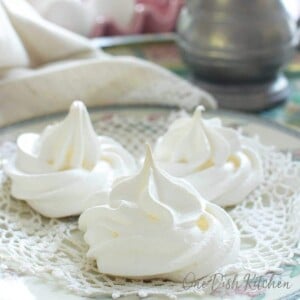
These small batch meringue cookies are crisp on the outside, soft in the center, and made from just one egg white. One bowl and four ingredients is all you need.
Featured Comment
“Wonderful recipe. Just made my first mini meringues with left over egg white and they have turned out wonderfully.”
– YMW
Quick Look
- Prep Time: 20 minutes
- Cook Time: 2 hours (oven off)
- Total Time: 2 hours 20 minutes
- Equipment: Electric hand mixer and a baking sheet
- Cook Method: Residual heat (preheat oven, turn off, cookies dry inside for 2 hours)
- Servings: 6 cookies
- Difficulty: Easy
This small batch meringue cookie recipe uses the French meringue method, where sugar is beaten into one egg white until stiff peaks form, then the cookies dry in a turned-off oven.
One Egg White Meringue Cookies

Meringue cookies are one of the simplest desserts you can make. No flour, no butter, no leavener. The structure comes entirely from air trapped in egg white proteins as they unfold and stretch during whipping. Sugar gets beaten in gradually until the mixture holds stiff, glossy peaks.
Most meringue cookie recipes call for 3 or 4 egg whites, which gives you dozens of cookies. I scaled this recipe down to a single egg white so you get about 6 cookies, enough to share or keep to yourself without a kitchen full of meringues going stale. The ratio is the same as a full batch: roughly 2 parts sugar to 1 part egg white by weight. That balance is what gives meringues their signature crisp shell and light, dry interior.
The method here is a little different from most recipes. Instead of baking at a low temperature for an hour, these go into a preheated 350°F oven that gets turned off immediately. The cookies dry slowly in the residual heat for about 2 hours. I tested both methods side by side and this one produced a more even texture throughout, with less risk of browning or cracking. The outside is dry and crisp, and the inside stays light with a slight chew.
Use the leftover egg yolk in single serving custard, banana bread for one, small batch thumbprint cookies, and lemon meringue pie for one.
Ingredient Notes
If you have any ingredients leftover from this small batch meringues recipe, check out our Leftover Ingredients Recipe Finder.
Egg White: One large egg white creates the entire structure of this meringue. As you whip, the proteins unfold and trap air, building the foam that becomes your cookie. Make sure no yolk gets into the white when separating. Even a small trace of fat will prevent the proteins from whipping properly.
Use the egg yolk in any of our egg yolk recipes like chocolate chip banana bread for one, small batch cream scones, or small batch molasses cookies.
Sugar: Granulated sugar dissolves into the egg white as you beat, adding sweetness and stability to the foam. Caster sugar (superfine) dissolves faster and produces a smoother meringue, which helps avoid grainy cookies.
Cream of Tartar: An acid that stabilizes the protein bonds in the egg white foam, helping the meringue hold its shape. With only one egg white the margin for error is smaller, so cream of tartar matters here.
Vanilla Extract: Adds flavor depth to what is otherwise just sweet egg white. Substitute ¼ teaspoon almond extract for a different flavor.
Recipe Variations
Customize this easy meringue cookie recipe with these tested flavor additions.
Chocolate Dipped: Let the cookies cool completely, then dip the bottoms in melted chocolate. Set on parchment until the chocolate hardens.
Peppermint: Replace the vanilla with ¼ teaspoon peppermint extract. Crush candy canes and sprinkle over the tops before baking.
Lemon: Fold in 1 teaspoon of fresh lemon zest after the meringue reaches stiff peaks. Fold gently so the whites don’t deflate.
Colored: Add 1-2 drops of food coloring after stiff peaks form and mix briefly.
How To Make Small Batch Meringue Cookies
For the full ingredient list and printable instructions, see the recipe card below.
- Prepare the baking sheet. Preheat the oven to 350°F (177°C). Line a baking sheet with parchment paper or a silicone liner.
- Beat the egg white. Add the egg white and cream of tartar to a clean bowl. Beat with an electric mixer on medium speed until the mixture is foamy, about 1 minute.
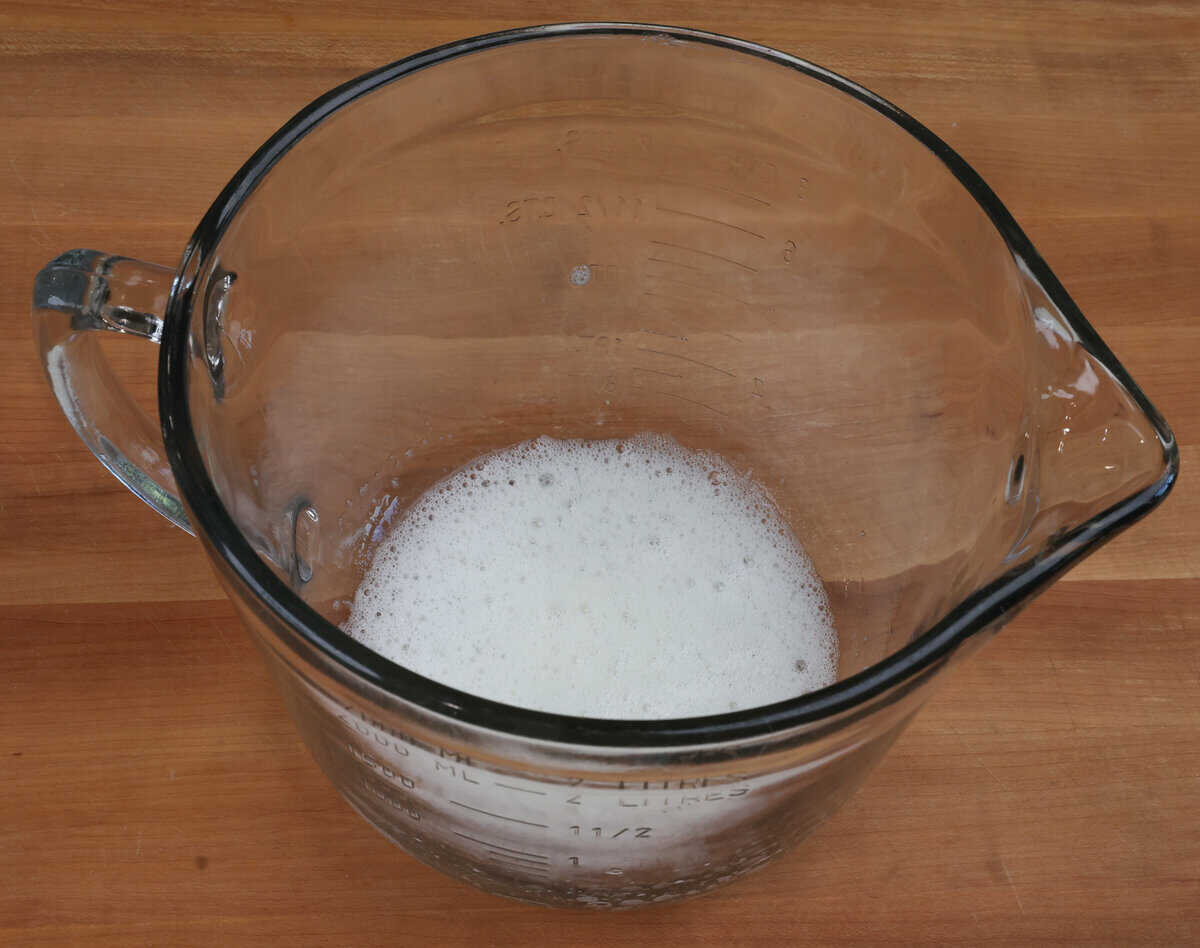
- Add the sugar. With the mixer running, add the sugar one tablespoon at a time. Wait about 15 seconds between each addition so the sugar dissolves fully. Undissolved sugar can cause weeping or grainy cookies.
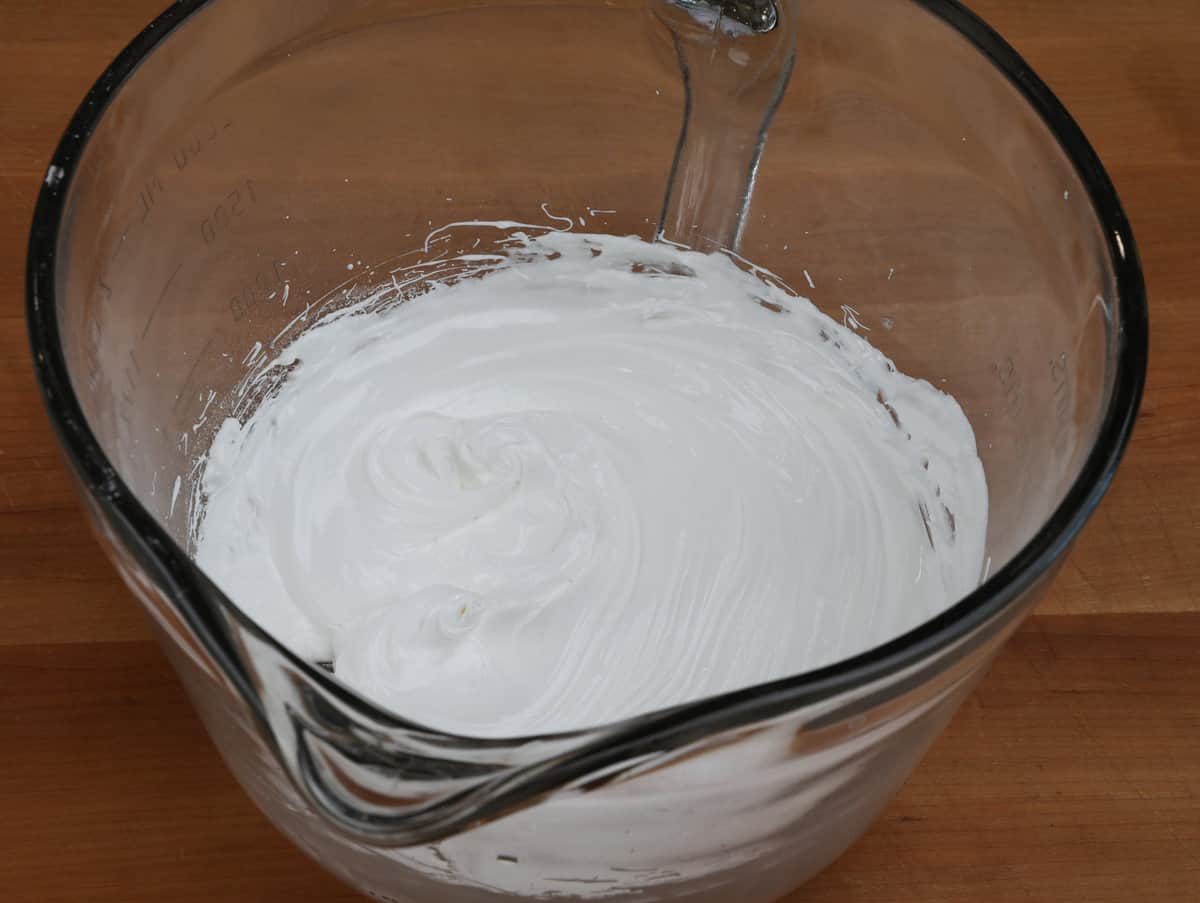
- Add vanilla and beat to stiff peaks. Mix in the vanilla and continue beating on high speed until the meringue is thick and glossy. To test for stiff peaks, lift the beaters out of the bowl. The meringue should stand straight up without folding over. If you’ve made my lemon meringue pie for one, you’ll recognize this stage.
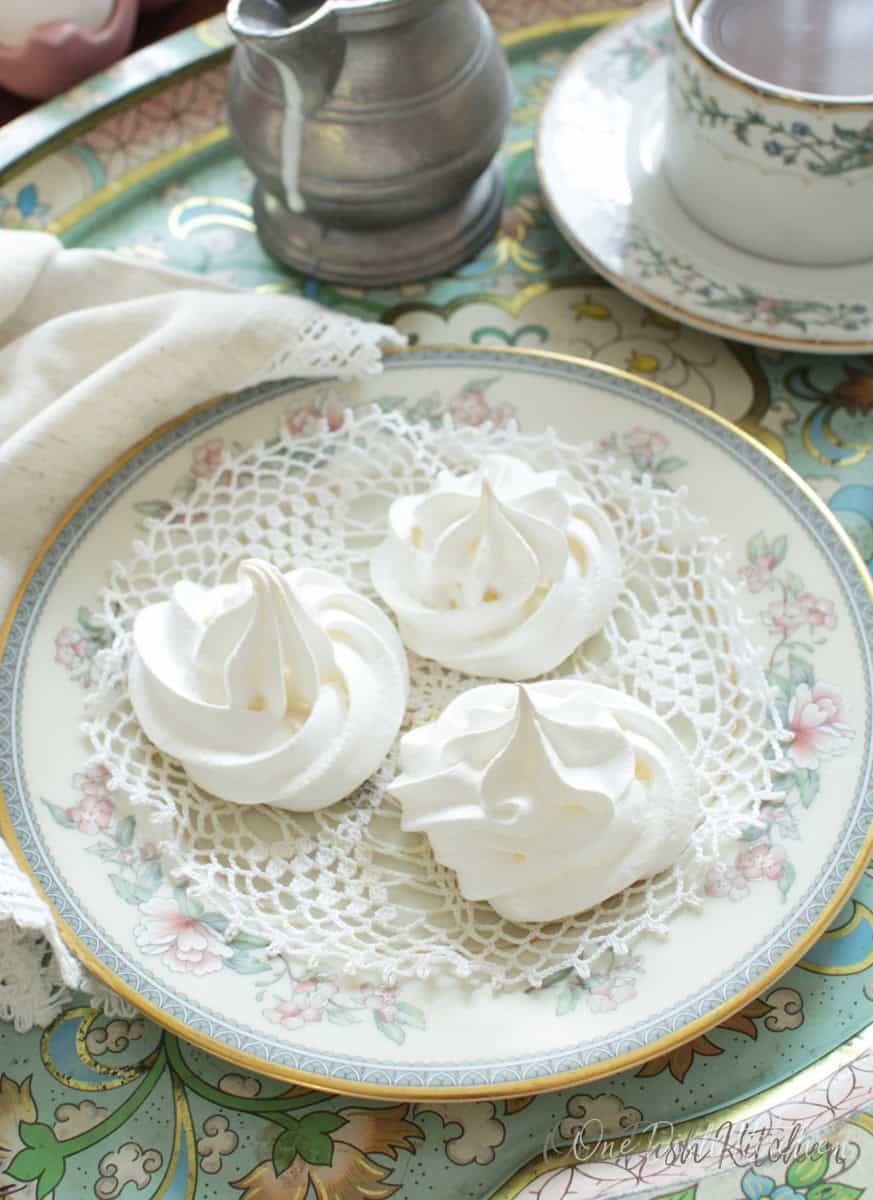
- Shape the cookies. Drop rounded tablespoons of meringue onto the lined baking sheet, spacing them about 1 inch apart. For small, uniform meringue cookies, pipe them using a pastry bag fitted with a large star tip. A tablespoon-sized scoop produces cookies about 1½ inches across.
- Cool completely. Remove from the oven and let the cookies cool on the baking sheet before handling. They will feel firm and light when ready.
Expert Tips
Separate the egg while cold, whip at room temperature. Cold eggs separate more cleanly with less risk of breaking the yolk into the white. Once separated, let the white sit on the counter for about 30 minutes before whipping. Room temperature whites produce more volume.
Use a glass or metal bowl. Plastic bowls can hold invisible traces of grease even after washing, which will prevent the egg white from whipping. Glass, stainless steel, or copper are all safe choices. Wipe the bowl and beaters with a little white vinegar before starting if you want to be sure.
Add sugar one tablespoon at a time. Rushing the sugar is the most common mistake with meringue. If you dump it in too fast, the sugar won’t dissolve and you’ll get grainy, weeping cookies. You can test by rubbing a small amount of meringue between your fingers. If it feels gritty, keep beating.
Don’t open the oven door. The cookies need a slow, gradual cool-down to set properly. Opening the door introduces a rush of cool air that causes cracking. Leave them undisturbed for the full 2 hours.
Check humidity before you start. Meringues absorb moisture from the air. On humid or rainy days, the cookies may turn soft or sticky no matter what you do. Dry days produce the best results. If you live in a humid climate, try making these in a well air-conditioned kitchen.
Troubleshooting
Why won’t my meringue stiffen?
Fat contamination is the most common cause. Even a tiny drop of egg yolk or a trace of grease in the bowl will prevent the proteins from whipping. Start over with a clean bowl, clean beaters, and a carefully separated egg white.
Why are my meringue cookies chewy instead of crisp?
They didn’t dry long enough. Put them back in the oven at 200°F for 10-15 minutes, then turn the oven off and let them sit inside for another hour. Humidity can also cause this, so store them in an airtight container as soon as they cool.
Why did my meringue cookies crack?
Temperature shock from opening the oven door during drying. This lets cool air rush in and causes the surface to contract too fast. Leave the cookies undisturbed for the full 2 hours and avoid opening the door.
Why do my meringue cookies have liquid beads on the surface?
Undissolved sugar. This is called weeping and happens when the sugar wasn’t fully incorporated before baking. Add sugar more slowly and test by rubbing a small amount of meringue between your fingers. If it feels gritty, keep beating.
Why did my meringues turn brown?
The oven was too hot when the cookies went in, or it wasn’t turned off quickly enough. Use an oven thermometer to verify your preheat temperature. Slight ivory coloring from vanilla extract is normal and not a sign of overbaking.
Frequently Asked Questions
Up to 2 weeks in an airtight container at room temperature. Layer them with parchment paper to prevent sticking. They can also be frozen for up to 3 months. Let them thaw at room temperature before serving. Do not store them in the refrigerator, which will make them soft and sticky.
Yes. Place cooled meringue cookies in an airtight container layered with parchment paper and freeze for up to 3 months. Thaw at room temperature with the container closed so condensation doesn’t form on the cookies.
The ratio is roughly 2 parts sugar to 1 part egg white by weight. For this recipe, that’s ⅓ cup (about 67g) of sugar to one large egg white (about 30g). This ratio produces cookies that are crisp and stable without being overly sweet.
Meringue cookies are not baked at a sustained 350°F. In this recipe, the oven is preheated to 350°F, then turned off as soon as the cookies go in. The meringues dry in the residual heat for 2 hours with the oven door closed. Baking meringues at 350°F will burn them within minutes.
es. Meringue cookies are naturally gluten free. They contain no flour and are made with egg white, sugar, cream of tartar, and vanilla.
Yes. Meringue cookies are naturally dairy free. There is no butter, milk, or cream in this recipe.
Ways To Use Leftover Ingredients
If you have any ingredients leftover from this recipe, check out our Leftover Ingredients Recipe Finder or you might like to consider using them in any of these single serving and small batch recipes:
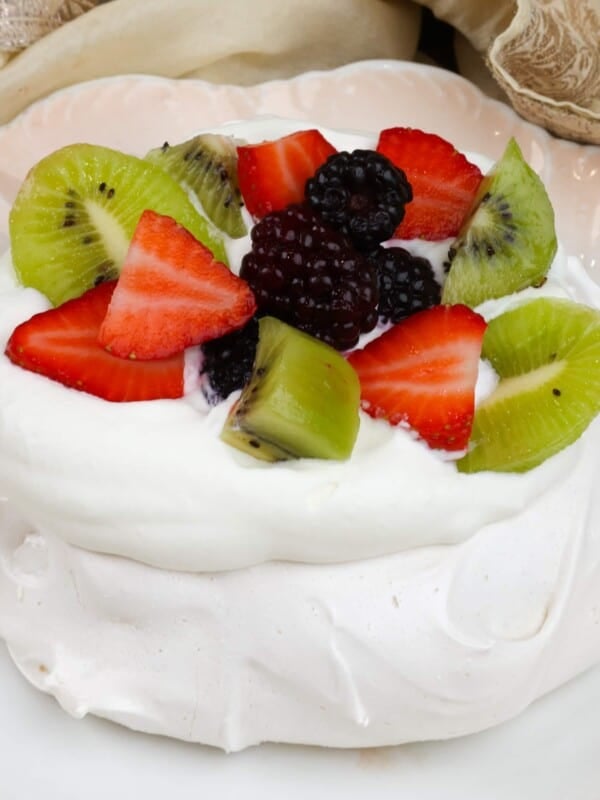
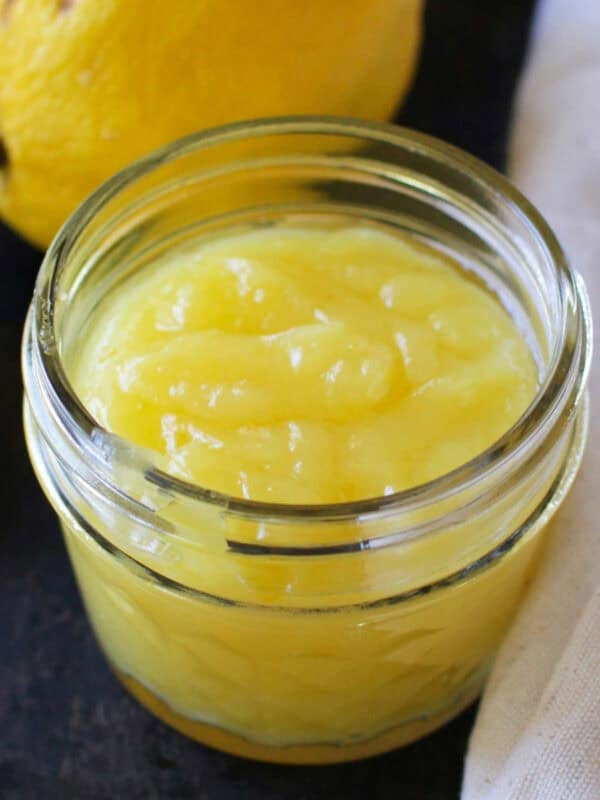
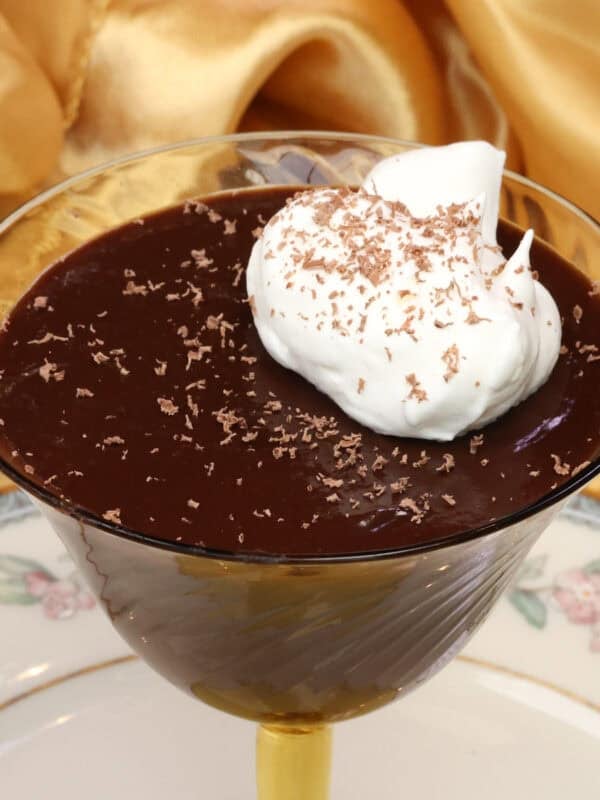
RELATED: The Best Cookie Recipes For One
If you make this small batch meringue cookie recipe, let me know how it turned out by rating the recipe and leaving a comment below. If you take a photo, tag us on Instagram (@onedishkitchen).
Small Batch Meringue Cookies
Equipment
Ingredients
- 1 large egg white
- ¼ teaspoon cream of tartar
- ⅓ cup granulated sugar or caster sugar
- ½ teaspoon vanilla extract
Instructions
- Preheat the oven to 350°F (177°C). Line a baking sheet with parchment paper or a silicone liner.
- Add the egg white and cream of tartar to a clean bowl. Beat with an electric mixer on medium speed until foamy, about 1 minute.
- With the mixer running, add the sugar one tablespoon at a time. Wait about 15 seconds between each addition so the sugar dissolves fully.
- Add the vanilla and continue beating on high speed until the meringue is thick, glossy, and holds stiff peaks. To test, lift the beaters. The meringue should stand straight up without folding over.
- Drop rounded tablespoons of meringue onto the lined baking sheet, spacing them about 1 inch apart. For more uniform cookies, pipe them using a pastry bag fitted with a large star tip.
- Place the baking sheet in the oven and turn the oven off immediately. Do not open the oven door. Let the cookies dry undisturbed for 2 hours.
- Remove from the oven and let the cookies cool completely on the baking sheet before serving. Store in an airtight container at room temperature.
Notes
Nutrition
The information shown is an estimate provided by an online nutrition calculator. It should not be considered a substitute for a professional nutritionist’s advice.



This is wonderful, thank you for doing the testing for us! I had exactly 1 egg white left from a brownie recipe, so this was the perfect recipe for me. The meringues are perfect & delicious!
So glad these worked out perfectly! Using up that single egg white is exactly what this recipe is for. Thanks so much for letting me know you enjoyed them!
2 hours … I had them in my oven 350⁰ for 30 minutes and burned
The key step is that the oven is turned off after the cookies go in. The meringues go into a fully preheated 350°F oven, then the oven is turned off immediately and the door stays closed for 2 hours. They aren’t baking at 350°F for 30 minutes. They’re gently drying in the residual heat.
If they were left baking at 350°F, they would burn very quickly, which is what happened here. Meringues rely on that turn-the-oven-off step to set properly without browning.
Greetings from Queensland, Australia. I have made these little meringues at least a dozen times now, and they are perfect every time. I usually add a couple of drops of pink food colouring, and sprinkle them with hundreds and thousands before they go in the oven, and they are just so pretty. Everyone loves them!
Greetings to you in Queensland! Thank you so much for your kind comment. I’m thrilled to hear the meringues have been a success time and time again. Your addition of pink food coloring and sprinkles sounds absolutely lovely – I can imagine how pretty they must look. I really appreciate you sharing!
Wonderful recipe. Just made my first mini meringue with left over egg white and they have turned out wonderfully. Loved the key guide lines which I followed to the ‘t’.
Very nice texture, lots of fun baking it, and above all, very easy to make! If you have a leftover egg white this is very useful!
Joanie, Have you tried making these with sugar alternatives like Swerve or Monk fruit sugar? I’m wondering if that would work.
No, I haven’t tested this recipe with other types of sweeteners. If you try it, please check back in and let us know how they worked.
I just tried it with granular monkfruit sweetener. #1 definitely suggest using powdered. #2 I only used 1T+1t and the sweetness seemed ok.
I made these this afternoon. When I took them out of the oven they were soft and not crisp or firm. What went wrong???
Hi Maureen, there are several factors that can cause meringues to turn soft. One reason could be that the meringue batter (egg whites) was not beaten long enough. It needs to be beaten to very stiff peaks. Another reason could be moisture, if your mixing bowl is not completely dry, then the egg whites will not whip up properly. Be sure to thoroughly clean and dry your bowl and use a glass or steel bowl instead of plastic which can sometimes harbor traces of grease which prevent egg whites from getting stiff.
Meringues are very sensitive to moisture in the air. If it’s a rainy day or you are in a humid climate, or even if you are boiling a pot of water nearby, any of these factors can cause your meringues to absorb too much moisture which will make the meringues chewy. If at all possible, make your meringues when conditions are dry.
Finally, you may want to check the temperature of your oven by using an inexpensive oven thermometer. Even if your oven is off by a few degrees, the meringues can underbake which will also make them chewy.
I mixed in some mini chocolate chips before popping them in the oven. These were so delicious!
Can you double or triple recipe. I usually have more than one egg white left over.
Yes, this recipe doubles and triples successfully.
Hey there! Is there any substitute for the cream of tartar? It’s not available in my area. Also how long do I need to preheat the oven before turning it off? Why does the oven need to be turned off when putting the meringue in? Thanks in advance!
Other readers have used 1/4 teaspoon of lemon juice or white vinegar instead of cream of tartar with success.
Preheat the oven to 350 F (177 C) and when the oven reaches that temperature, put the meringues in and then shut the oven off. The meringue cookies bake in the heated oven and don’t need any additional heat to bake properly.
I followed the recipe as directed. They turned out amazing! Thank you! So much easier to make than I initially thought. This will be my go to recipe from now on. 🙂
I’m so happy you enjoyed the meringues, Lisa. Thank you so much for taking the time to let me know.
I ended up having to actually bake these. Mine didn’t cook. The outside semi set but that’s it. Flavor was nice and ratios worked well but after two hours I ended up baking then at 225F for 30 minutes.
My husband and I loved this 1 egg white recipe! Meringues are still new to me, so I appreciated every pro tip. I used 1/4 cup of sugar vs. 1/3 and didn’t have cream of tartar, which I suspect is the reason why the consistency was more like a thick soup than fluffy (similar to marshmallow fluff). Incorporating the sugar without overwhipping the meringue is the hardest part and will need perfecting on my end, however, my little blobs still turned out beautifully and more importantly, tasted great!
I ended up cooking mine for a little over an hour instead of two, but that’s because I like a doughier inside and couldn’t wait to try my new treats! 10/10 will make again!
Meringues can be tricky and the cream of tartar is key to stabilizing the egg whites which helps provide the characteristic high peaks in meringues. I am so happy to know that you and your husband enjoyed them, thank you so much for taking the time to let me know.
Can you do this in a toaster oven? It would seem the toaster oven would not hold the heat long enough to cook the meringue.
I haven’t tested this recipe in a toaster oven so I can’t tell you for sure how the meringues will turn out.
I just made these today and put them in my toaster oven. 4 hours later, when I took them out, they were still soft, so I popped them in my oven. I hope that works! So – to answer your question – NO, they do not work in the toaster oven!
In the recipe it states to put the meringues in the oven then turn the oven off? So the oven isn’t actually on whilst there meringues are in it?
That’s right. Preheat the oven and when you put the meringues inside the oven, turn the oven off.
Wait , so u mean we don’t actually bake them ? Just leave them in a preheated oven for 2 hrs ? That’s it ?
Last time I made meringue it became sticky and brown , because I kept it at 200°C maybe.
Right. You preheat the oven while you make the meringues, put the tray of cookies in the oven and then turn the oven off.
How long do you preheat the oven for I have an electric oven which goes up to 250c so what must I put my oven on to still can’t believe you don’t tunn on oven when baking them but have to try your recipe love all your recipes for one
Preheat the oven to 177C (350F). Place the tray of meringues in the oven and turn the oven off. It may sound strange but it works. Enjoy!
Hi! Are you sure about the oven temperature? Seems quite a bit high, in comparison to other recipes.
Dina
Yes, I’m absolutely sure.
How much does it make at a time?
Hi Elaine, the recipe will yield 5-6 cookies.
I have never had meringue and I have always wanted to try it however I didn’t want to waste incase I didn’t like it. So this recipe is a big help because its not a huge amount. Also the meringue tastes amazing. I added extra ingredients like other flavours but without is just as great!
I made this recipe a few days after I made your single serve deep dish chocolate chip cookie. Meringues are one of my faves. I cooked mine on a pampered chef pan I think next time I’ll use a metal pan because they seem to be a little softer than average in the middle so maybe that’s why
Very good though despite that choice that I made in pan use
Hi Renee,
I’m so glad you enjoyed the cookies. The meringues could be softer due to humidity. I find that on rainy or humid days, my meringues don’t firm up as well. On days like this, you can increase the baking time and let the cookies dry out more before eating them.
I love meringue cookies and yours look beautiful! Great tips on how to make them as it is sometimes difficult to get that nice crispy exterior (especially here in Florida).
Love the small batch idea! Filing this away for the next time I have a single egg white leftover.
These take me bake to childhood! I love these velvety texture of these and they are so pretty!
Thank you, Crystal.
Your meringues look like heaven! I wish I could photograph mine as beautifully! They taste amazing though!
Thank you so much, Amy!
I LOVE meringues, but my hubby is definitely not a fan. I’ve been doing a ton of things with yolks lately, and using the white for macarons – but I may switch it up for a batch of these instead!
Meringues are one of my favorite sweet treats, but my husband is not a fan. This little small batch recipe is perfect for me!
Meringues are just the prettiest little things! Love the photography btw, so cute!
xx nicole
So delicious and very easy to make.
Yum! Meringues are the best! I didn’t realize how easy they are to make. Can’t wait to try it for myself!
These look delightful! Meringue is one of my favorite things to make when I have extra egg whites. Love how this is a small batch recipe.
Those came out perfect! I love meringues!
I made a batch to bring to a friend and added a few drops of food coloring. Best ever!
Loving this scaled down recipe for meringues!
Delicious and I love that this uses just one egg white!
These are so pretty!! I was so intimidated at first but your directions are easy to follow. I made them and they turned out great.
Meringues are just the DREAMIEST! I might have to find a use for a yolk so I can make these! Seriously, I love this recipe! These are my husband's favorite treats, so can't wait to try this!
I'm so happy to hear that, Patricia. I always seem to have extra egg whites and meringues are an easy way to use them up.
These are beautiful! Perfect for a little snack and chat with a girlfriend!
Thank you, Stephanie!
If I'm scooping out one egg white from a jar that holds many of them, how much do I measure…one tablespoon, two tablespoons,…?
Great question, Wanda. I large egg white equals about 2 tablespoons or a little over an ounce. I'll add that to the recipe notes. Thank you.
Thanks, Joanie!