This post may contain affiliate links. Please read our disclosure policy.
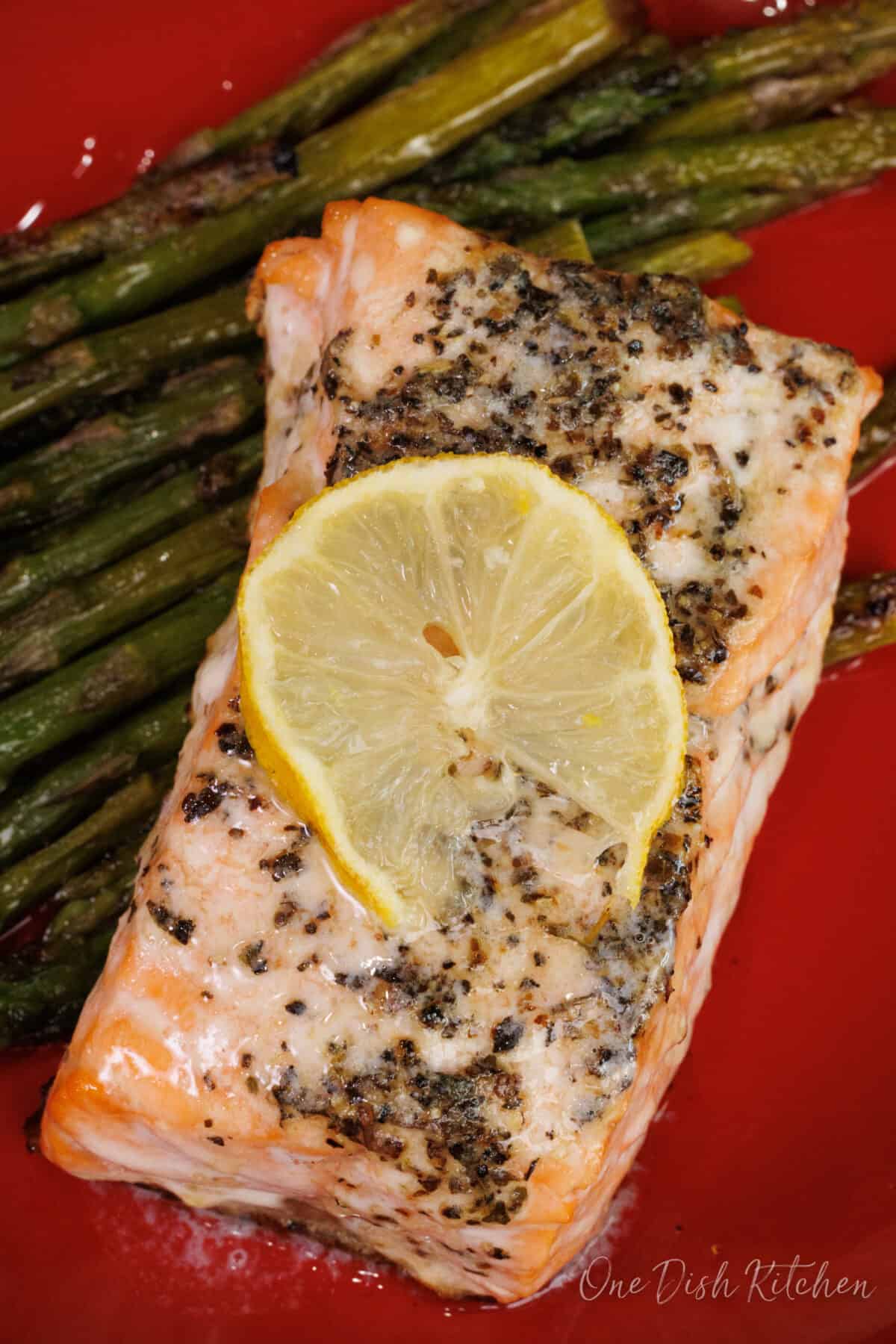
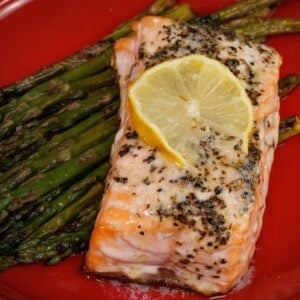
This sheet pan salmon and asparagus is a single serving dinner made with garlic, butter and dried basil. Ready in 20 minutes for an easy salmon dinner for one.
Featured Comment
Made this tonight x 2… I gave it a 10/10 for ease of prep to presentation. Made it as written and it came out perfect!
– CJinUSA
Quick Look
- Prep Time: 5 minutes
- Cook Time: 15 minutes
- Total Time: 20 minutes
- Equipment: Rimmed baking sheet
- Cook Method: Oven roasted on a sheet pan
- Servings: 1
- Difficulty: Easy
Sheet pan salmon and asparagus is a one pan single serving dinner made with a 4 to 5 ounce salmon fillet, fresh asparagus, garlic butter, and dried basil, oven baked at 425°F until the salmon is flaky and the asparagus is tender.
Why Bake Salmon and Asparagus on a Sheet Pan

Cooking dinner for one shouldn’t mean washing three pans, which is exactly why I started making salmon this way. One pan, one fillet, a handful of asparagus, and dinner is on the table in 20 minutes with almost nothing to clean up.
Roasting the salmon and asparagus together at 425°F is what makes this method work. The high heat caramelizes the asparagus tips, gives the salmon a soft golden top, and finishes both at the same time so nothing sits around getting cold.
The garlic butter spooned over the salmon melts down and bastes the fillet as it bakes, which keeps it tender and juicy without any extra effort.
Dried basil is the seasoning I reach for here. It has a mild, slightly sweet flavor that holds up to oven heat and brings out the natural richness of the salmon without overpowering it. Fresh basil scorches in a hot oven, so I save that for sprinkling on after the salmon comes out if I want a brighter finish.
After years of testing single serving recipes, I’ve learned that the best one pan dinners come down to choosing ingredients that finish at the same time. Salmon and asparagus do that naturally, which is why this dish has stayed in my regular dinner rotation for so long.
If you want a different method, our Baked Salmon in Foil For One is wrapped and steamed for a softer texture, our Roasted Salmon For One uses a maple-Dijon glaze, and our Broiled Salmon For One gives you a crisp exterior in 15 minutes.
Table of Contents
- Quick Look
- Why Bake Salmon and Asparagus on a Sheet Pan
- Ingredient Notes
- How to Choose the Best Salmon
- Recipe Variations
- How To Bake Salmon And Asparagus On A Sheet Pan
- Expert Tips
- Salmon Doneness Temperatures
- Troubleshooting
- Serving Suggestions
- Frequently Asked Questions
- Ways To Use Leftover Ingredients
- Sheet Pan Salmon And Asparagus for One Recipe
Ingredient Notes
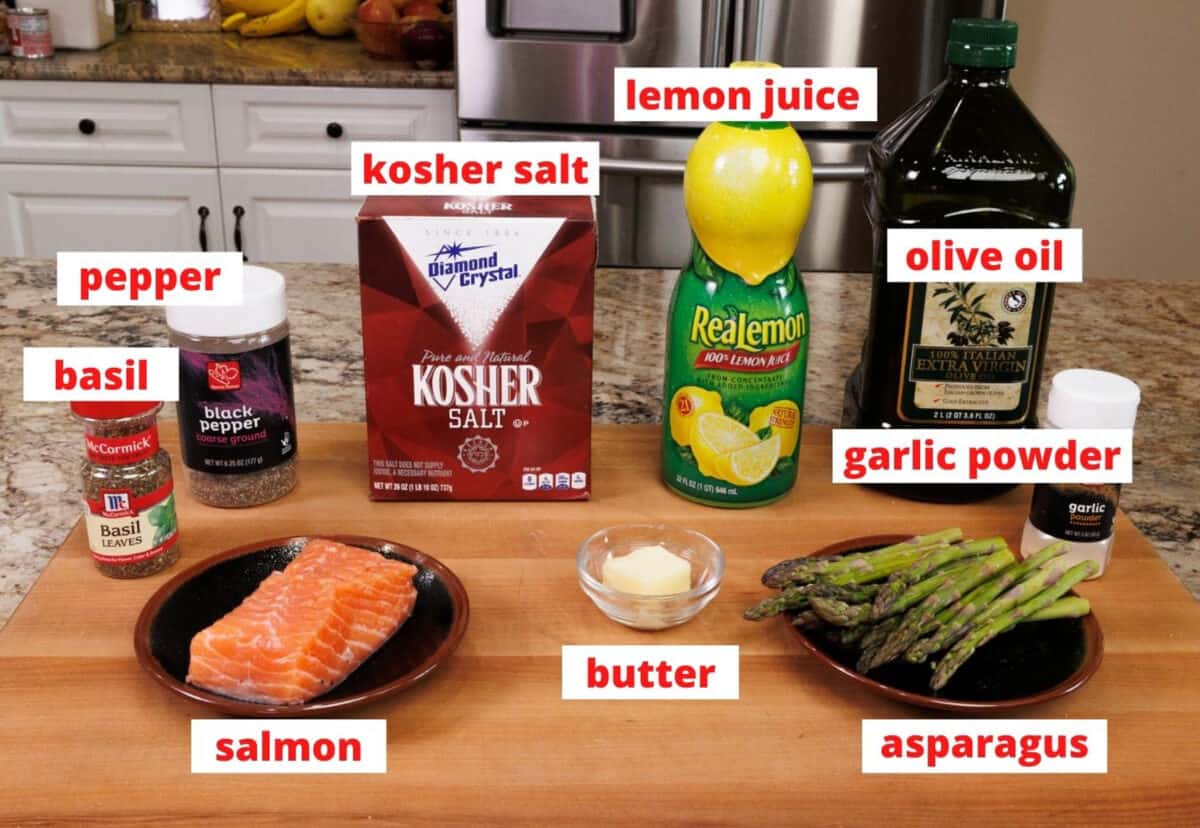
If you have any ingredients leftover from this single serving salmon recipe, check out our Leftover Ingredients Recipe Finder.
Salmon Fillet: Use a 4 to 5 ounce salmon fillet. That portion cooks at the same rate as a small bundle of asparagus. Skin-on or skinless both work. Steelhead trout can be substituted for a similar rich, flaky texture. For guidance on choosing salmon types like Sockeye, Coho, King, or Atlantic, see the section below. If you have an extra fillet, use it in our salmon rice bowl or single serving salmon bites.
Salted Butter: One tablespoon of softened salted butter, mixed with the seasonings and olive oil to make a flavored butter. As the salmon bakes, the butter melts down and bastes the fillet, which keeps it tender and juicy.
Olive Oil: One teaspoon of extra virgin olive oil, divided. Half goes into the butter mixture, the other half is drizzled over the asparagus to help it roast and crisp at the edges.
Dried Basil: Dried basil holds up to high oven heat without scorching the way fresh basil does. Dried oregano, thyme, or Italian seasoning work as substitutes.
Garlic Powder: Garlic powder mixes evenly into the soft butter and won’t burn during baking the way fresh minced garlic can. An eighth of a teaspoon is enough for gentle garlic flavor.
Kosher Salt and Black Pepper: Kosher salt dissolves into the butter and seasons the salmon evenly. Coarsely ground black pepper adds a small bite that balances the richness.
Asparagus: Use 7 to 8 thin spears, with the tough woody ends trimmed. Thicker spears need an extra minute or two; very thin pencil spears can overcook, so check them at the 10-minute mark. Other vegetables like broccoli, zucchini, Brussels sprouts, or cauliflower also work, see the variations section below for swap instructions. Use extra asparagus in our air fryer asparagus recipe.
Lemon Juice: A tablespoon of lemon juice drizzled over the salmon and asparagus after baking brightens both. Save extra lemon juice for our small batch lemon bars or mini lemon cake.
How to Choose the Best Salmon
Look for fillets that are vibrant in color and moist with no browning or separating flakes. Run your fingers along the surface to check for pin bones and pull any out with tweezers before cooking. Use the chart below to choose the variety that fits the flavor and texture you want.
| Variety | Flavor | Texture | Fat Content |
|---|---|---|---|
| Sockeye (Red Salmon) | Bold, pronounced salmon flavor | Firm with small, tight flakes | Lower |
| Coho (Silver Salmon) | Mild, delicate | Tender with medium flakes | Medium |
| King (Chinook) | Rich, buttery | Tender, large flakes, melts in the mouth | Highest |
| Atlantic | Mildest of the salmon varieties | Soft, fatty, large flakes | High (typically farmed) |
Atlantic Farmed Note
Atlantic salmon sold at retail is farmed; wild Atlantic salmon is rarely commercially available.
Recipe Variations
Try one of these popular one pan salmon recipes that vary the vegetables or seasoning:
Sheet Pan Salmon and Zucchini: Replace the asparagus with one small zucchini, sliced into ½-inch rounds or half-moons. Toss with ½ tablespoon olive oil, salt, and pepper, and roast alongside the salmon for the same 12 to 15 minutes.
Sheet Pan Salmon and Broccoli: Replace the asparagus with 1 cup of small broccoli florets. Toss the florets with ½ tablespoon olive oil, salt, and pepper. Broccoli takes longer to roast than asparagus, so put the florets in the oven first for 5 minutes, then add the salmon to the pan and bake everything together for another 12 to 15 minutes until the broccoli is tender and the salmon flakes.
Sheet Pan Salmon and Brussels Sprouts: Replace the asparagus with 1 cup of halved Brussels sprouts. Toss the sprouts with ½ tablespoon olive oil, salt, and pepper. Brussels sprouts need a longer head start. Roast them alone for 10 to 12 minutes, then add the salmon and continue baking for another 12 to 15 minutes.
Cajun Sheet Pan Salmon: Replace the dried basil with ¼ teaspoon Cajun or Creole seasoning. The bolder spice mix gives the salmon a savory, slightly spicy crust as it bakes.
Tip: If a vegetable finishes before the salmon does, transfer the salmon to a plate, cover it loosely to keep it warm, and return the vegetable to the oven for another minute or two.
How To Bake Salmon And Asparagus On A Sheet Pan
These photos and instructions show you how to bake salmon and asparagus on a sheet pan for one. See the recipe card below for ingredient amounts and full recipe instructions.
- Preheat the oven to 425°F. (220°C).
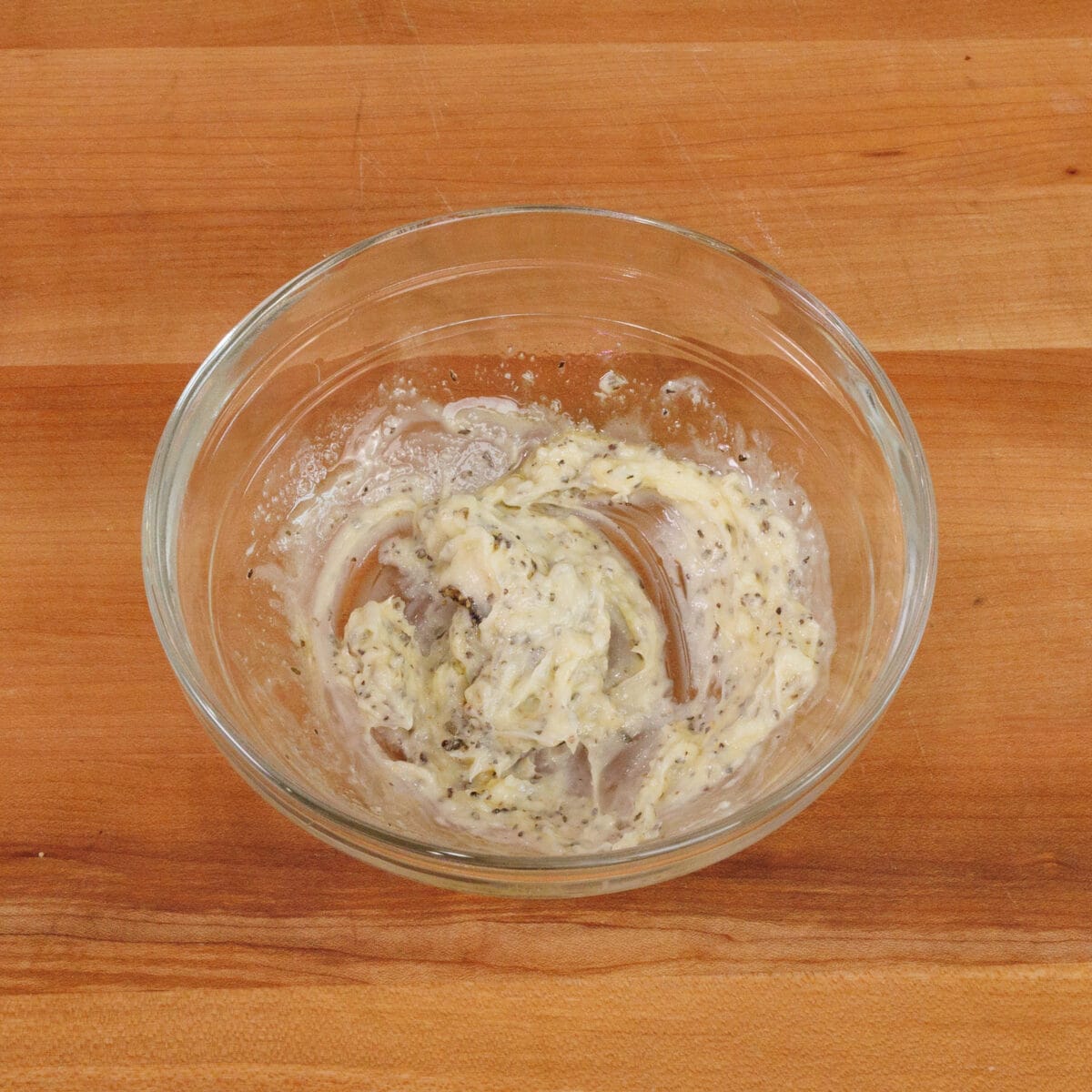
- Make the garlic butter mixture. In a small bowl, stir together the softened butter, olive oil, dried basil, garlic powder, kosher salt, and black pepper until evenly combined.
- Prepare the asparagus. Rinse the asparagus under cold water and pat it dry. Trim the tough woody ends by lining up the stalks and cutting them off with a knife, or by bending each stalk until it naturally snaps at the tender point.
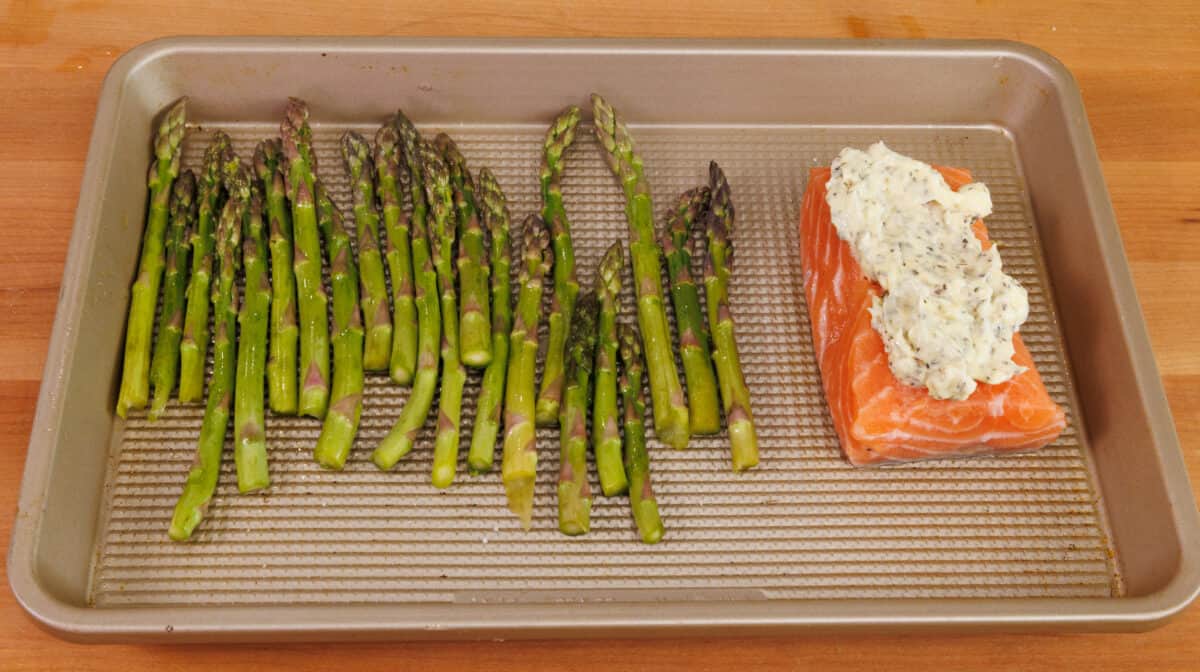
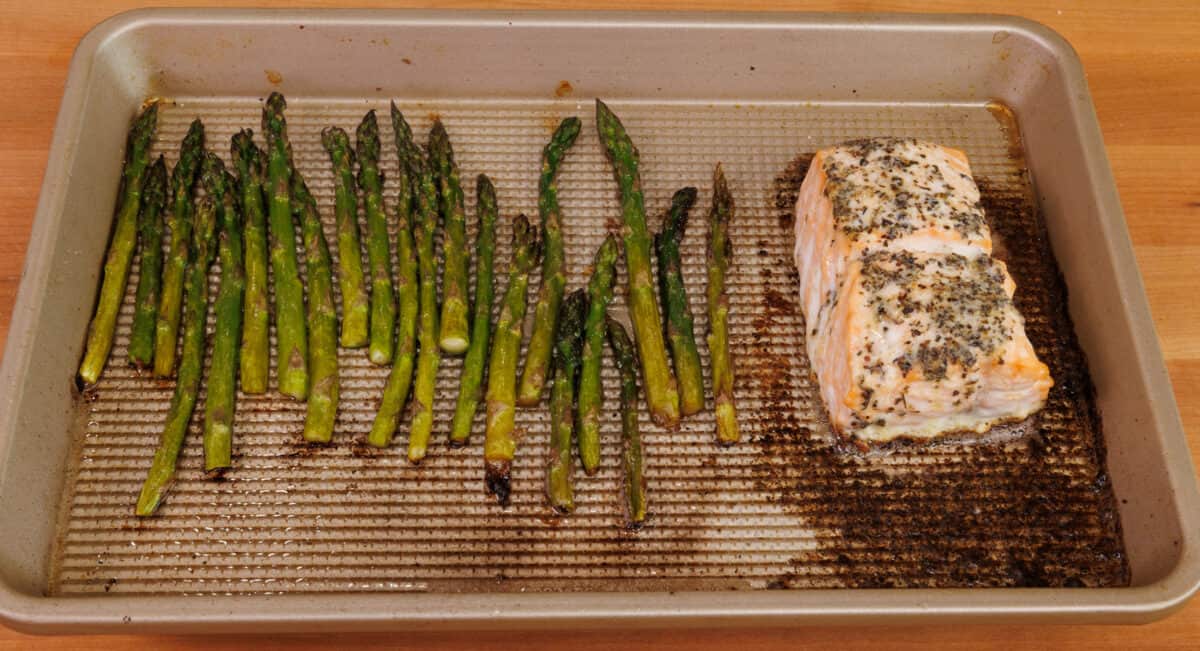
- Arrange on the sheet pan. Lightly coat one side of a rimmed baking sheet with olive oil and place the salmon fillet skin-side down. Spoon the garlic butter mixture evenly over the top of the salmon. Place the asparagus on the other side of the pan, drizzle with the remaining olive oil, and spread the spears in a single layer.
- Bake. Place the sheet pan in the oven and bake for 12 to 15 minutes, until the asparagus is tender and the salmon flakes easily with a fork. For tender, moist salmon, pull it from the oven when an instant-read thermometer reads 135°F at the thickest part. If the asparagus needs an extra minute or two, transfer the salmon to a plate, cover it loosely with foil to keep it warm, and return the asparagus to the oven.
- Finish and serve. Drizzle fresh or bottled lemon juice over the salmon and asparagus before serving.
Expert Tips
Use a rimmed baking sheet. A rim catches any escaping butter or oil. It also makes the pan easier to lift in and out of the oven.
Place the salmon skin-side down. The skin acts as a barrier between the fillet and the hot pan, which protects the flesh from drying out.
Let it rest 5 minutes. The internal temperature rises about 5 degrees as the salmon sits, finishing the cook gently.
Use an instant-read thermometer. A fork test tells you when the salmon flakes, but a thermometer tells you exactly where you are on the doneness spectrum. Insert the probe into the thickest part of the fillet. See the salmon doneness chart below.
Match the asparagus thickness to the cook time. Thin pencil spears cook fast and can go limp by minute 12. Thicker spears need an extra minute or two. Check at the 10-minute mark and spread them in a single layer so they roast instead of steam.
Salmon Doneness Temperatures
Salmon can be cooked to different levels of doneness depending on your preference. Use the chart below as a guide, and check the thickest part of the fillet with an instant-read thermometer.
| Internal Temperature | Doneness | Texture |
|---|---|---|
| 120°F | Medium-rare (wild salmon) | Soft, silky, slightly translucent center |
| 125°F | Medium-rare (farmed salmon) | Tender and moist, just opaque |
| 135°F | Medium (my preference) | Tender, moist, fully cooked through |
| 145°F | Well done (FDA recommendation) | Firm, fully opaque, drier |
Troubleshooting
Use these fixes if your sheet pan salmon doesn’t turn out the way you expected.
The salmon is dry or chewy. It baked too long or hit a temperature higher than 145°F. Pull it earlier next time, ideally at 135°F, and let it rest 5 minutes off the heat. A 4 to 5 ounce fillet at 425°F can go from moist to dry in just a couple of minutes past the target temperature.
The salmon is undercooked in the center. The thickest part of the fillet hasn’t reached your target temperature yet. Return it to the oven for 2 to 3 more minutes, then check again with a thermometer. Thicker fillets need the full 15 minutes.
The asparagus is undercooked. The spears were too thick, or the salmon finished first. Transfer the salmon to a plate, cover it loosely to keep it warm, and return the asparagus to the oven for another 2 to 3 minutes.
A white substance appeared on the salmon. That white film is albumin, a harmless protein that’s pushed out of the salmon as it cooks. It’s safe to eat. To reduce albumin next time, brine the salmon for 10 to 15 minutes before cooking. Use 1 tablespoon of salt for every cup of water, with enough water to cover the fillet. Pat the salmon dry after brining and avoid cooking past 145°F.
Serving Suggestions
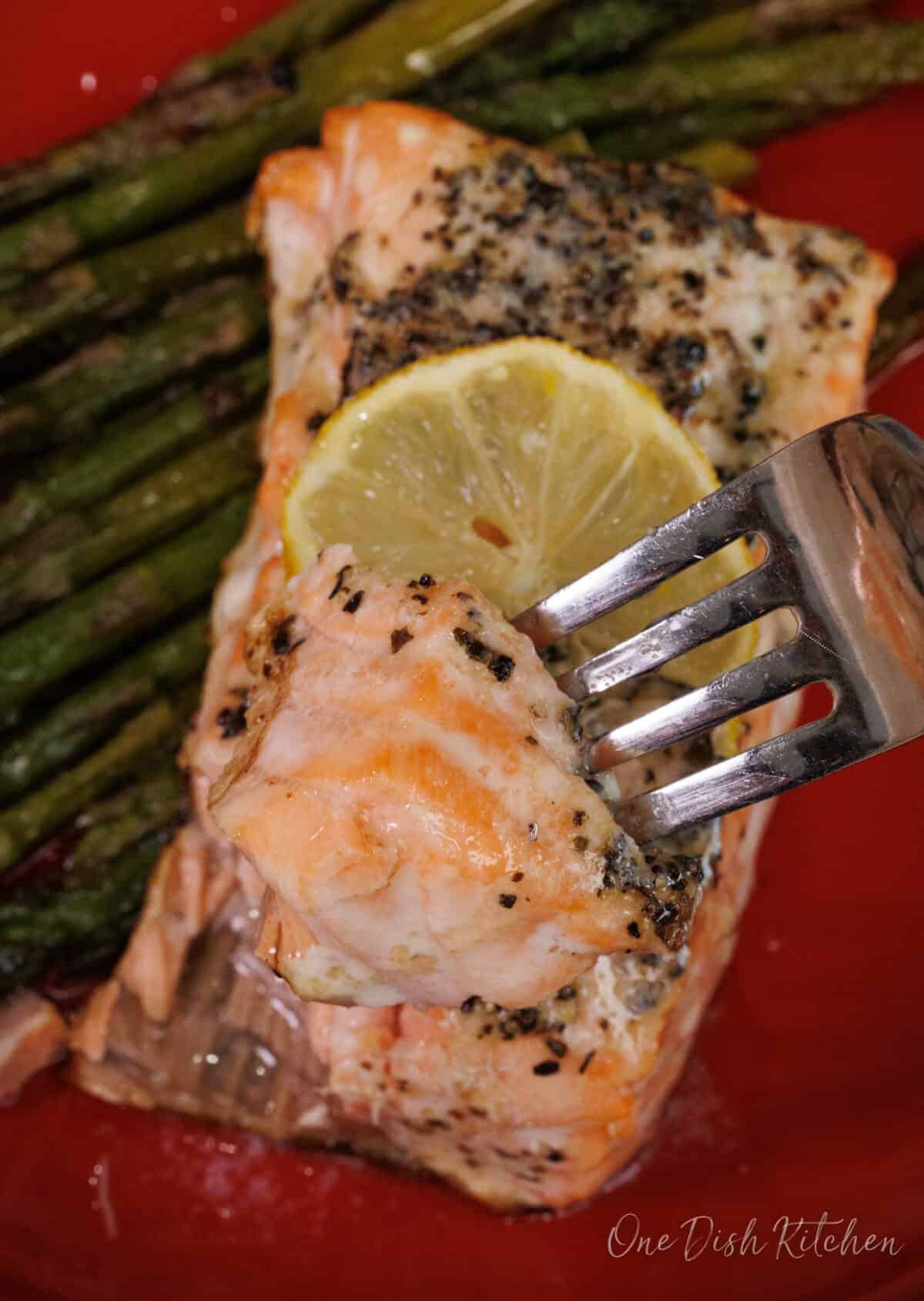
Round out your sheet pan salmon with one of these single serving sides:
Frequently Asked Questions
Bake a 4 to 5 ounce salmon fillet and 7 to 8 thin asparagus spears at 425°F for 12 to 15 minutes. The salmon is done when it turns opaque, flakes easily with a fork, and reaches 135°F at the thickest part. The asparagus should be tender with lightly charred tips.
Salmon is done when it reaches an internal temperature of 135°F at the thickest part and flakes easily with a fork. The FDA-recommended fully cooked temperature is 145°F. For tender, moist salmon, pull it from the oven at 135°F.
Cook 4 to 6 ounces of raw salmon per person. A 4 to 5 ounce fillet is a satisfying single serving and yields about 3 to 4 ounces of cooked salmon after natural moisture loss during baking.
No, it’s best to thaw frozen salmon completely in the refrigerator before cooking on a sheet pan. Frozen salmon releases extra water as it bakes, which causes uneven cooking and prevents the asparagus from roasting properly.
Skin-on salmon is the better choice for sheet pan cooking. The skin acts as a barrier between the fillet and the hot pan, holds the salmon together when you lift it off, and adds a small amount of moisture protection. Skinless works too, but the fillet may stick to the pan more easily.
Broccoli, zucchini, Brussels sprouts, cauliflower, and green beans all work well as asparagus substitutes. Roast harder vegetables like Brussels sprouts and broccoli longer, and add the salmon partway through so it doesn’t overcook.
Store cooked salmon in an airtight container in the refrigerator for up to 3 days. Reheat gently in a 275°F oven for 10 to 12 minutes, covered with foil, to keep it from drying out. Avoid the microwave when possible, as it tends to overcook the fish.
Ways To Use Leftover Ingredients
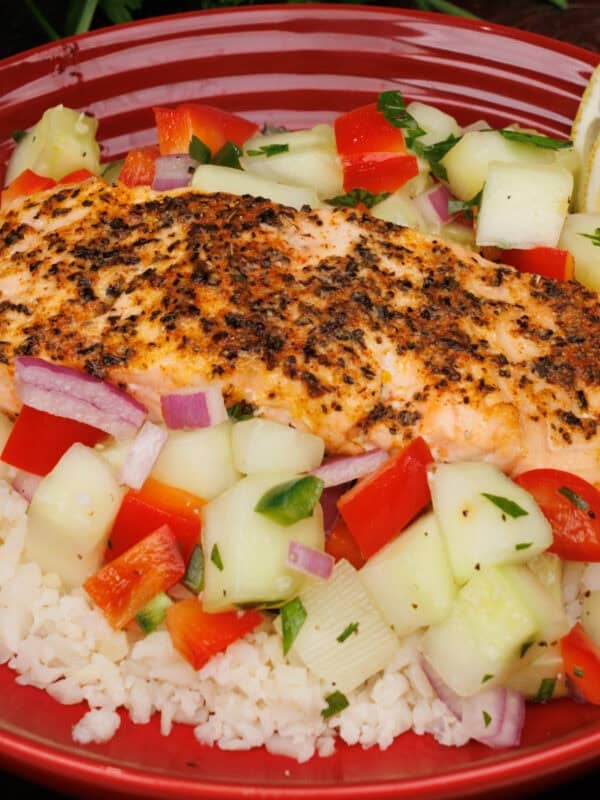
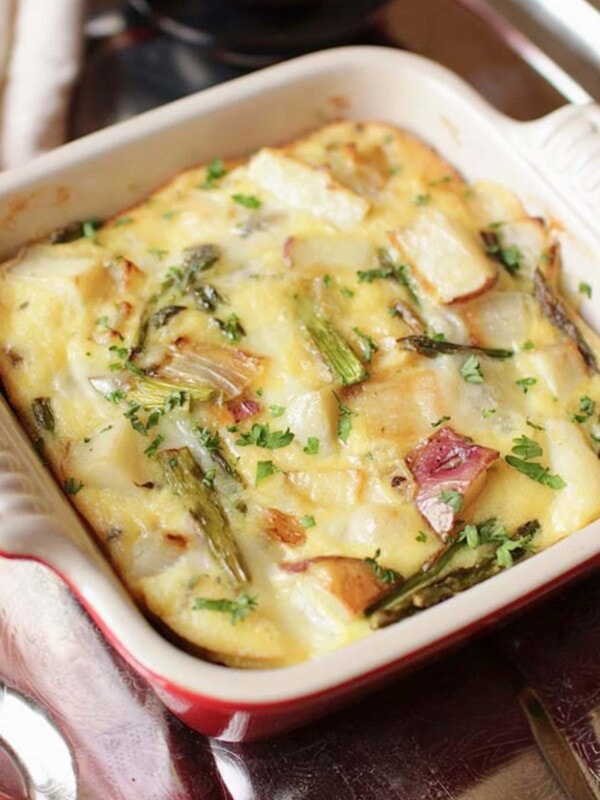
If you have any ingredients leftover from this recipe, check out our Leftover Ingredients Recipe Finder or you might like to consider using them in any of these single serving and small batch recipes:

If you’ve tried this easy salmon dinner for one or any recipe on One Dish Kitchen, I’d love to hear what you think. Please leave a star rating and a comment below to let me know how it turned out. If you take a picture, tag us on Instagram (@onedishkitchen). We love seeing what you make.
Sheet Pan Salmon And Asparagus for One
Equipment
Ingredients
- 1 tablespoon salted butter -softened
- 1 teaspoon olive oil -divided
- ¼ teaspoon dried basil
- ¼ teaspoon kosher salt
- ⅛ teaspoon garlic powder
- ⅛ teaspoon coarsely ground black pepper
- 7-8 thin asparagus spears
- 1 (4 to 5-ounce) salmon fillet
- 1 tablespoon lemon juice
Instructions
- Preheat the oven to 425°F (220°C).
- Make the garlic butter mixture. In a small bowl, stir together the softened butter, ½ teaspoon olive oil, dried basil, garlic powder, kosher salt, and black pepper until evenly combined.
- Prepare the asparagus. Rinse the asparagus under cold water and pat it dry. Trim the tough woody ends by lining up the stalks and cutting them off with a knife, or by bending each stalk until it naturally snaps at the tender point.
- Arrange on the sheet pan. Lightly coat one side of a rimmed baking sheet with olive oil and place the salmon fillet skin-side down. Spoon the garlic butter mixture evenly over the top of the salmon. Place the asparagus on the other side of the pan, drizzle with the remaining ½ teaspoon olive oil, and spread the spears in a single layer.
- Bake. Place the sheet pan in the oven and bake for 12 to 15 minutes, until the asparagus is tender and the salmon flakes easily with a fork. For tender, moist salmon, pull it from the oven when an instant-read thermometer reads 135°F at the thickest part. If the asparagus needs an extra minute or two, transfer the salmon to a plate, cover it loosely to keep it warm, and return the asparagus to the oven.
- Finish and serve. Drizzle 1 tablespoon of fresh lemon juice over the salmon and asparagus before serving.
Notes
Nutrition
The information shown is an estimate provided by an online nutrition calculator. It should not be considered a substitute for a professional nutritionist’s advice.


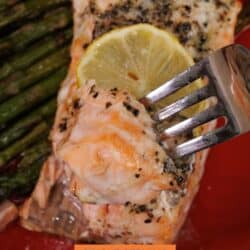
salmon has good flavor, so tender . i cooked zucchini with the fish it was delicious too
So glad you enjoyed the salmon! Zucchini is a great addition. Thanks for sharing!
Would fresh basil add to or detract from this recipe? Dried basil, to me, can have a stale taste. I am curious to hear your insight here. Perhaps you suggest dried basil to reduce waste?
I want to remain open to new ways of cooking and teachable here — as I am learning to cook for one at 56 years old after… raising three children, sending my last off to college this past August, and (sadly) being newly divorced.
My world shrunk just a lil’ bit. 🙁
Thank you for making this transition a bit easier and enjoyable. 🙂
Thank you so much for your kind note. I’m really touched to hear that the recipes have been helpful to you during this new chapter. You’re right that dried basil is listed to help reduce waste and because it holds up better in the oven. Fresh basil tends to crisp or darken when roasted, so if you’d like to use it, I’d recommend sprinkling it on just after baking for a fresh, bright flavor.
What would timing be for using green beans instead?
Green beans will work well here. Roast them at 425°F for the same 12–15 minutes as the asparagus, until they’re tender and slightly crisp.
Easy and awesome! Line pan with foil or parchment for easy cleanup.
We make this a lot. We add a little of Everything Bagel seasoning to the salmon.
Perfect!
We had it last week and it was wonderful! And it looked beautiful in the pan and on the plate.
Made this tonight x2. DH gave it a 9.5/10 (10 must knock his socks off). I gave it a 10.0/10 for ease of prep to presentation. Made it as written and it came out perfect! Dessert was lemon sorbet sprinkled with fresh blueberries. Will be a great addition to What’s for Dinner this summer. Thank you.
I made this for dinner this evening and it was delidelicious. I added onion and garlic powder and cooked it in the air fryer. This was a fast and heathy complete real. I will certainly be making this again.
I’m so glad you enjoyed the recipe. Thank you so much for your feedback.
Joanie, could I make this in a cast iron skillet in the griill? It is really hot in Denver right now so I’m looking for meals that don’t use the oven
Yes, you certainly can.
Absolutely delicious! I need to make seafood more often.
Thank you, Ashlyn.
Love this recipe Joanie! So good!
Thanks, Kelley. I hope sun comes your way soon 🙂
This just screams summer! I love the asparagus under the salmon and the simple seasonings.
Thanks, Tonia.
Ooo! Roasted Salmon! mmmm! I know what’s for dinner tomorrow!
Asparagus is beginning to get around to normal pricing again after this long winter, so looks like I can try this recipe out sooner than later! Looks great!
Love the Salmon and Asparagus together, they make the perfect combo.
Absolutely delicious!
This looks delicious! My husband is a huge salmon and asparagus lover, so he will flip for this!
Thank you Karly.
I could eat salmon daily, and my favorite thing about it is that it doesn’t even need dressing up. This is exactly the kind of meal I love, it looks delicious.
Thank you. I could eat it daily too, Heather. I love salmon.
Roasted salmon is a weeknight staple in our house! A little olive oil, salt, pepper, and lemon juice is my go-to and it turns out perfect every time.
Thanks Lauren.
The essential perfect dinner 😉
Salmon and asparagus is definitely one of our families’ favorite dinners!!
This is one of my favorite food pairings – something about salmon and asparagus go perfectly together!
Thank you Martha.
This is a great recipe – so easy and delicious!
Thank you, Claire!
Love roasting salmon! I have to do it that way because I’m terrible at grilling fish. Also, it’s still too cold to grill 🙂
I love roasting salmon too, Sharon. It’s so easy to do and it tastes so good.