This post may contain affiliate links. Please read our disclosure policy.
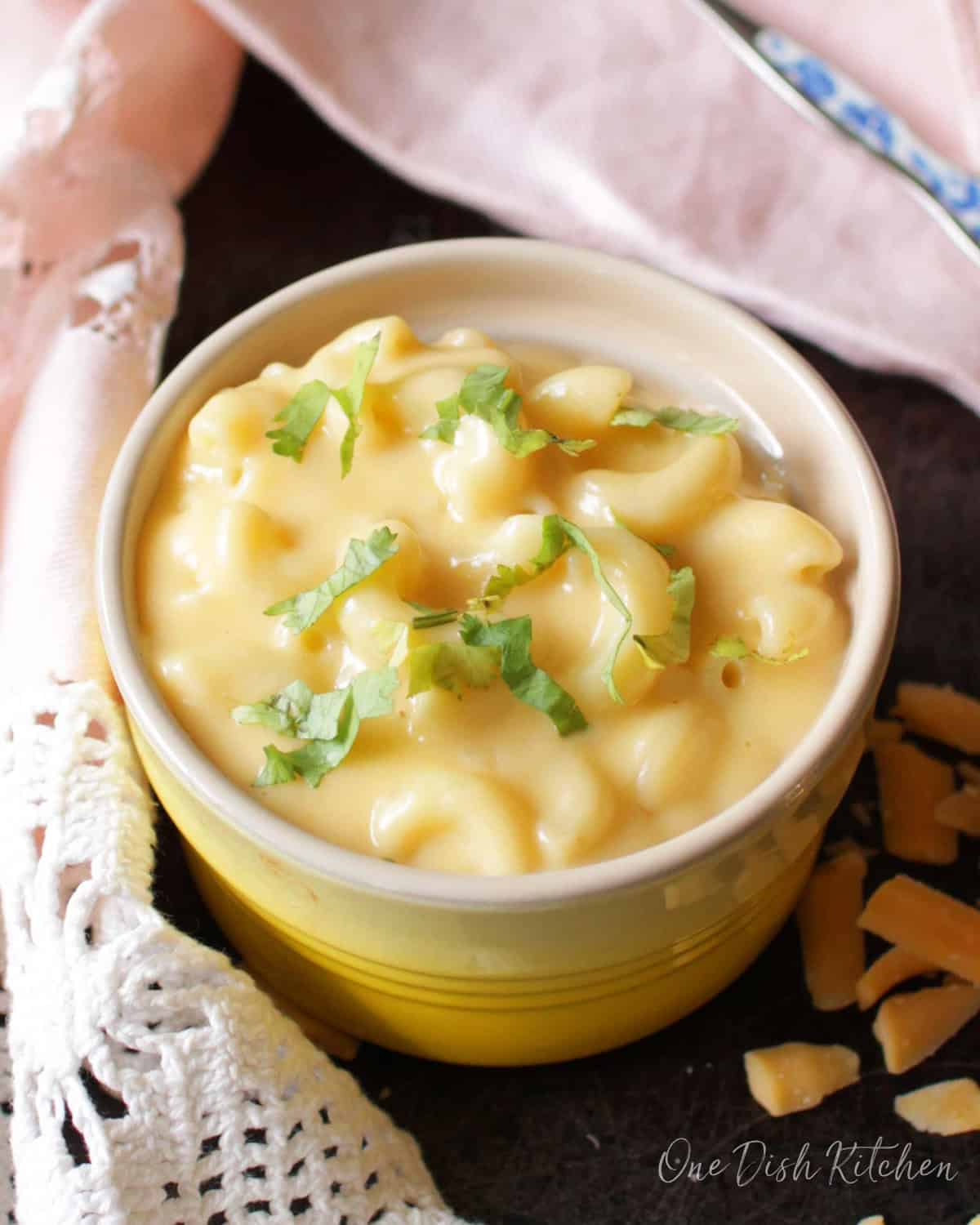
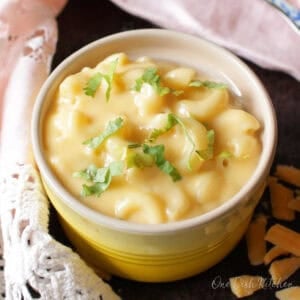
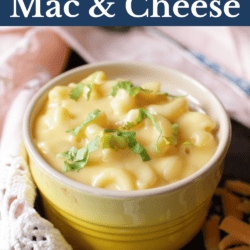
This mac and cheese for one is a creamy, homemade single serving of macaroni and cheese made on the stovetop in about 15 minutes. Tender elbow macaroni gets coated in a smooth cheddar cheese sauce built from a simple roux, no boxed mix, no leftovers.
Featured Comment
“This mac and cheese is beyond delicious!…”
– Nicki
Quick Look
- Prep Time: 5 minutes
- Cook Time: 10 minutes
- Total Time: 15 minutes
- Equipment: 1-quart saucepan
- Cook Method: Stovetop
- Servings: 1
- Difficulty: Easy
This mac and cheese for one is a single serving of elbow macaroni tossed in a homemade cheddar cheese sauce, made from scratch on the stovetop in about 15 minutes.
Why You’ll Love This Mac and Cheese for One

When I want homemade mac and cheese but don’t want a whole casserole staring at me from the fridge for three days, this is the recipe I make.
It’s the version I’ve been making for myself for years, and it comes together with one small saucepan, one bowl, and one perfect portion.
The sauce is what makes it. You build a quick roux with butter and flour, whisk in cold milk until it thickens, then pull the pan off the heat before stirring in the cheese. That last step matters. Adding cheese off the heat keeps the sauce silky instead of grainy. It’s the same technique I’d use for a full-size batch, scaled down for one bowl.
I use sharp cheddar because the flavor stands up to the milk and butter. A pinch of dry mustard sharpens the cheese without anyone tasting mustard. That’s it. No cream cheese, no evaporated milk, no shortcuts that make the sauce taste flat.
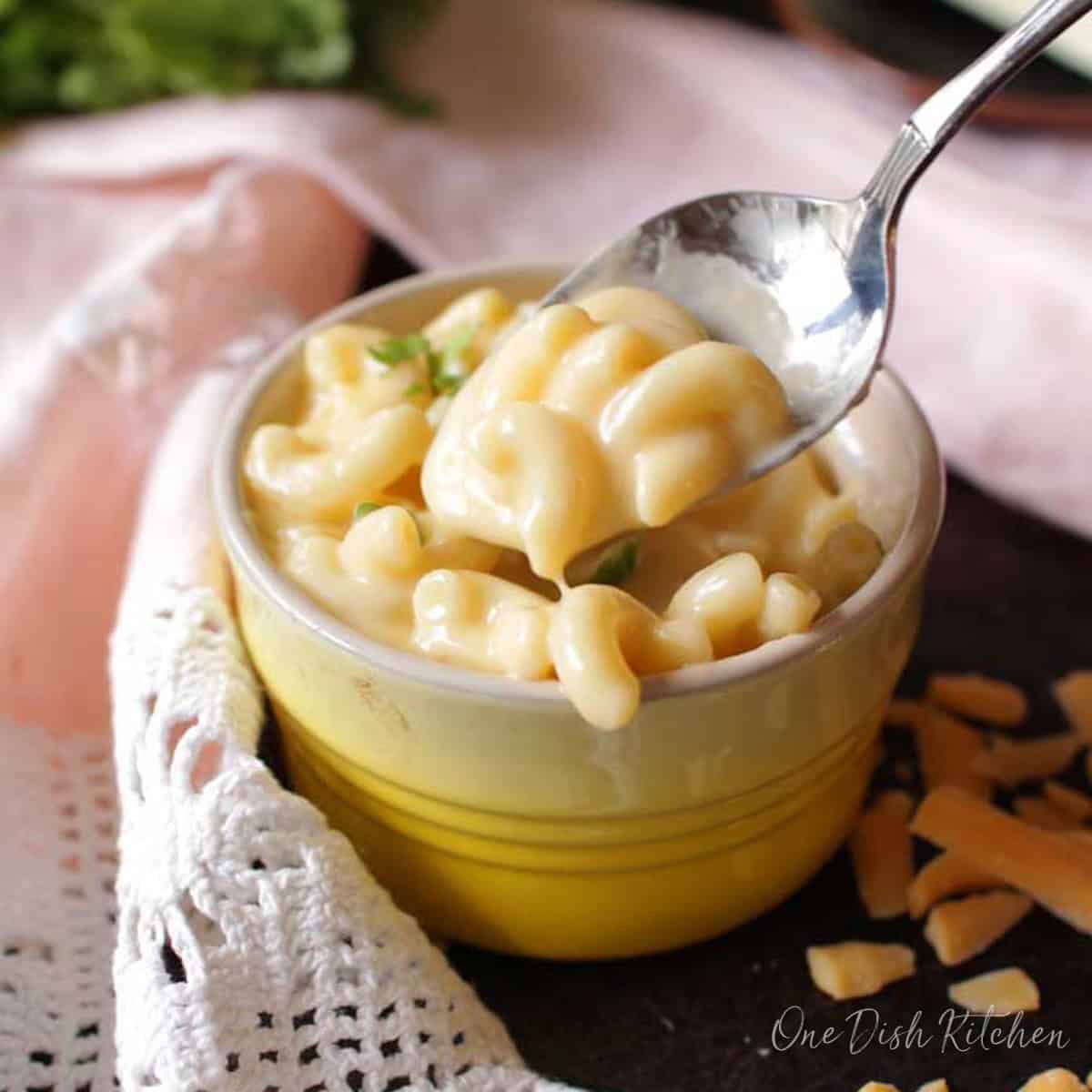
What you get is tender elbow macaroni in a thick, glossy cheese sauce that coats every piece. The sauce clings to the pasta instead of pooling at the bottom of the bowl. The cheddar tastes like cheddar, not like the powder from a box.
If you like this single serve mac and cheese, you’ll probably like my single serving slow cooker mac and cheese for hands-off days, my small batch chili mac when you want something heartier, or my single serving baked ziti for another quick pasta night.
Watch How To Make Mac & Cheese For One

Table of Contents
- Quick Look
- Why You’ll Love This Mac and Cheese for One
- Watch How To Make Mac & Cheese For One
- Ingredients
- How Much Dry Pasta Is In One Serving?
- Recipe Variations
- How to Make Mac and Cheese for One
- Expert Tips
- Troubleshooting
- Serving Suggestions
- Frequently Asked Questions
- Ways To Use Leftover Ingredients
- Mac and Cheese For One Recipe
Ingredients
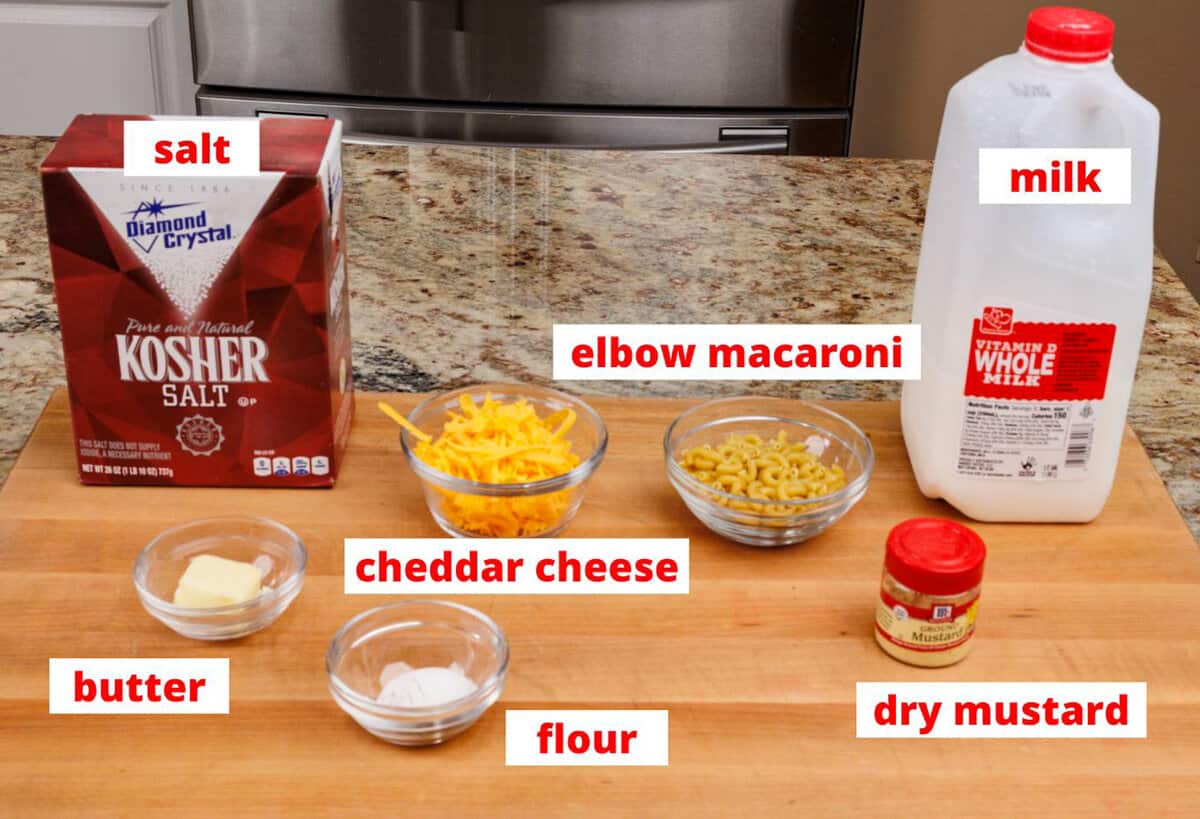
Each ingredient in this single serving mac and cheese earns its place. If you have any ingredients leftover from this recipe, check out our Leftover Ingredients Recipe Finder.
Elbow macaroni: Use 2 ounces of dry elbow macaroni, which is about ½ cup. The small curved shape holds onto the cheese sauce better than long pasta. Shells, cavatappi, or rotini work just as well if that’s what you have. Other pasta shapes have different cup measurements per 2 ounces, so check the pasta conversion chart below. Use leftover macaroni in small batch macaroni salad, single serving tuna casserole, or goulash for one.
Salted butter: Butter is the fat in your roux. It carries flavor and helps the flour cook into a smooth base before the milk goes in. I use salted butter and add only a small pinch of salt at the end. If you only have unsalted butter, add a slightly more generous pinch of salt to the sauce.
All-purpose flour: Flour thickens the sauce. When you whisk it into melted butter and cook it for a minute, you’re making a roux, the foundation of any classic cheese sauce. The flour also keeps the cheese from breaking or separating once it’s stirred in.
Whole milk: Whole milk gives the sauce body and richness. 2% works in a pinch but the sauce will be thinner. For a dairy-free version, unsweetened almond milk works, though the flavor will be slightly nuttier and the sauce slightly less rich. Skip flavored or sweetened plant milks.
Sharp cheddar cheese: Sharp cheddar is the right choice for a single serving sauce because the flavor stands up to the milk and butter without needing a second cheese to back it up. Shred it yourself from a block. Pre-shredded cheese is coated in anti-caking agents like potato starch and cellulose that prevent it from melting smoothly, which is the most common reason a cheese sauce turns grainy. Leftover cheddar works in crack chicken for one, small batch stuffed peppers, or a single breakfast bowl.
Dry mustard: A pinch of dry mustard amplifies the sharp, savory notes of the cheddar without anyone tasting mustard. The mustard contains compounds that react with cheese proteins to deepen the perceived flavor of the cheese itself. Also useful in my baked beans for one, small batch fondue, or single sloppy joe.
Kosher salt: A small pinch at the end finishes the sauce. Cheese already brings salt, so taste before adding more.
Looking for more easy dinner ideas for one? Start here with our 35 favorite single serving dinners.
How Much Dry Pasta Is In One Serving?
One serving of macaroni and cheese uses 2 ounces of dry pasta. Use this chart to measure 2 ounces by volume when you don’t have a kitchen scale, since different pasta shapes have different cup measurements.
| Pasta shape | 2 oz dry, by volume |
|---|---|
| Elbow macaroni | ½ cup |
| Small shells | ½ cup |
| Rotini | ½ cup |
| Cavatappi | ⅔ cup |
| Penne | ⅔ cup |
| Farfalle (bow tie) | ¾ cup |
| Medium shells | ¾ cup |
Recipe Variations
One of the reasons I keep coming back to this single serve mac and cheese recipe is how easy it is to change up. Here are five variations worth trying.
Baked Mac and Cheese for One: Spoon the finished mac and cheese into a 10-ounce ramekin or small oven-safe dish and place it on a rimmed baking sheet to catch any spills. Top with 2 tablespoons of seasoned breadcrumbs and a few small pieces of butter. Bake at 350°F (177°C) for 12 to 15 minutes, until the top is golden and the sauce is bubbling at the edges.
Three-Cheese Mac and Cheese: Use ¼ cup sharp cheddar, plus 2 tablespoons each of gruyère and gouda. Each cheese melts smoothly and brings something different: cheddar carries the main flavor, gruyère adds a nutty edge, and gouda adds a mellow, slightly sweet finish. Stir all three in off the heat at the same time.
Bacon Mac and Cheese: Cook 1 strip of bacon until crisp, drain on a paper towel, and crumble it on top of the finished mac and cheese. The smoky, salty bite plays well against the sharp cheddar sauce.
Spicy Mac and Cheese: Stir ⅛ teaspoon of red pepper flakes into the cheese sauce as it thickens, or add a few dashes of hot sauce at the end. For more heat, mix in ½ tablespoon of diced pickled jalapeños.
Broccoli Mac and Cheese: Steam ½ cup of small broccoli florets until tender, about 4 minutes. Stir them into the finished mac and cheese for a quick way to turn this side dish into a single serving meal.
How to Make Mac and Cheese for One
Making homemade macaroni and cheese for one on the stovetop takes about 15 minutes. The full ingredient list is in the recipe card below.
- Cook the pasta. Bring a 1-quart saucepan of salted water to a boil. Add the elbow macaroni and cook according to the package directions, usually 7 to 8 minutes for al dente. Drain in a colander and set aside. Wipe the saucepan dry with a paper towel to use it again for the cheese sauce.
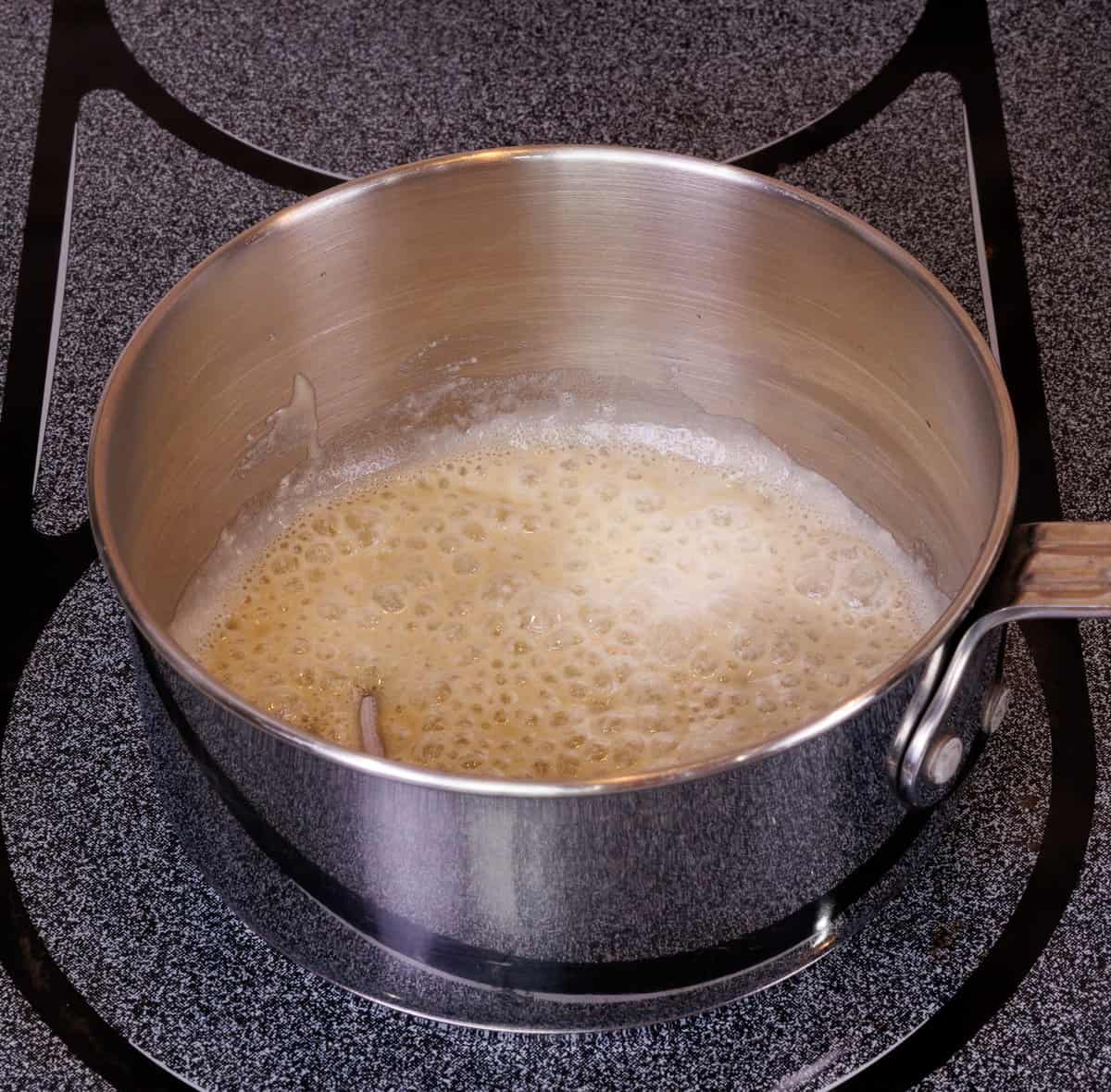
- Make the roux. In the same saucepan over medium heat, melt the butter. Once the butter is fully melted, whisk in the flour. Cook for 1 minute, whisking constantly. The mixture will turn a pale golden color and smell slightly nutty. This is your roux.
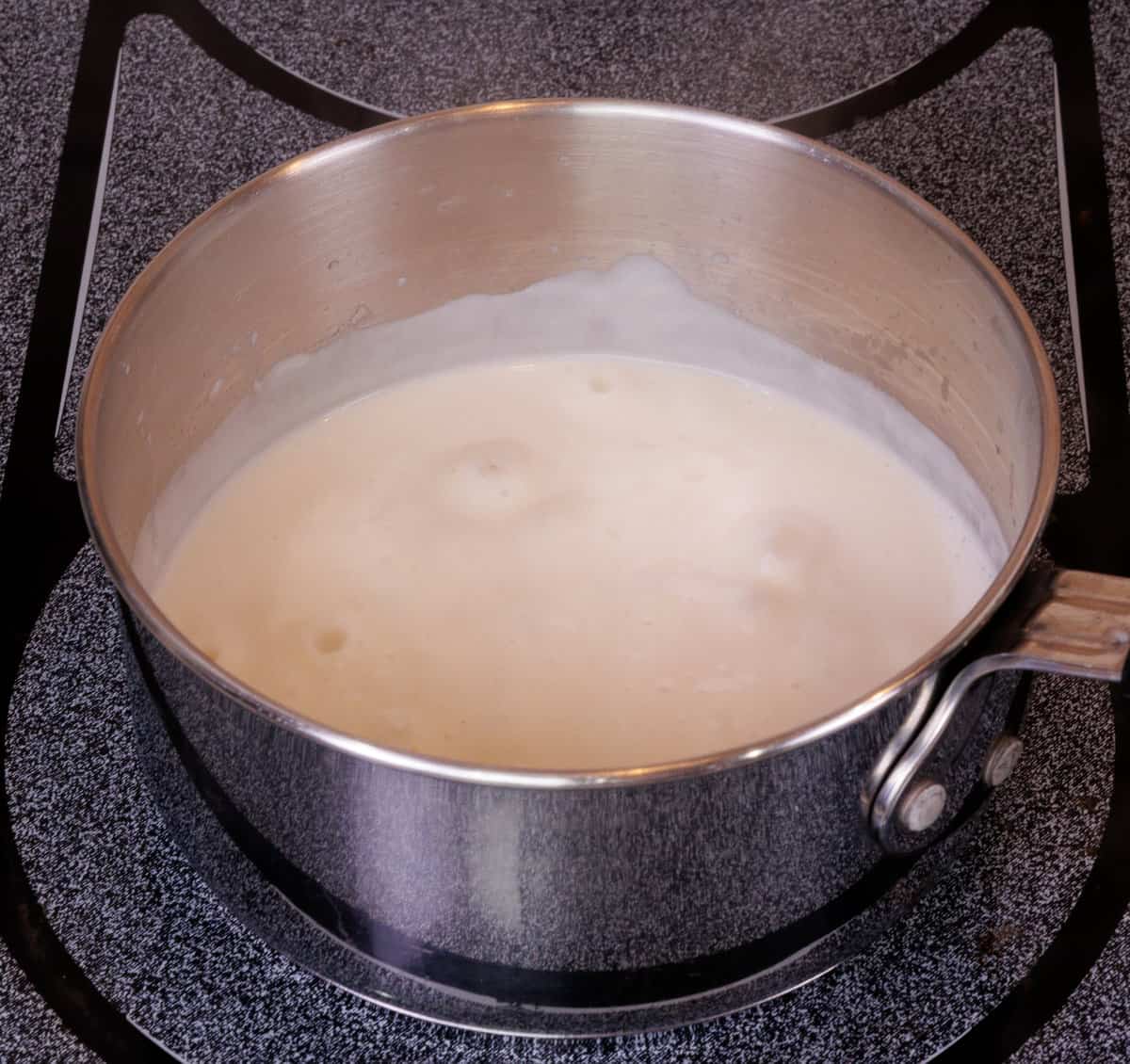
- Add the milk. Slowly pour the milk into the roux, whisking the whole time to keep the sauce smooth. Cook for about 2 minutes, whisking often, until the sauce thickens enough to coat the back of a spoon. This is now a béchamel sauce, the base for any classic cheese sauce.
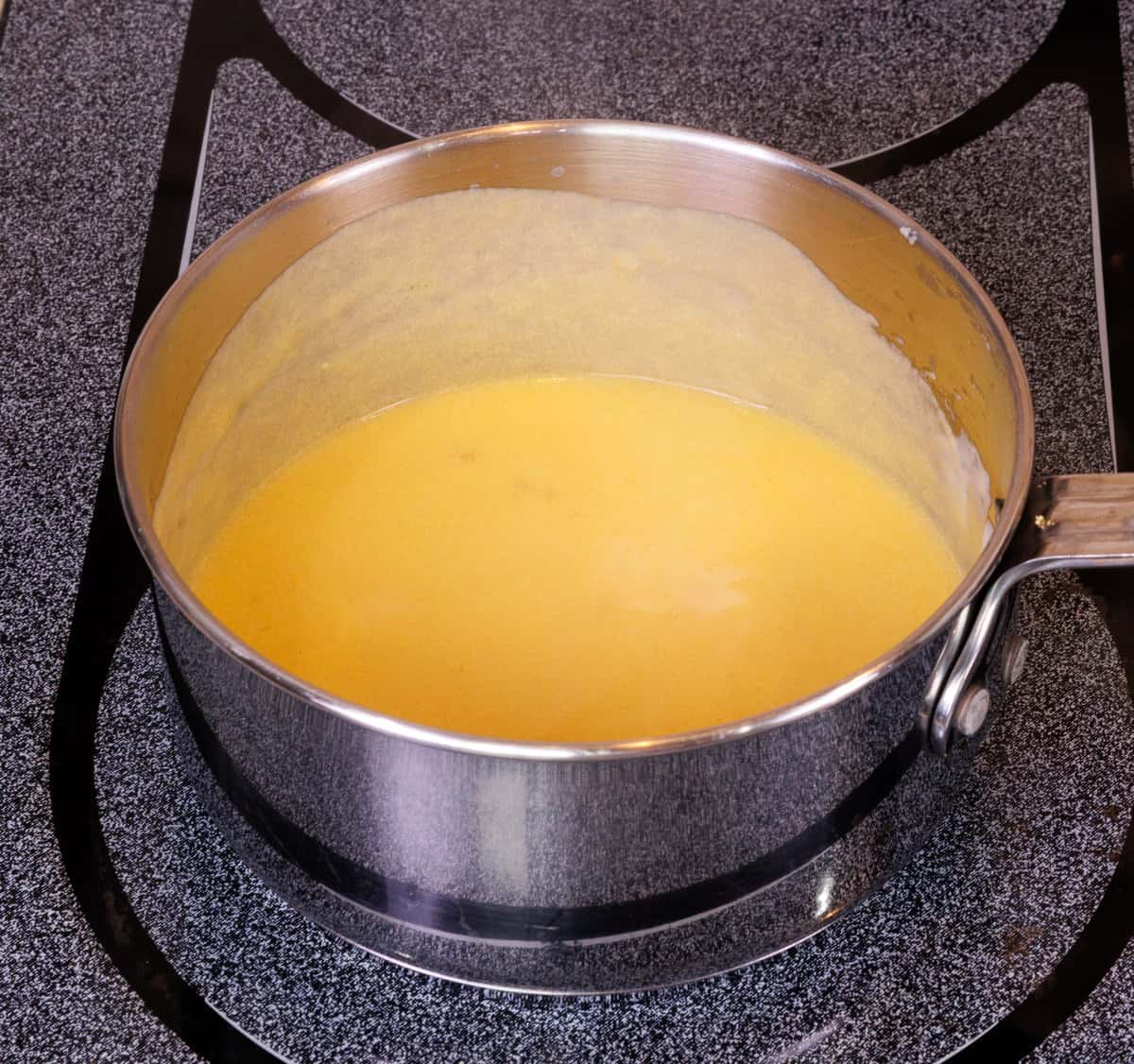
- Stir in the cheese. Take the saucepan off the heat. Add the shredded sharp cheddar cheese and dry mustard. Stir until the cheese is fully melted and the sauce is smooth. Adding the cheese off the heat keeps it from breaking and turning grainy.
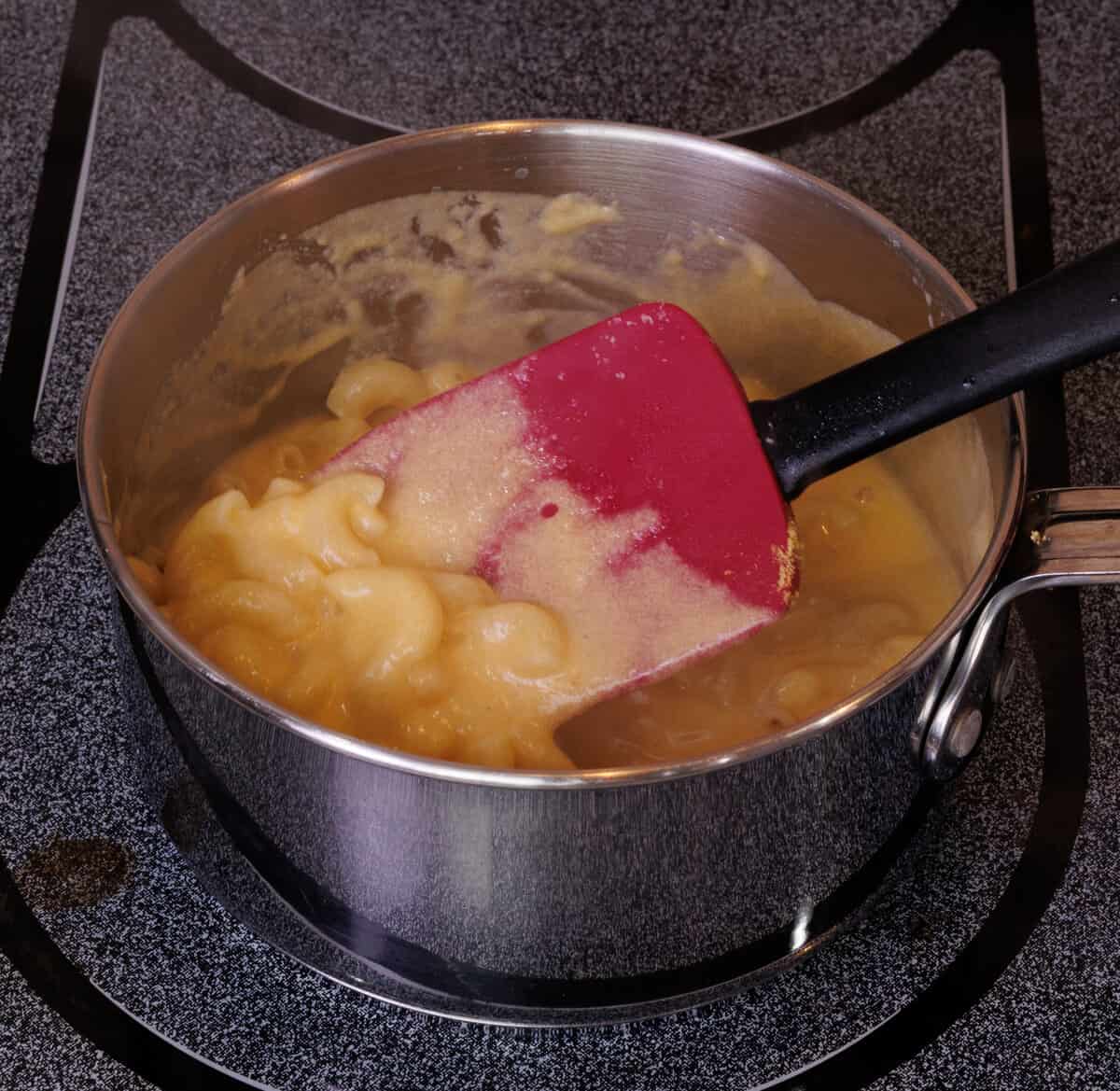
- Combine and serve. Add the cooked pasta to the cheese sauce and stir until every piece is coated. Taste and add a small pinch of salt if needed. Serve right away. The sauce is at its creamiest when hot and will thicken as it cools.
Expert Tips
Shred the cheese from a block. Pre-shredded cheese is coated in anti-caking agents that prevent it from melting smoothly. Shredding from a block is the single biggest thing you can do to get a creamy, glossy sauce instead of a grainy one.
Add the milk in a slow stream. Pouring the milk in all at once is the most common cause of lumpy cheese sauce. A slow stream with constant whisking lets the roux disperse evenly into the milk before it has a chance to clump.
Take the saucepan off the heat before adding the cheese. Cheese added to a hot pan can break, releasing its oils and turning the sauce greasy or grainy. Off the heat, the residual warmth is enough to melt the cheese without breaking the sauce.
Serve right away. Cheese sauces thicken quickly as they cool, and the texture is best in the first few minutes. Plan to eat this recipe immediately rather than holding it on the stove or in a warm oven.
Troubleshooting
Even simple recipes can hit a snag. Here’s how to fix the most common cheese sauce problems if they come up while you’re cooking.
Why did the sauce separate?
If the sauce looks oily, separated, or curdled instead of smooth, pull the saucepan off the heat. Add a tablespoon of warm milk and whisk briskly until the sauce comes back together.
Why is the sauce too thick?
If the sauce coats the spoon heavily and feels gluey rather than glossy, the roux cooked too long or absorbed too much liquid. Whisk in warm milk a tablespoon at a time over low heat until the sauce loosens.
Why is the sauce too thin?
If the sauce is runny and won’t coat the pasta, the milk wasn’t given enough time to thicken. Return the saucepan to low heat and let the sauce bubble gently for another minute, whisking the whole time, until it thickens.
Why did the pasta soak up all the sauce?
Mac and cheese keeps absorbing sauce as it sits. Stir in a splash of warm milk to bring back a creamy coating.
Serving Suggestions
Stovetop mac and cheese for one works as a side dish or a main meal, depending on what you pair it with. Here are a few single serving recipes from One Dish Kitchen that go well with it.
- Small batch chicken nuggets for a comfort food plate.
- Oven-baked ribs for one when you want something heartier.
- Mini meatloaf for a classic American dinner.
- Pork tenderloin for one for a leaner protein option.
Frequently Asked Questions
One serving of mac and cheese uses 2 ounces of dry pasta, which is about ½ cup of dry elbow macaroni. Other pasta shapes have different cup measurements per 2 ounces, so see the pasta conversion chart above for shells, rotini, cavatappi, penne, and farfalle.
Elbow macaroni is the best pasta for mac and cheese because the curved shape holds onto the cheese sauce better than long pasta. Small shells, rotini, cavatappi, and penne also work well because their ridges and curves grip the sauce. Avoid long pasta like spaghetti or linguine, which won’t hold a creamy cheese sauce evenly.
Sharp cheddar is the best all-around cheese for macaroni and cheese because the flavor stands up to the milk and butter. For a richer version, replace half the cheddar with gruyère, gouda, or fontina. Always shred your cheese from a block, since pre-shredded cheese is coated in anti-caking agents that prevent it from melting.
To make a roux for mac and cheese, melt 1 tablespoon of butter in a saucepan over medium heat, then whisk in 1 tablespoon of all-purpose flour. Cook for 1 minute, whisking constantly, until the mixture turns pale golden and smells slightly nutty. Slowly whisk in milk to turn the roux into a smooth béchamel sauce, then stir in the shredded cheese off the heat.
Store leftover mac and cheese in an airtight container in the refrigerator for up to 3 days. Reheat gently on the stove or in the microwave with a tablespoon of milk stirred in to loosen the sauce as it warms.
Yes, mac and cheese can be frozen for up to 3 months in an airtight container, but the texture suffers. The pasta absorbs liquid and the cheese sauce can separate when thawed and reheated. Mac and cheese is best made fresh, especially in single serving sizes.
Ways To Use Leftover Ingredients
If you have any ingredients leftover from this recipe, check out our Leftover Ingredients Recipe Finder or you might like to consider using them in any of these single serving and small batch recipes:

If you’ve tried this quick mac and cheese recipe for one or any of my other single serving recipes, I’d love to hear how it turned out. Leave a star rating and a comment below to let me know.
If you take a photo, tag us on Instagram (@onedishkitchen). I’d love to see what you make.
Mac and Cheese For One
Watch How To Make This
Equipment
Ingredients
- 2 ounces uncooked elbow macaroni (about ½ cup)
- 1 tablespoon salted butter
- 1 tablespoon all purpose flour
- ½ cup whole milk or use 2% or almond milk for a less rich sauce
- ½ cup shredded sharp cheddar cheese
- ⅛ teaspoon dry mustard
- ⅛ teaspoon kosher salt if needed
Instructions
- Cook the pasta. Bring a 1-quart saucepan of salted water to a boil. Add the elbow macaroni and cook according to the package directions, about 7 to 8 minutes for al dente. Drain in a colander and set aside. Wipe the saucepan dry to use it again for the cheese sauce.
- Make the roux. In the same saucepan over medium heat, melt the butter. Once melted, whisk in the flour and cook for 1 minute, whisking constantly. The mixture will turn pale golden and smell slightly nutty.
- Add the milk. Slowly pour the milk into the roux, whisking the whole time to keep the sauce smooth. Cook for about 2 minutes, whisking often, until the sauce thickens enough to coat the back of a spoon.
- Stir in the cheese. Take the saucepan off the heat. Add the shredded cheddar and dry mustard, then stir until the cheese is fully melted and the sauce is smooth.
- Combine and serve. Add the cooked pasta to the cheese sauce and stir until every piece is coated. Taste and add a pinch of salt if needed. Serve right away. The sauce is creamiest when hot and thickens as it cools.
Notes
Nutrition
The information shown is an estimate provided by an online nutrition calculator. It should not be considered a substitute for a professional nutritionist’s advice.

I love cheesy macaroni and cheese. This was perfect!
This was perfect. So good. Only thing I did different was added green chili.
I am making the Mac & Cheese recipe i make it often because this recipe is the best.
I use your recipe’s often as they have been perfected by you Joanie and almost every time i say to myself or even out loud “Thank you Joanne your the best”
My comment of thanks and appreciation. for the time you take to perfect a recipe for us single folk. 💕
Margaret.
Thank you so much, Margaret.
This is delicious. I add a bit of worcestershire sauce and a drop or two of hot sauce.
Made this for lunch today, and was pleasantly surprised. I’ve tried other single serve recipes and they always fell short of tasty. Joanie, your recipe is delicious and so simple. There was enough for two so that was a bonus. Thank you Joanie for these great recipes.
You are most welcome. I’m so happy you enjoyed it!
Thank you ever so much for sharing! My husband loves it! Perfect for two, especially we’re watching our sodium content.
This was really good and easy!! I added the butter and breadcrumbs and a left over slice of bacon on top. Yum!! Perfect lunch!
I’m so happy you enjoyed it!
This mac and cheese is beyond delicious! I used rigatoni pasta and a bjend of Italian cheeses. It is so creamy and indulgent. Thank you Joanie for a superior recipe.
So good, fast and easy to remember. the proportions (2 T butter, 2 T flour and 1/2 c milk, 1/2 c cheese) even I can remember it!
I’m so happy you enjoyed it!
This recipe is great! I substituted the cheese, butter, and milk for vegan alternatives and it worked all the same! Super tasty.
Wonderful to know those substitutions worked well. Thank you so much for your feedback.
I really enjoyed this mac n cheese! I’m just a beginner in cooking, but it was quite easy to make.
I’m so happy you enjoyed it!
This is EXCELLENT beyond belief.
Thank you so much!
Have always wanted a great “creamy” macaroni & cheese recipe…… This IS IT 100%.
I’m so happy you loved the recipe!
Excellent recipe, it is rich and creamy! Made this single serve Mac and Cheese a couple times as a side dish for ribs and chicken, way better than store bought macaroni and cheese and the serving portion is just the right size for one person.
Loved how simple and fast to make. Just for me this was plenty to give me two meals. Was rather too thick for my liking. Added a little more milk. I will make this often.
This is delicious and easy. It’s also a great basic recipe to “play” with using fresh veggies, cooked & crumbled bacon, diced ham–you name it.
Delicious and easy to make at home after school
This a very nice dish and easy to prepare. It beats the box salty Mac n cheese and actually tastes good cold the next day. I used unsweetened almond milk and the wife actually asked me to fix again with added meats. Awesome dish.
I used Almond Original Milk in this recipe and had to throw it out. Too much sweetness. But love the recipe and it works so good with Whole cow milk. I enjoy all your recipes. Thank you so much for providing them!
I have made this recipe twice and enjoyed it as much the second time as the first time. I mostly use frozen vegetables, my kitchen is a no waste zone and I can never use fresh vegetables fast enough. So I always have frozen brocolli on hand. Some small pieces of brocolli added to this recipe makes for a well rounded and easily made lunch.
This is pretty good. My grandkids like it. I make it extra cheesy.
Absolutely love this mac and cheese recipe! I use extra sharp vermont white cheddar, add a dash of Crystal Louisiana hot sauce, and serve it with a generous amount of freshly ground black pepper.
this sounds great. i always make a large batch and freeze in small portions, but this would be nice if short on ingredients.
Love all of your one dish recipes especially this one. Thanks.
I made this today and really enjoyed it! Thanks
I love the idea of adding mustard since that what my mom always used in her mac and cheese. It’s not something I keep in stock – but would dijon mustard work as a substitute? If so, how much should I use?
Dijon mustard would add a nice flavor as well. I would use 1/8 of a teaspoon.
It was so good. Thanks
Just the best! Passed the husband and granddaughter taste test!
I’m so happy they enjoyed it. Thank you for taking the time to let me know.
Perfect!
I can’t use milk in my diet so I use either a nut milk or soy.. The day I made mac and cheese all I had was soy. Surprisingly the soy milk worked in this recipe. Delicious! Thank you for providing us single people with these easy one dish meals.
Sorry, I forgot to rate it!
-Mrs. Chang
As an FCS teacher I was stressing over how to send food boxes to students for their culinary unit. Since we can’t have students cooking together or sharing tools and ingredients in class because of the pandemic, I was struggling to find recipes that I could use for virtual and in person learning. I also needed to keep in mind the cost in buying tools and food for EACH individual. That was going to be tough. I am so grateful for running into your site! This helps so much with not having to buy many kitchen tools and mass ingredients! Thank you so much!
-Mrs. Chang
Mrs. Chang, thank you so much for taking the time to write. I’m so happy to hear that our website and recipes have been helpful to you and your students.
Wonderful recipe, I shared them with my Mom who lives alone and she really likes not having to make a big portion .
I used shell pasta, since I had it on hand. Pleasantly surprised how much I enjoyed it! Nice and creamy, wasn’t sure 2oz would be enough but it was perfect. Thank you!
Tried this tonight. OMG delicious.i have not been disappointed with any thing I have tried
I’m so glad you are enjoying the recipes. The mac and cheese is a personal favorite.
Sounds delicious
I MADE THIS AND IT WAS
DELICIOUS. THANK YOU.
PAT.
Hi, could you please advise what size 2 oz of macaroni would be please? Would it be close to a 1/4th or a 1/3rd of a cup?
Hi Denise,
It’ll be about 1/2 cup of dry macaroni.
So quick and easy! Doubled it for two and it was perfect! Sprinkled some Panko breadcrumbs in top and toasted it till golden!!!! Look forward to making again!
I’m not a big fan of stovetop macaroni and cheese, so I put mine in a little baking dish and put it in the toaster oven for about 20 minutes, until it started to brown on top.
Delicious!
Sounds wonderful! Thank you for sharing what worked for you.
Joanie
Haven’t made yet, but looks delicious! At what temperature and how long should I cook this recipe in convection oven?
I’m not clear on 2 ounce of pasta. How would you measure it. Am so excited about your cook book coming out. I have wasted so much food not knowing how to downsize ingredients. Thanks again for taking out the guess work
Mary,
Thank you so much, we are so excited to share what we’ve been working on so long for our readers.
As for the pasta amount, 2 ounces is approximately 1/2 cup of elbow macaroni.
Joanie
I doubled it for 2. Loved the easy to follow recipe. I used lemon pepper in place of mustard. I wish I had fresh basil and/or chives to sprinkle on top. Thanks alot.
I’m so happy you enjoyed the mac and cheese, Leslie. Thank you so much for taking the time to let me know.
Joanie
My daughter loved this Mac and cheese. We made it with gluten free pasta and flour and it came out perfect. Also, we used smoked paprika instead of the dry mustard. Quick question. If I wanted to make this family style… Would you know how could I change the measurements? Thanks again for the recipe.
Hi Sandy,
I’m so happy you and your daughter loved the mac and cheese! Thank you so much for taking the time to let me know. I have only doubled the recipe with success but haven’t tested the recipe beyond that.
Joanie
I loved this recipe! But I wasn’t clear on the 2oz of pasta, is that before or after cooking? I cooked the whole box and added the amount of cooked pasta that looked good. In the future, it would be nice not to have to cook the whole box, could you clarify the amount of pasta for me?
Hi Christine,
The recipe calls for 2-ounces of uncooked pasta.
I’m so happy you enjoyed it, thank you for taking the time to write.
Joanie
Thanks for the clarification.
I made this today for lunch and it was delicious! The next time, I may try it with a blend of cheeses and use the crumb topping as suggested. It was as easy, and a lot tastier, than the boxed mix! Thank you!
I’m so happy you enjoyed the recipe. Thank you so much for letting me know!
Have a wonderful week.
Joanie
Excellent!! Thank you Joanie
I love a good stovetop Mac & Cheese! And you are so right, everyone needs one in their arsenal. Yours was delicious and I always like to put crumbs on top of mine and brown it in the oven. This made the perfect side dish with my pork chops.
I love this recipe – cooking for one is an occasional thing for me, but I like to treat myself when the occasion does arise and will always turn to recipes like this. Thankyou for sharing it.
Great idea to create a recipe for one for this classic dish – when cooking just for myself sometimes the comfort cravings hit and recipes like this are just what I’m looking for.
I don’t like to buy an item to use for one time. My storage is full of those items. Can regular mustard be subbed for dry mustard? I know reg mustard has viniger and might affect taste of food. This is a question for your Mac and cheese.
Hi Howard,
You can leave out the dry mustard if you don’t have it on hand. It’ll still be wonderful.
Enjoy your weekend!
Joanie