This post may contain affiliate links. Please read our disclosure policy.
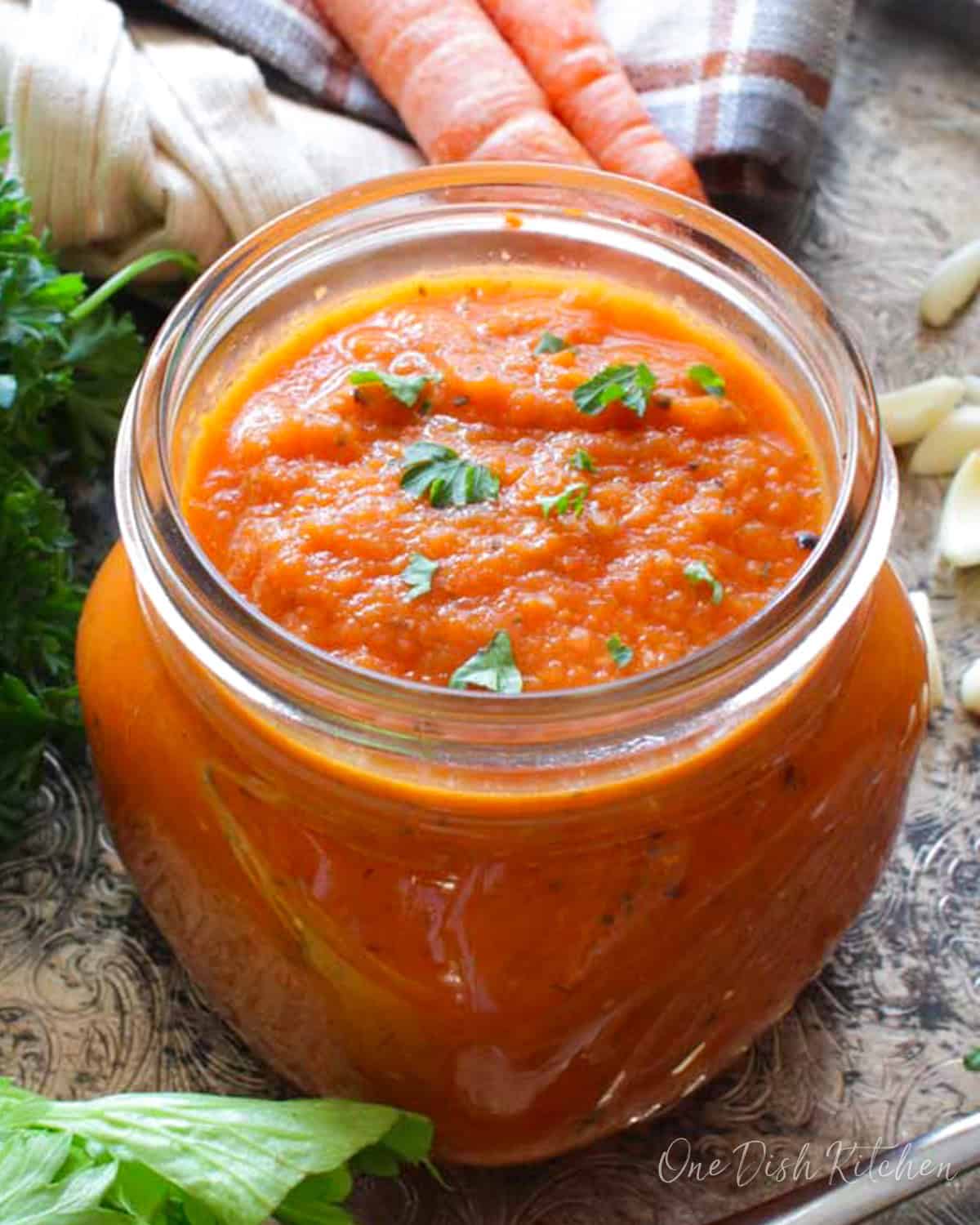
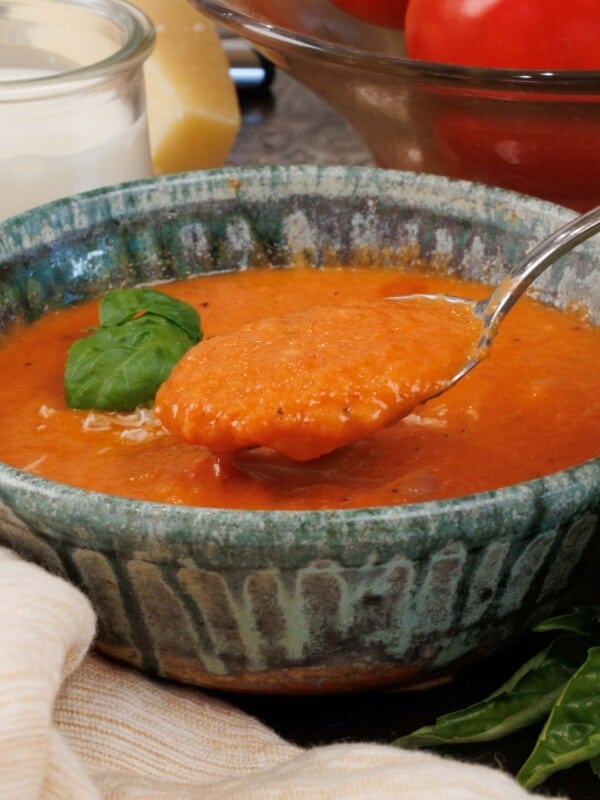
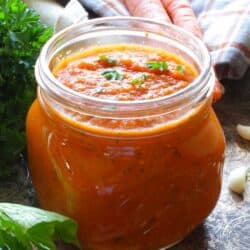
This small batch tomato sauce is rich, flavorful, and ready in about 30 minutes. Made with simple ingredients, it’s a homemade sauce for one or two that works on pasta, pizza, and more.
Featured Comment
“This will be my new sauce to replace the jarred sauces I’ve always purchased. So easy, and made the house smell amazing!”
– Leslie
Quick Look
- Prep Time: 10 minutes
- Cook Time: 30 minutes
- Total Time: 40 minutes
- Equipment: 2-quart saucepan, immersion blender
- Cook Method: Stovetop
- Flavor Profile: Rich, savory, and slightly sweet with Italian herbs.
- Servings: 2 (about 2 cups)
- Difficulty: Easy
This small batch tomato sauce has a rich, savory flavor from sautéed onions, carrots, celery, and garlic, finished with butter and honey for a smooth, balanced taste.
Why I Love This Homemade Tomato Sauce

Every Sunday at my grandmother’s house, her tomato sauce simmered on the stove for hours. The whole kitchen smelled like garlic, tomatoes, and herbs, and by the time we all sat down to eat, that sauce had gone through a slow transformation into something deep, layered, and worth the wait.
This small batch tomato sauce is based on her recipe. I scaled it down to make about 2 cups, enough for one or two servings, starting with the same combination of onions, carrots, and celery that she always used. That combination is called a soffritto, and it’s the foundation of most traditional Italian sauces.
The carrots add natural sweetness, the celery brings a mild, savory note, and the onions soften into the sauce as it simmers. A little butter and honey at the end smooth out the acidity of the tomatoes without making the sauce taste sweet.
I use canned diced tomatoes because they’re consistent year-round and something I almost always have in the pantry. One can is the right amount for a 2-quart saucepan, and I tested the ratios until the consistency and flavor were where I wanted them. You can double the recipe in a larger pot with the same 30-minute simmer time.
This is the sauce I reach for whenever a recipe calls for homemade tomato sauce. It goes on a mini lasagna, small batch stuffed peppers, and a giant Italian meatball. After years of developing single serving and small batch recipes, this sauce is one of the most useful things in my kitchen.
Table of Contents
- Quick Look
- Why I Love This Homemade Tomato Sauce
- Ingredient Notes
- Recipe Variations
- How To Make Small Batch Tomato Sauce
- Expert Tips
- Troubleshooting
- How To Store Small Batch Tomato Sauce
- What To Make With This Tomato Sauce
- Frequently Asked Questions
- Ways To Use Leftover Ingredients
- Small Batch Tomato Sauce Recipe
Ingredient Notes
This easy tomato sauce for one starts with simple pantry staples and a few fresh vegetables. If you have any ingredients leftover from this recipe, check out our Leftover Ingredients Recipe Finder.
Olive oil: Extra virgin olive oil adds flavor to the soffritto and helps the onions, carrots, and celery release their natural sugars as they soften. A lighter olive oil works if you prefer a more neutral taste.
Onions, carrots, and celery: The onions provide sweetness as they cook down, the carrots add natural sugar that helps balance the acidity of the tomatoes, and the celery adds a clean, earthy flavor that balances the sweetness of the onions and carrots. These same vegetables are great in split pea soup for one, small batch chicken stew, and vegetable soup for one.
Garlic: Two cloves of minced garlic add depth and aroma to the sauce. Add garlic after the vegetables have softened because it burns quickly and turns bitter, which can throw off the flavor of the entire sauce. One minute of cooking is enough to take the raw edge off.
Kosher salt and black pepper: Season the soffritto while it cooks so the flavors build from the start rather than sitting on top at the end. You can always adjust at the finish, but early seasoning makes a noticeable difference.
Canned diced tomatoes: One 14.5-ounce can is the right amount for this small batch. San Marzano tomatoes are a good choice here because they’re lower in moisture, have fewer seeds, and carry more natural sweetness than most grocery store brands. That matters in a short 30-minute simmer where the tomatoes don’t have hours to cook down and concentrate. Use any leftover tomatoes in single serving Spanish rice, chicken cacciatore for one, and jambalaya for one.
Dried basil, oregano, and bay leaf: Dried herbs work better than fresh in a simmered sauce because they need time and heat to release their oils. Basil and oregano give the sauce its Italian character, and the bay leaf adds a subtle depth you’d miss if you left it out. Remove the bay leaf before blending.
Butter: Two tablespoons of salted butter stirred in at the end softens the acidity of the tomatoes and adds a subtle richness you won’t get from olive oil alone. My mother and grandmother always finished their sauce this way.
Honey: Half a teaspoon of honey balances whatever tartness remains after the butter. It doesn’t make the sauce taste sweet, it just lets the tomato flavor come through clean. This is a traditional southern Italian technique. Sugar works as a substitute if you don’t have honey on hand.
Recipe Variations
This homemade single serving pasta sauce is a versatile base you can change to match whatever you’re cooking.
Spicy Tomato Sauce (Arrabbiata): Add ⅛ to ¼ teaspoon of crushed red pepper flakes when you add the garlic. The spice blooms in the oil and carries through the whole sauce.
Creamy Tomato Sauce: Stir in 2 to 3 tablespoons of heavy cream after blending for a smooth, creamy sauce. Start with less and add to taste. This version is great over pasta.
Vodka Sauce: Add a splash of vodka after the tomatoes have simmered, let it cook for a few minutes to burn off the alcohol, then stir in heavy cream. The vodka helps the tomato and cream bind together into a smoother sauce. This is the base for penne alla vodka for one.
Meaty Tomato Sauce: Brown ground beef, Italian sausage, or turkey in the saucepan before adding the vegetables. Drain any excess fat, then continue with the recipe as written.
Slow Cooker Tomato Sauce: Sauté the vegetables on the stovetop, then transfer everything to a small slow cooker with the tomatoes and herbs. Cook on low for 4 to 6 hours. The longer simmer deepens the flavor and thickens the sauce without any stirring.
How To Make Small Batch Tomato Sauce
Making homemade tomato sauce is simple and cooks in about 30 minutes. Here’s a quick overview of the process. For ingredient amounts and full instructions, see the recipe card below.
- Cook the vegetables. Heat olive oil in a 2-quart saucepan over medium-high heat. Add the onions, carrots, and celery and cook for about 5 minutes, stirring occasionally, until they soften and start to turn golden at the edges. Add the garlic, salt, and pepper and cook for 1 more minute until the garlic is fragrant. Don’t let the garlic brown.
- Add the tomatoes and herbs. Stir in the diced tomatoes with their juices, dried basil, oregano, and the bay leaf. Bring the sauce to a gentle boil.
- Simmer. Reduce the heat to low and let the sauce cook for 20 minutes, stirring every few minutes to keep it from sticking to the bottom of the pan. The sauce will thicken and the vegetables will break down as it simmers.
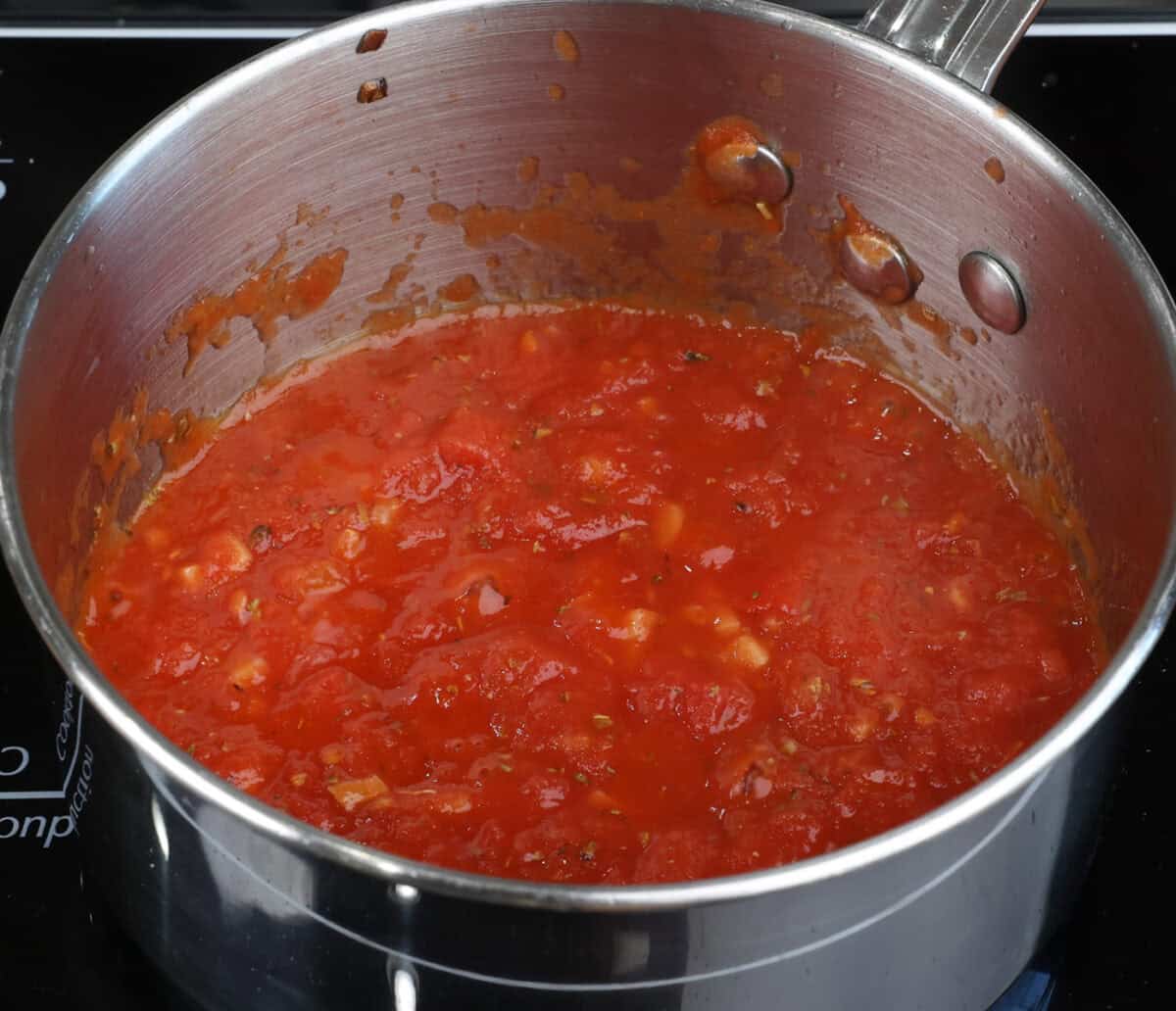
- Blend. Remove the pan from the heat and take out the bay leaf. Use an immersion blender directly in the saucepan, or carefully transfer the sauce to a countertop blender. Blend until the sauce is mostly smooth but still has some texture. You’re not looking for a puree here.
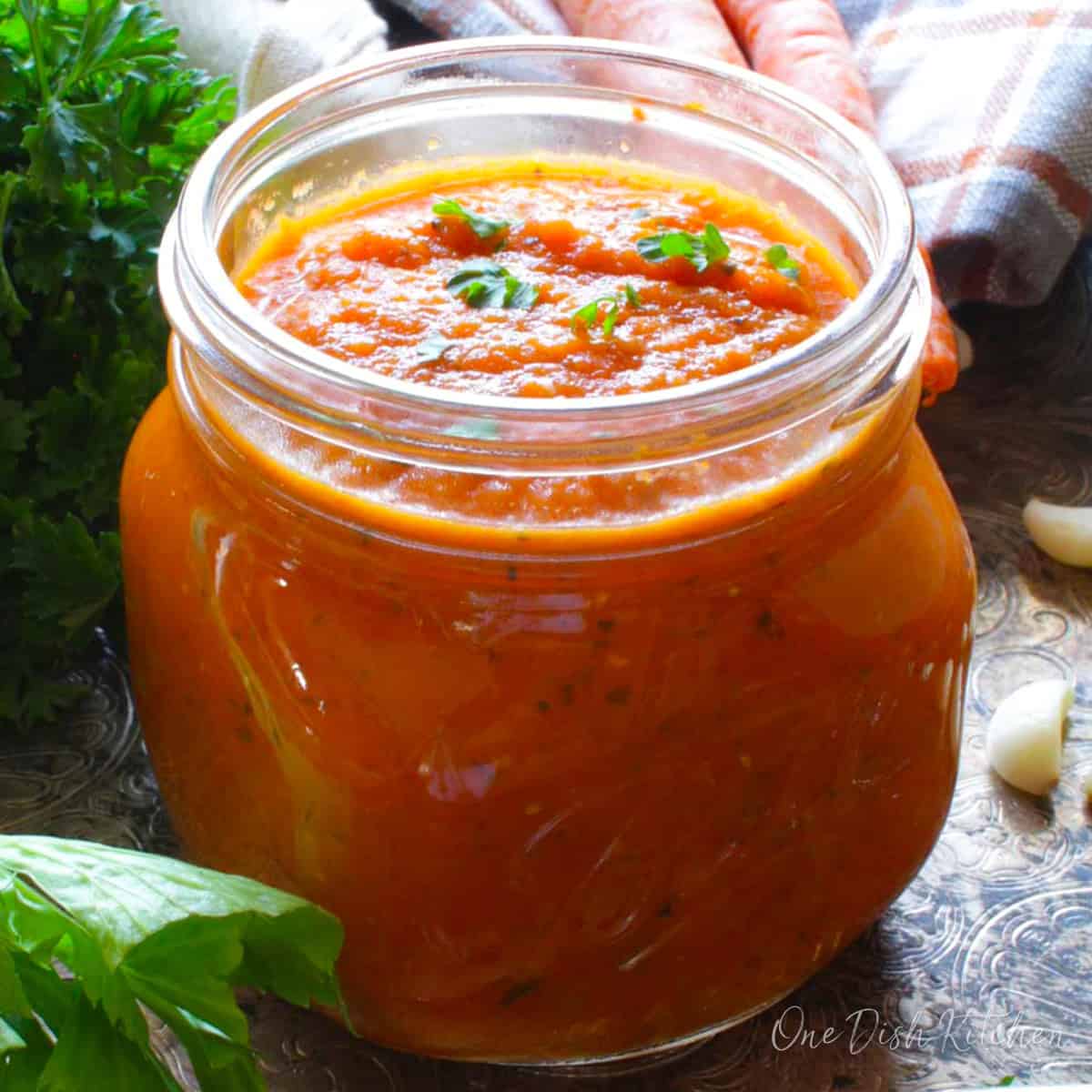
- Finish. Stir in the butter and honey until the butter melts completely. Taste the sauce and add a pinch more salt if it needs it.
Expert Tips
Chop the vegetables into small, even pieces. Smaller pieces cook faster, soften more completely, and blend into a smoother sauce. If the pieces are uneven, some will still be firm when others have broken down.
Don’t skip the butter. Olive oil alone won’t soften the acidity the same way. Butter contains milk solids that change how the sauce tastes on your tongue. Stir it in off the heat so it melts gently into the sauce rather than separating.
Use a 2-quart saucepan. A larger pot spreads the sauce too thin and it will reduce too quickly. A smaller pot won’t give you enough room to stir without splashing. The 2-quart size keeps the sauce at the right depth for an even simmer.
Taste before you blend. Once the sauce is blended, the flavors are locked in. Adjust salt and honey before blending so you know what you’re working with.
Troubleshooting
If your sauce isn’t turning out quite right, here is how to fix common issues like bitterness, acidity, or consistency.
Why is my tomato sauce too thin?
Simmer it uncovered for another 5 to 10 minutes after blending. The extra time evaporates moisture and thickens the sauce. Stir frequently so it doesn’t scorch on the bottom.
Why is my tomato sauce too thick?
Add water one tablespoon at a time, stirring between each addition, until you reach the consistency you want. Adding too much at once will dilute the flavor.
Why does my tomato sauce taste too acidic?
Add another ¼ teaspoon of honey and stir it in. If it still tastes sharp, stir in a small piece of butter. Honey adds sweetness to offset the acid, and butter adds fat that coats your palate and softens the perception of tartness.
Why does my tomato sauce taste flat?
It probably needs salt. Add a pinch of kosher salt, stir, and taste again. Salt brings all the other flavors forward. If it still tastes dull after salting, a tiny squeeze of lemon juice can brighten everything up.
Why does my tomato sauce taste bitter?
Burnt garlic is the most common cause. Garlic goes from golden to bitter in seconds, and once it burns there’s no fixing it in the finished sauce. Add the garlic after the vegetables have softened and cook it for no more than one minute. A bay leaf left in too long can also add bitterness, so remove it after 20 minutes.
Why is my tomato sauce too sweet?
Add a small pinch of salt to balance it. If it’s still too sweet, stir in about ¼ teaspoon of red wine vinegar. The vinegar cuts through the sweetness without making the sauce taste sour.
How To Store Small Batch Tomato Sauce
Refrigerator: Store in an airtight container or glass jar for up to 4 days. Tomato sauce can stain plastic, so glass is a better option if you have it.
Freezer: This sauce freezes well for up to 3 months. Divide into single serving portions using freezer-safe containers or resealable freezer bags. Lay bags flat so they stack easily and thaw faster.
Reheating: Warm the sauce on the stovetop over low heat, stirring occasionally. Add a splash of water if it has thickened during storage. Microwave works too, but stir halfway through to heat it evenly.
What To Make With This Tomato Sauce
This small batch tomato sauce works anywhere a recipe calls for homemade tomato sauce. Here are some of our favorite ways to use it:
Frequently Asked Questions
Yes. Crushed tomatoes will give you a smoother sauce with less blending needed. Whole peeled tomatoes work too, but break them up by hand or with a spoon before simmering so they cook down evenly.
All three are Italian tomato-based sauces, but they differ in complexity and use. Tomato sauce starts with a vegetable base of onions, carrots, and celery, simmers for 30 minutes, and works as an all-purpose base for lasagna, casseroles, and meatballs. Pomodoro is a quicker pasta sauce made with just tomatoes, garlic, and olive oil. Marinara falls in between with garlic and herbs but no vegetables.
Honey balances the natural acidity of the tomatoes without making the sauce taste sweet. It rounds out the flavor so the tomato comes through clean. This is a traditional southern Italian technique. Sugar works as a substitute.
About ½ cup of sauce per single serving of pasta is a good starting point. This recipe yields about 2 cups, which is enough for 3 to 4 servings of pasta depending on how saucy you like it.
You can, but you’ll need about 1 pound of fresh tomatoes (3 to 4 medium), peeled and chopped, to replace one 14.5-ounce can. Fresh tomatoes have more moisture and less concentrated flavor, so the sauce may need a longer simmer to thicken. Canned diced tomatoes are more consistent year-round, which is why this recipe calls for them.
Yes. Mash the sauce with a potato masher or the back of a wooden spoon for a chunkier texture. The sauce will still taste the same, it just won’t be as smooth.
Yes. Double all the ingredients and use a larger pot. The simmer time stays the same at about 20 minutes. You’ll have about 4 cups of sauce, which is enough to freeze half for later.
Ways To Use Leftover Ingredients
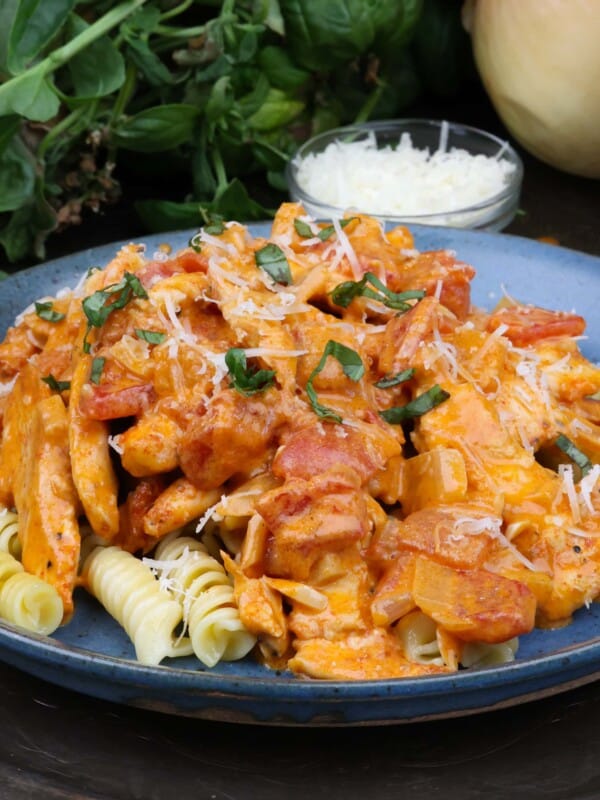
If you have any ingredients leftover from this recipe, check out our Leftover Ingredients Recipe Finder or you might like to consider using them in any of these single serving and small batch recipes:

If you’ve tried this small batch tomato sauce or any recipe on One Dish Kitchen please let me know how you liked it by rating the recipe and telling me about it in the comment section below.
Also, if you take a picture please tag us on Instagram (@onedishkitchen) we’d love to see!
Small Batch Tomato Sauce

Equipment
Ingredients
- 1 tablespoon olive oil
- ½ cup chopped onions
- 1 medium carrot (½ cup chopped)
- 1 celery (⅓ cup chopped)
- 2 cloves garlic -minced
- ½ teaspoon kosher salt
- ¼ teaspoon coarsely ground black pepper
- 1 (14.5-ounce) can diced tomatoes
- ½ teaspoon dried basil
- ½ teaspoon dried oregano
- 1 bay leaf
- 2 tablespoons salted butter
- ½ teaspoon honey
Instructions
- Heat olive oil in a 2-quart saucepan over medium-high heat. Add the onions, carrots, and celery and cook for about 5 minutes, stirring occasionally, until softened and lightly golden at the edges. Add the garlic, salt, and pepper and cook for 1 minute until fragrant.
- Stir in the diced tomatoes with their juices, basil, oregano, and bay leaf. Bring to a gentle boil.
- Reduce heat to low and simmer for 20 minutes, stirring every few minutes to prevent sticking. The sauce will thicken and the vegetables will begin to break down.
- Remove from heat and discard the bay leaf. Blend with an immersion blender directly in the saucepan, or carefully transfer to a countertop blender, until mostly smooth but still slightly textured.
- Stir in butter and honey until the butter melts completely. Taste and adjust salt if needed.
Notes
Nutrition
The information shown is an estimate provided by an online nutrition calculator. It should not be considered a substitute for a professional nutritionist’s advice.

I’m middle aged, 100% Italian originally from Brooklyn, New York & made Tomato Sauce a hundred times & eaten my Grandmothers’, Mom’s & Aunts’ sauces.
I was blown away after making your recipe for the first time today. Girl, it was outstanding! I’m throwing away all the handwritten recipes I’ve kept all these years. YOURS is the only one I need from now on.
Thank you Joanie for this fabulous recipe…..and all the others of yours that I’ve been making since my husband passed & I saw your column & bought your book. You’ve made me very happy.
What a wonderful message — thank you for sharing this with me. I’m so touched by your kind words and honored that my recipe brought back such special memories. It truly means a lot to know my recipes have a place in your kitchen.
I made this tonight to serve with fast cook ravioli. Worked out well but it was in too tall a pot for me effectively to blend it. (Coulda used my blender, may do that tomorrow.) But it was good, a bit redder than in the picture, and kind of rustic, which I don’t mind. I don’t use a lot of sauce so I think I may be using this in various preparations this week. Thanks; I’m so grateful for your site!
This will be my new sauce to replace the jarred sauces I’ve always purchased. So easy, and made the house smell amazing!
I like using my mini crockpot when I can. Can I double this recipe dump in my mini for 3 or 4 hours on high and go about my day?
It should turn out just fine in your slow cooker.
I can’t say enough how much I love this sauce!!! I make it almost every day. I am making the manicotti today and I can’t wait!! Thanks for the great recipe!!
I’ve just finished making this sauce which turned out delish.. I did add another 1/2 TSP honey& a sprinkle of both garlic& onion powder & salt to suit my taste.. But really it’s fab… Will definitely make again😊 It’s to go with your chicken Parm for one..
Take care Joanie.. Oh, and I downloaded the dessert recipes after I subscribed to your newsletter.. (thank you) They were making my mouth water!
Lorna..🏴😊
Thank you so much, Lorna. I’m so happy you enjoyed it and hope you love the dessert recipes!
I’m wowed how good this tastes. So fresh and delicious. I used organic fire roasted tomatoes. It made just enough sauce for my chicken Parmesan zucchini boat recipe. My child wanted to lick the spoon she loved it so much!
I rarely use celery. Even cooking for 6 at holidays I only use a few stalks in dressing and throw out the rest after it’s been in fridge 2 months. So I keep celery seed to sprinkle in my potato salad or chicken salad recipe. How much celery seed would you suggest to substitute for your 1 stalk in this recipe? Or just leave it out?
I would start with using 1/4 teaspoon of celery seed and taste the sauce. Add additional celery seed until you reach your desired flavor.
Terrific!! Thank you….💖
How long can this keep please?
This sauce will last for 3 to 4 days, covered in the refrigerator. It can also be stored in the freezer; freeze in a covered airtight container or heavy-duty freezer bag. It will last for up to 3 months in the freezer.
I’m so glad I found your website. I love to cook, but it’s only me at home. So these recipes are perfect.
halved this to make a panini. perfect. thank you
I really appreciate your kindness in putting up a “skip to recipe” button at the top of your page/blog.
When I’m and many others are looking for recipes nothing is more frustrating than have to scroll down looking for the recipe or hidden link to it.
Like others I’m sure if I like what the recipe looks like I’ll go back later and read blog about the recipe.
Wish the rest of the bloggers would take a hint and do the same.
Thank You
Thank you for taking the time to let me know you like the “Jump To Recipe” feature. We strive to keep our site very user-friendly and want our readers to always have a good experience when visiting. I’m glad you like that feature, I know I do when I visit other websites.
Joanie
Thank you for your cooking for one or two recipes and the “jump to recipe is a great help. Much needed recipes for us small families. Now if we could just get the manufacturer’s to produce one smaller amounts. Not 5 pounds etc.
Can the sauce be canned using water bath? I am thinking tjis would be a great gift for some of my “older” friends.
Absolutely love this site.
Hi Carol,
I’m so glad you are enjoying the recipes. Jars of this tomato sauce would make lovely gifts and I love that idea! I’ve actually never canned this sauce so I can’t tell you if and how it would work. I haven’t experimented with it yet, sorry.
Best,
Joanie
I have, and it worked great! I used half pint jars so I could truly have “single servings”.
I just found your website and I’m more than happy…. the recipes look delicious. Today I’m going to make the tomato sauce. I was wondering about your little blue pot….. where oh where did you find it…. please tell me I can buy one. I love small pots, pan and dishes. Thank you, Peggy
Thank you for the info…. just ordered the blue pot and 5 inch baking dish from Amazon today. Thank you. By the way, the tomato sauce was yummo delish!!!
Hi Peggy, I think you will love the blue pot. It works well as a slow cooker and I love that you can use the pot on the stove too. The small baking dish is the one I use to make most of the single-serving recipes here, I think you’ll love the size. Hope you have a wonderful weekend and I’m so happy you enjoyed the tomato sauce!
I am planning to make this, as I am trying to get away from jarred soups and sauces (too much salt and sugar!). I was wondering, can this be made with fresh tomatoes instead of canned? If so, how much would I use and are the cooking instructions altered at all by using fresh? Thanks for the wonderful recipes!
I just found this site and am delighted. I was the oldest of 10 children, so I learned to cook big. I am now a widow. I am learning how to shop and cook for one. Not an easy task.I much prefer fresh to processed food.I think learning to shop for one is a challenge. I am lucky enough to have a grocery store that provides many options for the single person. Thank you for providing this site. I am sure I will be experimenting with new recipes soon. I am 76 and want to prove you CAN reach an old dog new tricks. Again thank you.
Hi Rae,
Thank you for your note. I’m so happy you found our site and hope you find many new recipes to try.
Joanie
This will come in super handy! Thanks for sharing!
This would be perfect for my daughter. She only cooks for herself, doesn't need massive quantities of sauce.
This looks so delicious.
Love the small batch because three of the four of us only like a smidgen of sauce on our pasta, so I hate having a ton extra.
I grew up in an Italian Irish home too, and we called my Italian grandmother mama! =)
Nothing beats homemade tomato sauce and your small batch version is so practical.
I like the idea of making a small batch. Looks and sounds wonderful! I'm Irish too (at least my ancestors were) and my husband is half Italian. 🙂
that is actually a perfect gift for the non-cooks in your life!
Nothing better than homemade tomato sauce. Looks chunky and delicious!
I have to agree, Thanks, Miryam!
What a great idea for a small batch. I often make too much and my freezer is too full for more.
I'm so going to use this recipe! I'v always wanted to try making my own tomato sauce but found it TOO much to cook/store.
Love that this is a small batch of tomato sauce. YUM! I always shy away from making it, because I always end up making too much. I gotta try this!
You just can't beat a really good homemade tomato sauce! Love the simplicity of the ingredients list and the small batch size.
I have always wanted to try homemade sauce. Thanks for the recipe!
Oh yum, this sauce looks so incredible! I Love that its homemade
Wow! This looks so yummy! A small batch is a great idea to minimize waste!
This looks delicious and I love how it's in a smaller quantity!
You're making me rethink dinner. 🙂
I come from a big Italian family, too, and there's nothing better than Sunday meals with the family! This sauce looks so great — and made from love, for sure! I've never made tomato sauce with carrots, and I bet they add great flavor! Thanks for sharing!
This tomato sauce looks amazing! It is smart to freeze it in such small batches since I always make pasta in small batches as well!
Looks like such a delicious sauce. Much better than store bought!
I love this idea of a small batch. I bet it would be great to freeze so it can always be on hand.
Why the heck have I not been making my own tomato sauce?!?!? I LOVE this! Do you think it would freeze well too??
Homemade tomato sauce is the best, Chrissa. I don't know if this sauce freezes well, since it only makes 2 cups I've never had a need to freeze it. It's the perfect size for one or two meals.