
This post may contain affiliate links. Please read our disclosure policy.
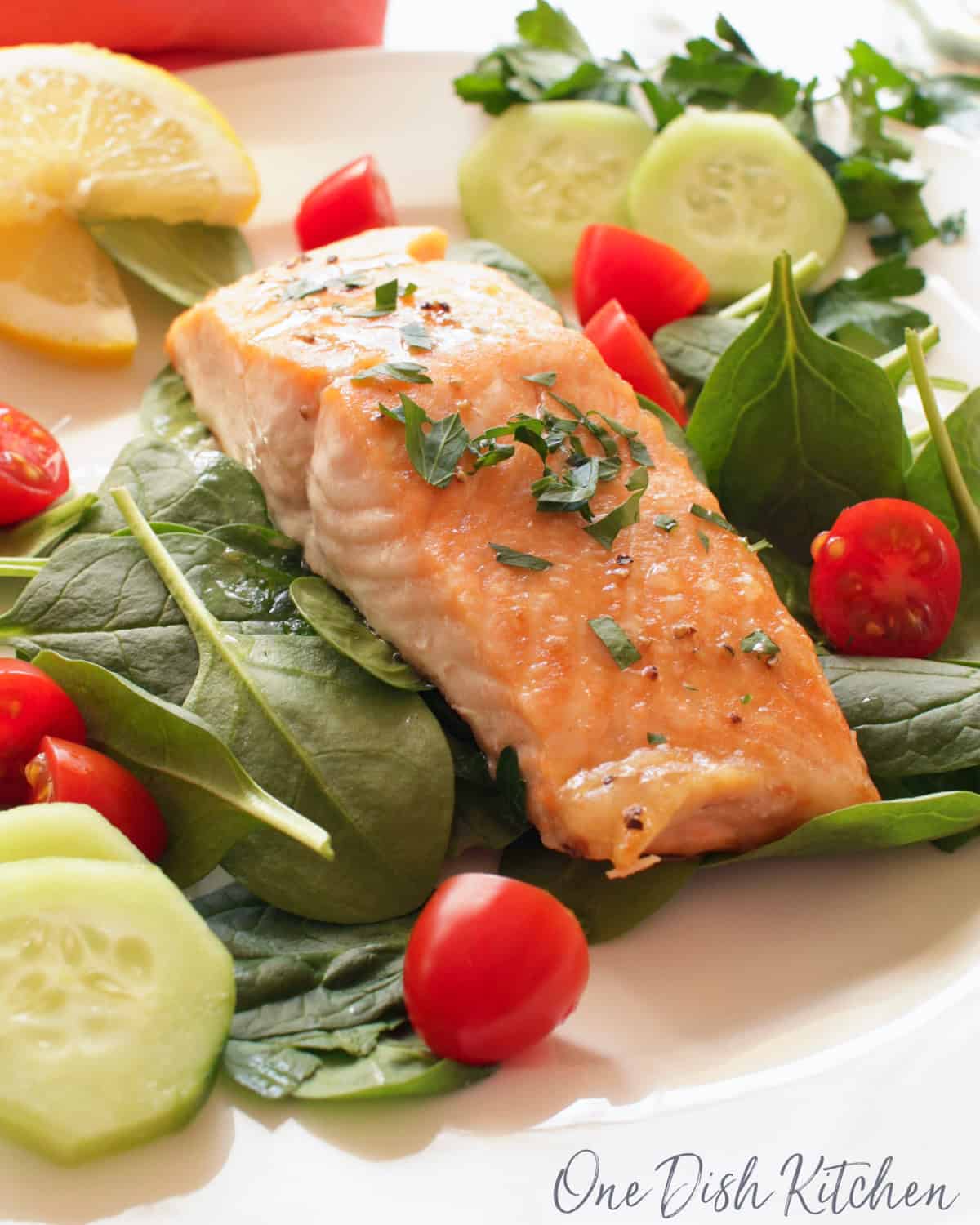
A single serving salmon fillet brushed with sweet maple syrup and tangy Dijon mustard, roasted until tender and lightly caramelized. Ready in 15 minutes for an easy salmon dinner for one.
Featured Comment
“The flavor of the salmon was wonderful, and the texture was perfect. Thank you for yet another great recipe. This is my go-to site for delicious food for one or two people!”
– Margaret
Quick Look
- Prep Time: 5 minutes
- Cook Time: 15 minutes
- Total Time: 20 minutes
- Equipment: Rimmed baking sheet
- Cook Method: Oven roasted
- Servings: 1
- Difficulty: Easy
This single serving roasted salmon with maple Dijon glaze is made with a 4 to 6 ounce salmon fillet, maple syrup, Dijon mustard, salt, and pepper, then roasted at 400°F until the glaze is lightly caramelized and the salmon flakes easily with a fork.
Why You’ll Love This Easy Roasted Salmon Recipe

I love how this single serving salmon recipe takes a simple piece of salmon and turns it into a dinner that feels a little more thoughtful, with very little extra effort.
Roasting salmon is one of the best ways to cook salmon when you’re cooking for yourself. The dry heat does the work without flipping, without splatter, and without the risk of overcooking that comes with a hot skillet.
You stir together two ingredients, brush them on top, and the oven does the rest in 15 minutes.
Maple syrup is what gives this salmon its glossy, lightly caramelized top. The sugars in the syrup brown gently in the oven and create a thin coating that clings to the fillet. Dijon mustard balances that sweetness with sharpness, so the glaze tastes savory rather than just sweet. The ratio of maple syrup to Dijon doesn’t have to be exact, which makes this an easy recipe to get right even the first time you make it.
After years of testing single serving recipes, this roasted salmon recipe is one I come back to again and again because it’s nearly impossible to mess up.
If you want a different method, our Baked Salmon in Foil For One is wrapped and steamed for the most tender texture, our Sheet Pan Salmon and Asparagus For One cooks the salmon and a vegetable on one pan, and our Broiled Salmon For One gives you a crisp exterior in 15 minutes.
Table of Contents
- Quick Look
- Why You’ll Love This Easy Roasted Salmon Recipe
- Ingredient Notes
- How To Choose The Best Salmon
- Recipe Variations
- How To Roast Salmon With Maple Dijon Glaze
- Expert Tips
- Salmon Doneness Temperatures
- Troubleshooting
- Serving Suggestions
- Frequently Asked Questions
- Ways To Use Leftover Ingredients
- Roasted Salmon For One Recipe
Ingredient Notes
If you have any ingredients leftover from this simple salmon recipe for one, check out our Leftover Ingredients Recipe Finder.
Salmon Fillet: Use a 4 to 6 ounce salmon fillet for one person. Skin-on or skinless both work, but skin-on holds together better when you lift the fillet off the pan. Steelhead trout can be substituted for a similar rich, flaky texture. For guidance on choosing between Sockeye, Coho, King, or Atlantic salmon, see the section below. If you have an extra fillet, use it in our salmon rice bowl or single serving salmon bites.
Maple Syrup: Use pure maple syrup, not pancake syrup or maple-flavored syrup. The real thing is what gives the glaze its signature flavor and helps it caramelize properly in the oven. Save extra for our single maple muffin or small batch maple granola.
Dijon Mustard: Dijon adds tang and balances the sweetness of the maple syrup. Smooth Dijon works best here for a clean, even glaze, but coarse-grain Dijon is fine if that’s what you have. Yellow mustard isn’t a good substitute because it lacks the sharpness Dijon brings.
Kosher Salt and Black Pepper: Kosher salt seasons the salmon evenly and dissolves into the glaze. Coarsely ground black pepper adds a small bite that balances the sweet-savory glaze.
How To Choose The Best Salmon
Choosing the right salmon variety affects flavor, texture, and how the fillet cooks. Here’s what to look for at the seafood counter.
Look for fillets that are vibrant in color and moist with no browning or separating flakes. Run your fingers along the surface to check for pin bones and pull any out with tweezers before cooking. Use the chart below to choose the variety that fits the flavor and texture you want.
| Variety | Flavor | Texture | Fat Content |
|---|---|---|---|
| Sockeye (Red Salmon) | Bold, pronounced salmon flavor | Firm with small, tight flakes | Lower |
| Coho (Silver Salmon) | Mild, delicate | Tender with medium flakes | Medium |
| King (Chinook) | Rich, buttery | Tender, large flakes, melts in the mouth | Highest |
| Atlantic | Mildest of the salmon varieties | Soft, fatty, large flakes | High (typically farmed) |
Recipe Variations
These easy variations let you change the flavor without changing the cook time:
Herb Roasted Salmon: Skip the maple Dijon glaze. Brush the salmon with ½ teaspoon olive oil and press 1 tablespoon of chopped fresh herbs (dill, parsley, basil, or a combination) onto the top before roasting. The herbs crisp slightly in the oven and give the salmon a fresh, savory flavor.
Citrus Maple Dijon Salmon: Add ½ teaspoon fresh lemon zest or orange zest to the glaze. The citrus oils brighten the sweet-savory balance and pair well with the maple syrup.
Spicy Maple Dijon Salmon: Add a pinch of red pepper flakes or a small dash of hot sauce to the glaze. The heat balances the sweetness and gives the salmon a savory, slightly spicy edge.
Garlic and Ginger Salmon: Replace the maple syrup with 1 teaspoon olive oil. Stir together with ½ teaspoon Dijon mustard, ¼ teaspoon minced garlic, and ¼ teaspoon freshly grated ginger. The garlic and ginger give the salmon a savory, aromatic finish without the sweetness of the standard glaze.
How To Roast Salmon With Maple Dijon Glaze
See the recipe box below for ingredient amounts and full recipe instructions.
- Preheat the oven. Heat the oven to 400°F.
- Make the glaze. In a small bowl, stir together the Dijon mustard and maple syrup until smooth.
- Prepare the salmon. Pat the salmon fillet dry with a paper towel and place it skin-side down on a lightly oiled rimmed baking sheet. Season with salt and pepper.
- Glaze the salmon. Spoon the glaze evenly over the top of the fillet, using the back of the spoon to spread it into a thin, even coating.
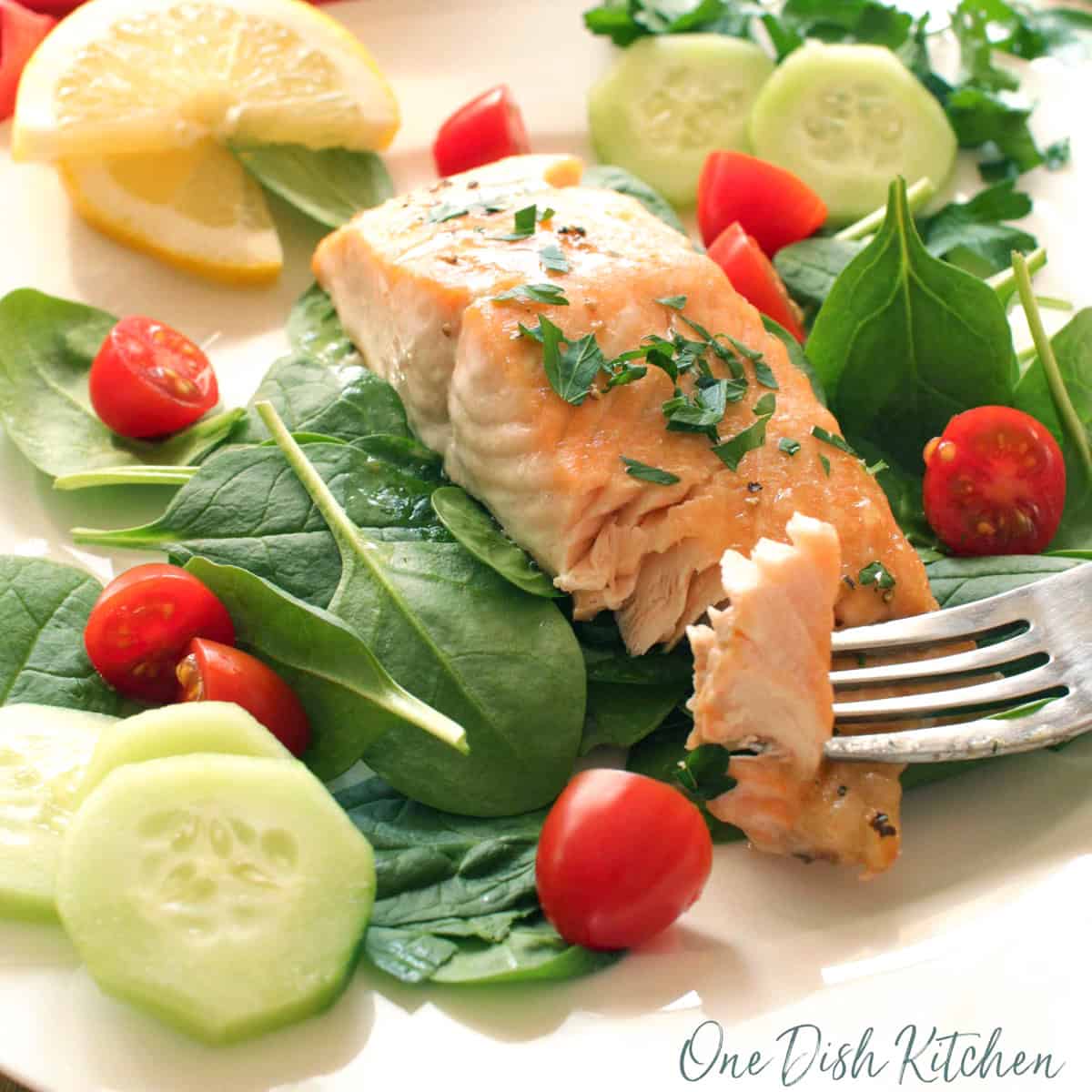
- Roast. Bake for 12 to 15 minutes, until the salmon flakes easily with a fork. For tender, moist salmon, pull it from the oven when an instant-read thermometer reads 135°F at the thickest part of the fillet.
- Rest and serve. Let the salmon rest on the pan for about 5 minutes before serving. The internal temperature will rise about 5 degrees as it sits, finishing the cook gently.
Expert Tips
Reserve some glaze for finishing (optional). Double the glaze (1 teaspoon Dijon, 1 tablespoon maple syrup) and divide it in half before brushing. Brush half on the raw salmon, then brush the rest on after baking using a clean spoon.
Pat the salmon dry before glazing. Surface moisture causes the glaze to run off the fillet. A quick blot with a paper towel helps the glaze adhere and form a thin, even coat that caramelizes properly.
Use pure maple syrup. Pancake syrup and maple-flavored syrup contain corn syrup and won’t caramelize the same way. The real thing is what gives the glaze its signature color and flavor in the oven.
Watch closely in the last 2 minutes. Maple syrup can go from golden to bitter quickly because the sugars caramelize fast at 400°F. Check the salmon at the 10-minute mark and watch the glaze color closely from there.
Use an instant-read thermometer. A fork test tells you when the salmon flakes, but a thermometer tells you exactly where you are on the doneness spectrum. Insert the probe into the thickest part of the fillet. See the salmon doneness chart below.
Salmon Doneness Temperatures
Salmon can be cooked to different levels of doneness depending on your preference. Use the chart below as a guide, and check the thickest part of the fillet with an instant-read thermometer.
| Internal Temperature | Doneness | Texture |
|---|---|---|
| 120°F | Medium-rare (wild salmon) | Soft, silky, slightly translucent center |
| 125°F | Medium-rare (farmed salmon) | Tender and moist, just opaque |
| 135°F | Medium (my preference) | Tender, moist, fully cooked through |
| 145°F | Well done (FDA recommendation) | Firm, fully opaque, drier |
After cooking, let the salmon rest for 5 minutes. The internal temperature will rise about 5 degrees as it sits, so pull the salmon at your target temperature minus 5 degrees.
Troubleshooting
Use these fixes if your salmon doesn’t turn out the way you expected.
The salmon is dry or chewy. It baked too long or hit a temperature higher than 145°F. Remove it from the oven earlier next time, ideally at 135°F, and let it rest 5 minutes off the heat. A 4 to 6 ounce fillet at 400°F can go from moist to dry in just a couple of minutes past the target temperature.
The salmon is undercooked in the center. The thickest part of the fillet hasn’t reached your target temperature yet. Return it to the oven for 2 to 3 more minutes, then check again with a thermometer. Thicker fillets need closer to the full 15 minutes.
The salmon stuck to the pan. Either the pan wasn’t oiled, or the salmon was overcooked. Lightly coat the pan with olive oil before placing the fillet on it. If you used skin-on salmon, the skin may have stuck. That’s normal, and the flesh should still lift off cleanly with a spatula.
Serving Suggestions
Round out your roasted salmon with one of these single serving sides:
Frequently Asked Questions
Bake a 4 to 6 ounce salmon fillet at 400°F for 12 to 15 minutes. The salmon is done when it flakes easily with a fork and reaches 135°F at the thickest part. Thicker fillets need closer to 15 minutes; thinner fillets check at 12.
Salmon is done when it reaches an internal temperature of 135°F at the thickest part and flakes easily with a fork. The FDA-recommended fully cooked temperature is 145°F. For tender, moist salmon, pull it from the oven at 135°F.
Cook 4 to 6 ounces of raw salmon per person. A 4 to 6 ounce fillet is a satisfying single serving and yields about 3 to 4 ounces of cooked salmon after natural moisture loss during baking.
No, honey burns at lower temperatures than maple syrup and can turn bitter at 400°F. Maple syrup caramelizes properly at this temperature and gives the glaze its signature flavor. If you want to use honey, lower the oven temperature to 375°F and watch closely.
No, it’s best to thaw frozen salmon completely in the refrigerator before cooking. Frozen salmon releases extra water as it bakes, which dilutes the glaze and prevents it from caramelizing on top of the fillet.
Store cooked salmon in an airtight container in the refrigerator for up to 3 days. Reheat gently in a 275°F oven for 10 to 12 minutes, covered with foil, to keep it from drying out. Avoid the microwave when possible, as it tends to overcook the fish.
Ways To Use Leftover Ingredients
If you have any ingredients leftover from this recipe, check out our Leftover Ingredients Recipe Finder or you might like to consider using them in any of these single serving and small batch recipes:
If you’ve tried this easy salmon dinner for one or any recipe on One Dish Kitchen, I’d love to hear what you think. Please leave a star rating and a comment below to let me know how it turned out. If you take a picture, tag us on Instagram (@onedishkitchen). We love seeing what you make.
Roasted Salmon For One
Equipment
Ingredients
- 1 (4 to 6 ounce) salmon fillet
- ½ teaspoon dijon mustard
- 1 ½ teaspoons maple syrup
- ⅛ teaspoon kosher salt
- ⅛ teaspoon coarsely ground black pepper
Instructions
- Preheat the oven to 400°F (200°C).
- In a small bowl, stir together the Dijon mustard and maple syrup until smooth.
- Pat the salmon fillet dry with a paper towel and place it skin-side down on a lightly oiled rimmed baking sheet. Season with salt and pepper.
- Spoon the glaze evenly over the top of the fillet, using the back of the spoon to spread it into a thin, even coating.
- Bake for 12 to 15 minutes, until the salmon flakes easily with a fork or reaches 135°F at the thickest part for tender, moist salmon.
- Let the salmon rest on the pan for about 5 minutes before serving.
Notes
Nutrition
The information shown is an estimate provided by an online nutrition calculator. It should not be considered a substitute for a professional nutritionist’s advice.












This is my go-to salmon recipe. Salmon can be kind of strong-tasting, and the glaze tempers that a bit.
I made this last night for my husband and myself. It was delicious! Great flavor and salmon was tender and flaky.
I made this for dinner tonight, really enjoyed it, was delicious , Thank you for the recipe !!!
The flavor of the salmon was wonderful, and the texture was perfect. Thank you for yet another great recipe. This is my go-to site for delicious food for one or two people! Thank you, you never disappoint
I used sockeye salmon. This was amazing! Great flavor and so easy!
I love sockeye salmon! I’m so happy you enjoyed the recipe.
Great salmon but only get a hint of the glaze. Most of it ran off before I got it in the oven. What am I doing wrong?
Some of the glaze should melt into the salmon but some will also run off onto the pan. If you’d like a more intense flavor from the glaze, I would double the glaze ingredients.
I actually don’t use the syrup/mustard glaze as a glaze. I just micro-zap it to warm it up and then use it after cooking as a “gravy” for the salmon.
Love the glaze! So glad to have found recipes for one for this empty nester!
Thank you, Julie.
Fast and easy recipe…good flavor
Delicious!! I’m making this tonight for the second time with roasted carrots, spinach salad. I can’t get enough!!
Sounds wonderful! I’m so happy you are enjoying the recipe.
I’m anxious to try the salmon suggestion, I need to eat it more often so maybe this will improve my recipe.