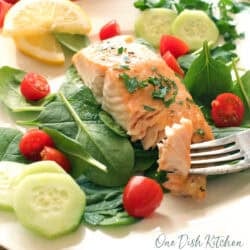
Salmon With Maple Dijon Glaze For One
This single serving salmon is brushed with a maple Dijon glaze and roasted until tender and lightly caramelized. Cooks in just 15 minutes.
Servings: 1 serving
Equipment
Ingredients
- 1 (4 to 6 ounce) salmon fillet
- ½ teaspoon dijon mustard
- 1 ½ teaspoons maple syrup
- ⅛ teaspoon kosher salt
- ⅛ teaspoon coarsely ground black pepper
Instructions
- Preheat the oven to 400°F (200°C).
- In a small bowl, stir together the Dijon mustard and maple syrup until smooth.
- Pat the salmon fillet dry with a paper towel and place it skin-side down on a lightly oiled rimmed baking sheet. Season with salt and pepper.
- Spoon the glaze evenly over the top of the fillet, using the back of the spoon to spread it into a thin, even coating.
- Bake for 12 to 15 minutes, until the salmon flakes easily with a fork or reaches 135°F at the thickest part for tender, moist salmon.
- Let the salmon rest on the pan for about 5 minutes before serving.
Notes
Reserve some glaze for finishing (optional). Double the glaze (1 teaspoon Dijon, 1 tablespoon maple syrup) and divide it in half before brushing. Brush half on the raw salmon, then brush the rest on after baking using a clean spoon.
Pat the salmon dry before glazing. Surface moisture causes the glaze to run off the fillet. A quick blot with a paper towel helps the glaze adhere and form a thin, even coat that caramelizes properly.
Use pure maple syrup. Pancake syrup and maple-flavored syrup contain corn syrup and won't caramelize the same way. The real thing is what gives the glaze its signature color and flavor in the oven.
Watch closely in the last 2 minutes. Maple syrup can go from golden to bitter quickly because the sugars caramelize fast at 400°F. Check the salmon at the 10-minute mark and watch the glaze color closely from there.
Use an instant-read thermometer. A fork test tells you when the salmon flakes, but a thermometer tells you exactly where you are on the doneness spectrum. Insert the probe into the thickest part of the fillet.
Nutrition
Calories: 230kcal | Carbohydrates: 8g | Protein: 12g | Fat: 12g | Sodium: 29mg | Sugar: 6g | Calcium: 11mg
QR code
Scan this QR code with your phone's camera to view this recipe on your mobile device.
