This post may contain affiliate links. Please read our disclosure policy.
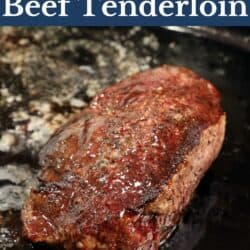
Learn how to cook a small beef tenderloin steak at home with a hot cast iron skillet, a quick sear, and a few minutes in the oven. This single serving beef tenderloin recipe gives you a golden crust and a juicy, tender center in about 25 minutes.
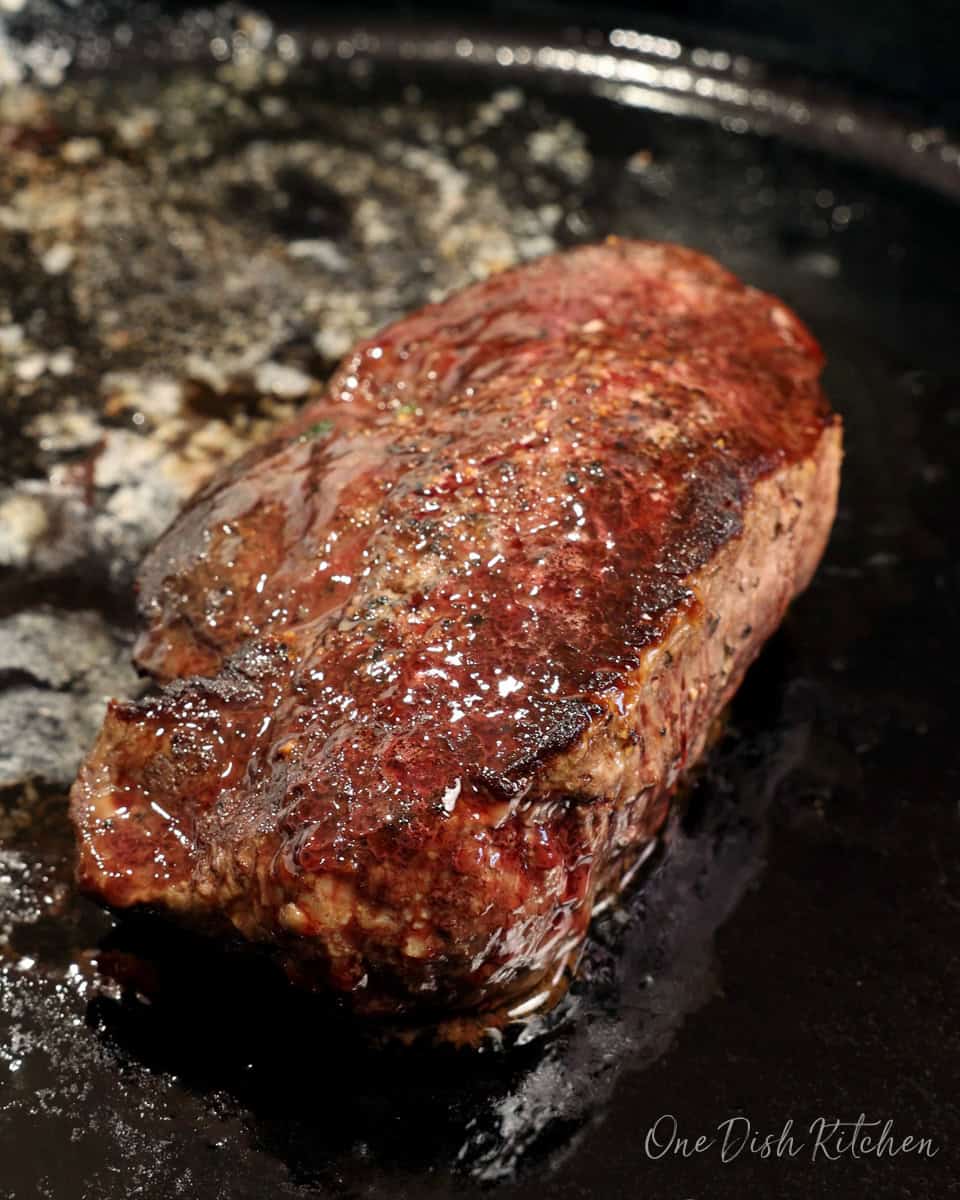
Featured Comment
“I am not a confident cook, but this…THIS I can do! It was so tender, so delicious!”
– Laura
Quick Look
- Prep: 5 minutes
- Cook: 15 minutes
- Total: 25 minutes (includes 5 minutes resting)
- Servings: 1
- Equipment: 10-inch cast iron skillet
- Cook method: Seared on the stovetop, finished in the oven
- Difficulty: Easy.
A beef tenderloin steak recipe that sears a 6-ounce steak in a hot cast iron skillet, then roasts it in the oven to your target doneness.
What is Beef Tenderloin?

Beef tenderloin is the most tender cut of beef. It comes from the short loin, a muscle that barely does any work, which is why it’s so tender and cooks quickly. A filet mignon is the same cut, just the smaller center portion. So when you see “beef tenderloin steak” or “filet mignon” at the meat counter, you’re looking at the same muscle, different names.
For one person, I buy a single 6-ounce steak about an inch thick. That’s the right size for one serving, and it cooks beautifully in a hot cast iron skillet in just a few minutes.
A good tenderloin doesn’t need much. The flavor is subtle compared to a ribeye, so you don’t want to bury it under heavy rubs or sauces. A hot pan, good salt, and a thermometer are all you need to get it right.
If you like cooking a nice cut of meat for yourself, you might also enjoy my pork tenderloin for one, sheet pan steak and potatoes for one, or pepper steak for one.
Table of Contents
Ingredient Notes
If you have any ingredients leftover from this small beef tenderloin recipe, check out our check out our Leftover Ingredients Recipe Finder.
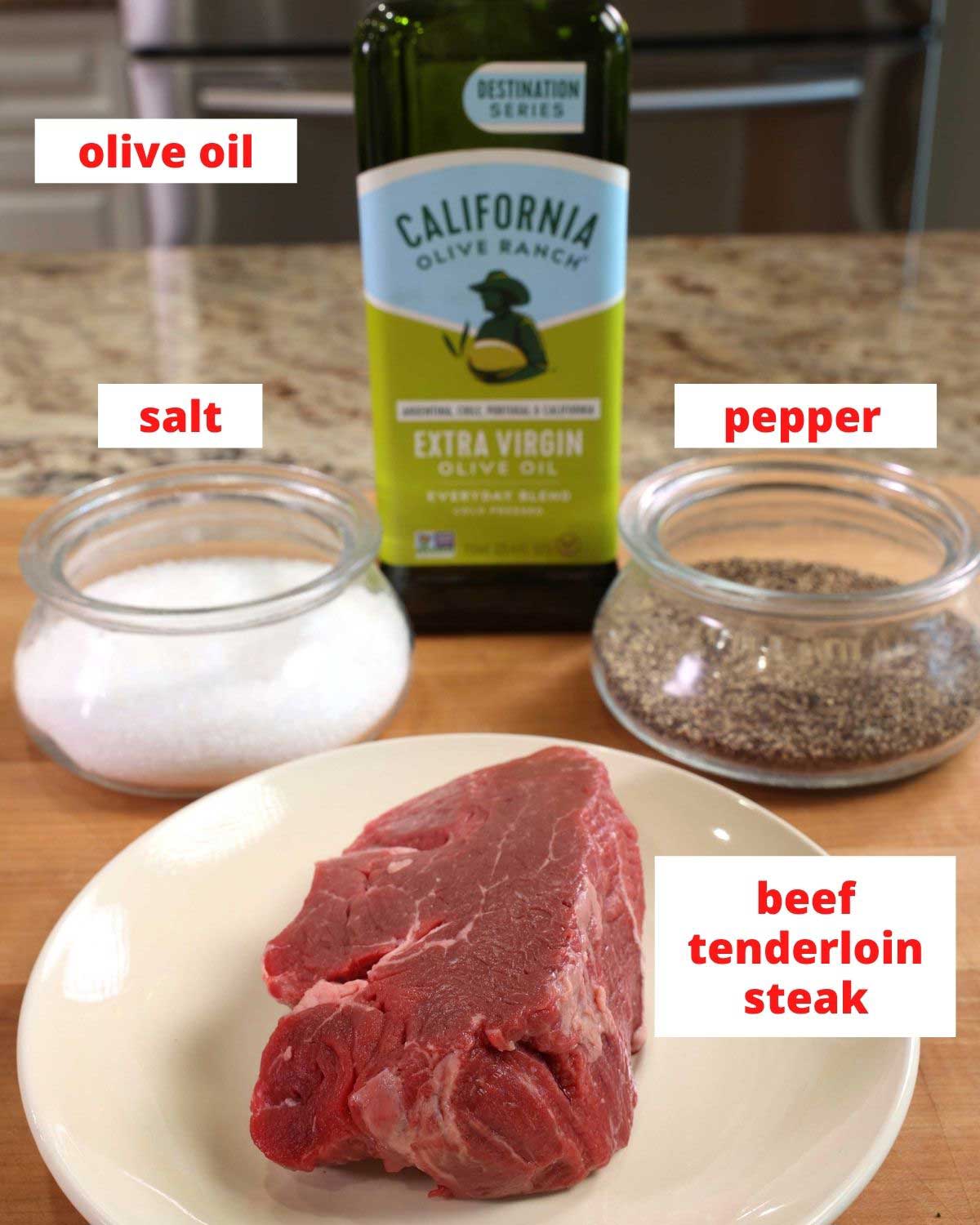
Beef tenderloin steak: Look for a 6-ounce steak about 1 inch thick. Ask your butcher for a center-cut piece (sometimes called filet of beef or tenderloin filet) for uniform thickness. USDA Prime, Choice, or Angus grades give the best flavor. Filet mignon works too since it’s cut from the same muscle.
Olive oil: A small amount coats the pan for the sear. Avocado oil works as a substitute.
Kosher salt and black pepper: Season both sides of the steak generously. The salt draws moisture out of the surface, which is what gives you a crisp brown crust instead of a steamed gray one. Freshly cracked black pepper has more flavor than pre-ground.
Butter: Salted butter added at the end melts over the hot steak and mixes with the pan juices to create a simple sauce. Ghee is a good swap if you want butter flavor without the milk solids.
Looking for more easy dinner ideas for one? Start here with our 35 favorite single serving dinners.
Recipe Variations
Here are a few simple ways to change up this beef tenderloin steak recipe based on what you have on hand:
Garlic Herb Butter: Mix 1 tablespoon softened butter with a minced garlic clove and a teaspoon of chopped fresh parsley, thyme, or rosemary. Place the compound butter on the hot steak as it rests so it melts into a quick herb sauce.
Blue Cheese Topping: Crumble about 2 tablespoons of blue cheese or Gorgonzola over the steak during the last minute in the oven. The cheese softens and melts into the surface for a sharp, creamy finish.
Sautéed Mushrooms and Onions: While the steak rests, sauté 1/4 of a sliced onion and a handful of sliced mushrooms in the pan drippings over medium heat. Cook for 4 to 5 minutes, stirring occasionally, until the onions soften and the mushrooms release their liquid and start to brown. Season with a pinch of salt and spoon over the sliced tenderloin.
Peppercorn-Crusted Steak: Press a heavy layer of coarsely cracked black peppercorns into both sides of the steak before searing. The pepper forms a spicy, fragrant crust during the sear and mellows in the oven.
How To Cook A Small Beef Tenderloin
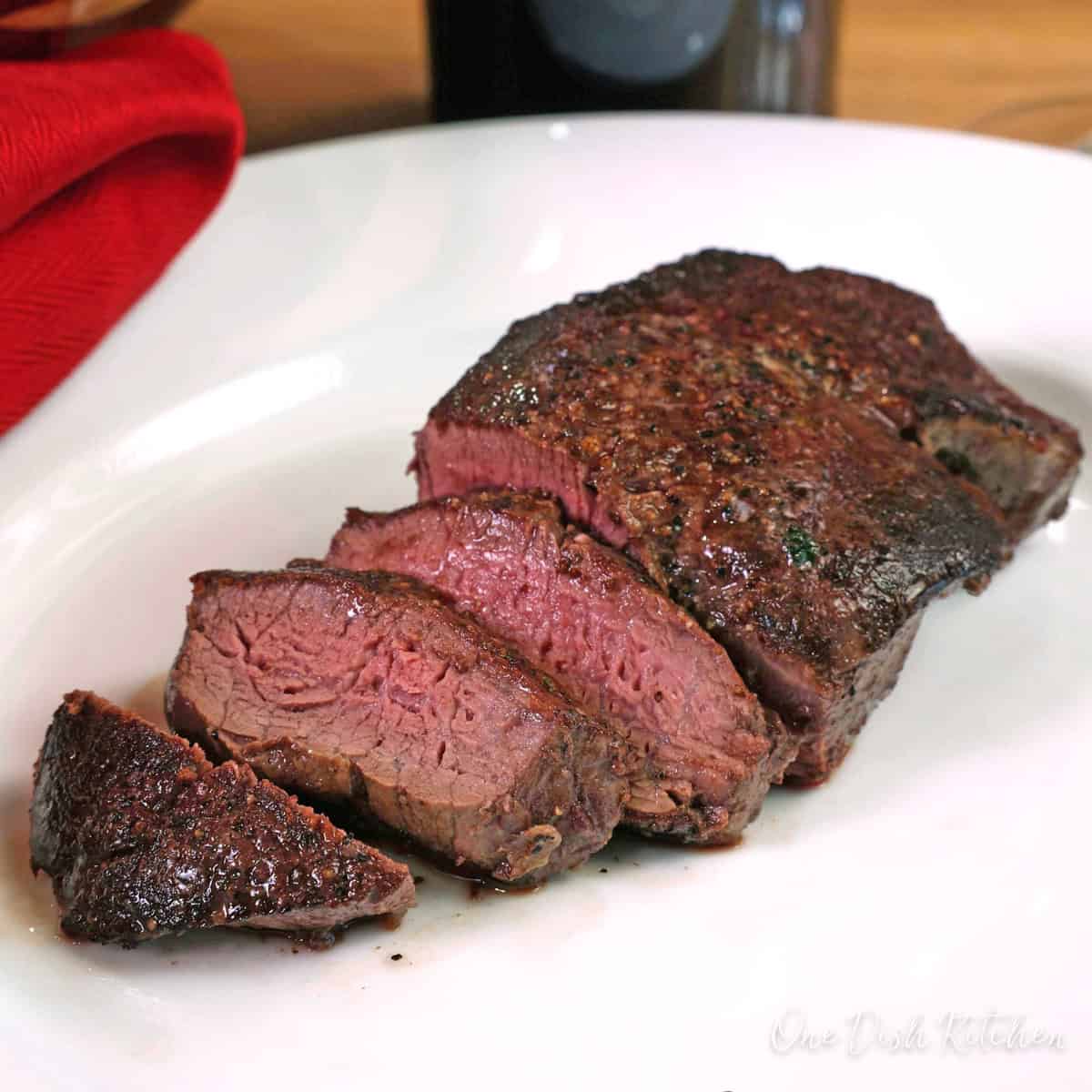
Personal Note: The sear-and-roast method is the way I cook a beef tenderloin steak. I sear the steak in a preheated cast iron skillet for 4 minutes per side to build a deep golden crust, then transfer the skillet to a 400°F oven for 5 minutes. I pull it at 130°F for medium-rare, which is how I like it. Let it rest for 5 minutes before slicing so the juices redistribute through the meat. The step-by-step photos below show the key stages. See the recipe card for exact measurements.
- Heat the oven and skillet. Preheat the oven to 400°F. Heat olive oil in a cast iron or oven-safe skillet over medium-high heat for about 30 seconds, until the oil shimmers.
Pro Tip: The skillet needs to be very hot before the steak goes in. If the oil shimmers but isn’t smoking, it’s ready.
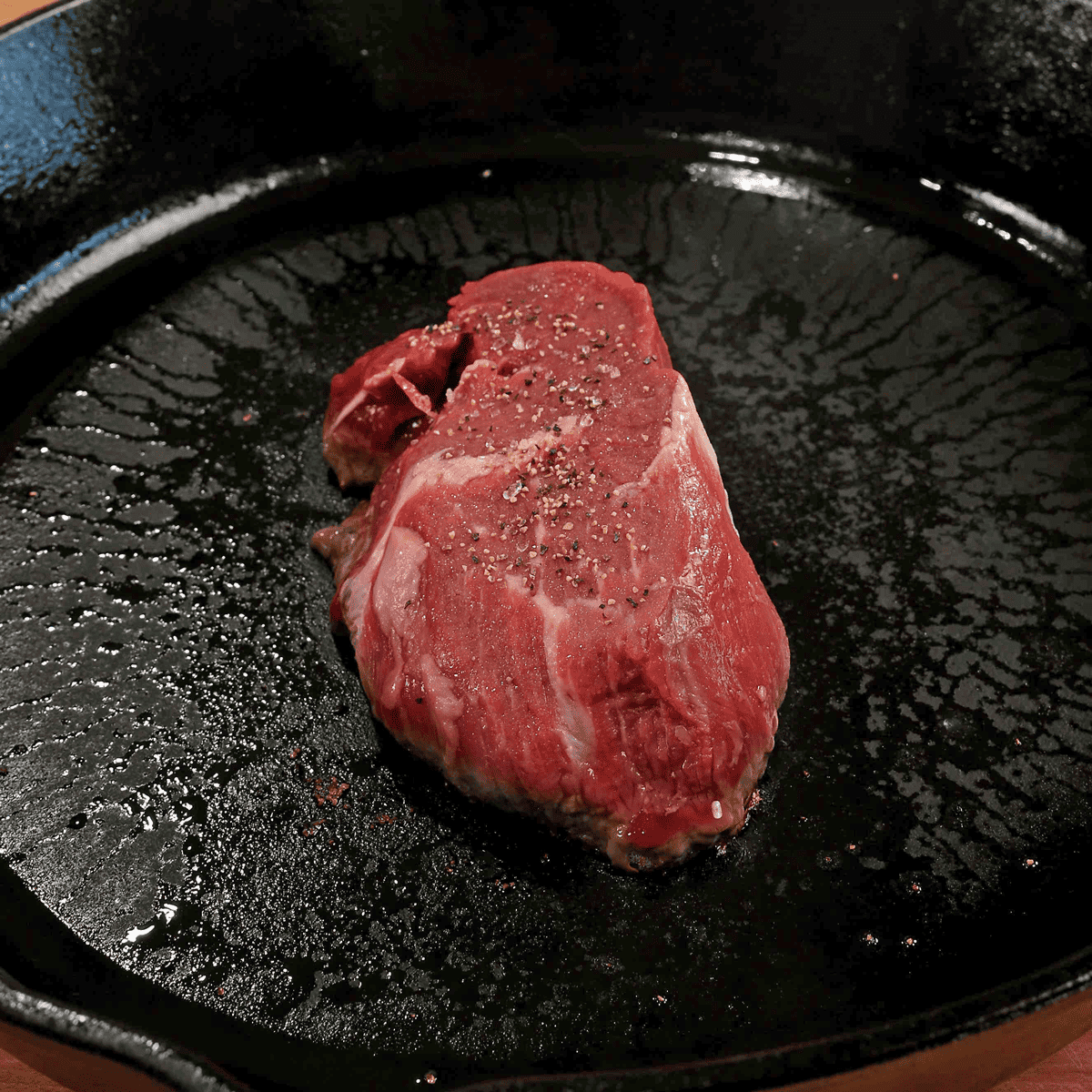
- Pat the steak very dry and season generously. Use a paper towel to blot both sides until the surface is dry to the touch, then season with salt and pepper on both sides.
Pro Tip: A dry surface is what creates a crisp brown crust. Wet steak steams instead of sears.
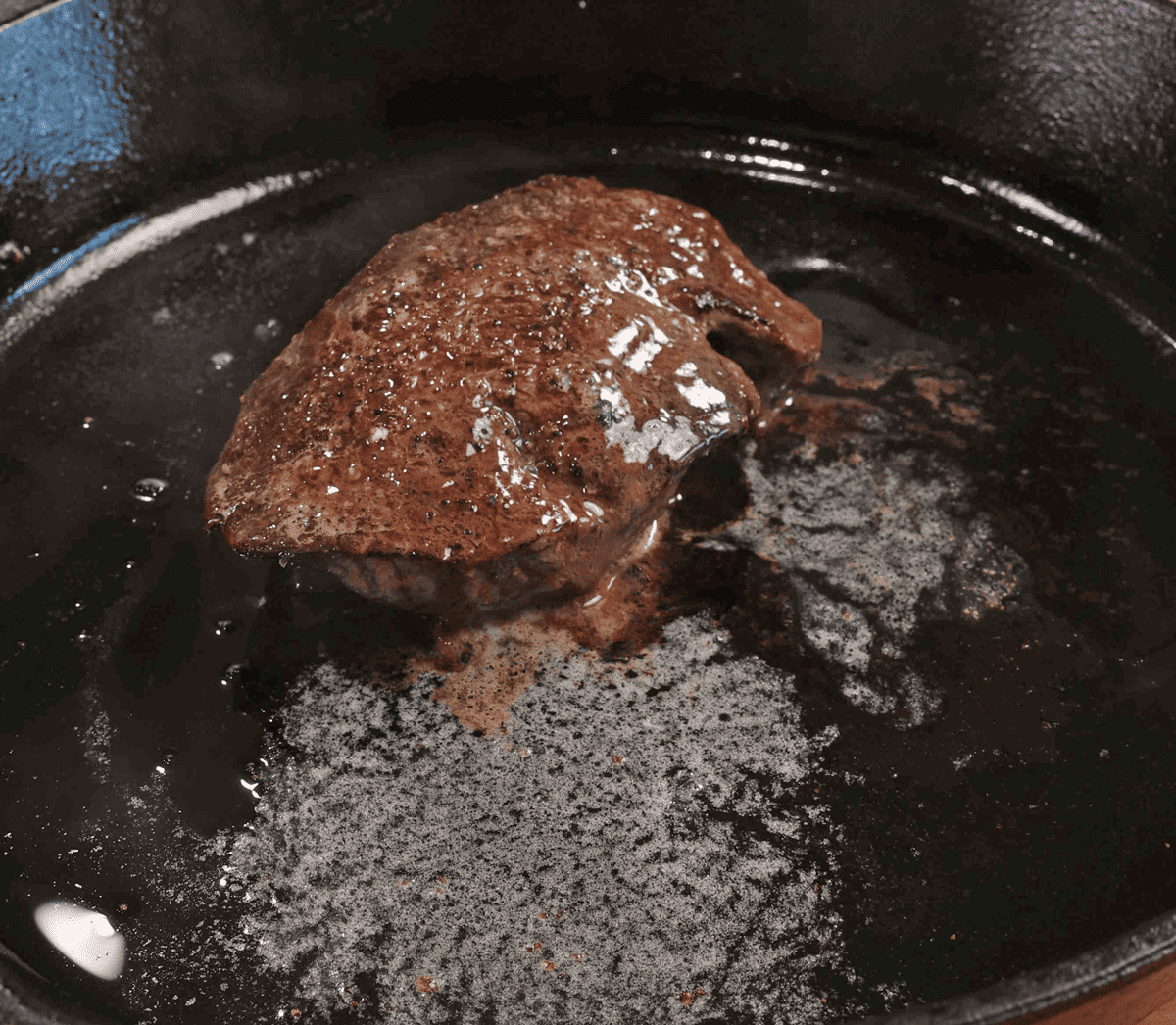
- Sear the steak. Place the steak in the hot skillet and sear for about 4 minutes per side, until a deep golden crust forms.
Pro Tip: Don’t move the steak while it sears. Lifting or shifting it breaks the crust before it sets.
- Roast in the oven. Transfer the skillet to the preheated oven and roast for about 5 minutes. Use an instant-read meat thermometer to check doneness. Pull the steak when it reads 5°F below your target since the temperature continues to rise as it rests.
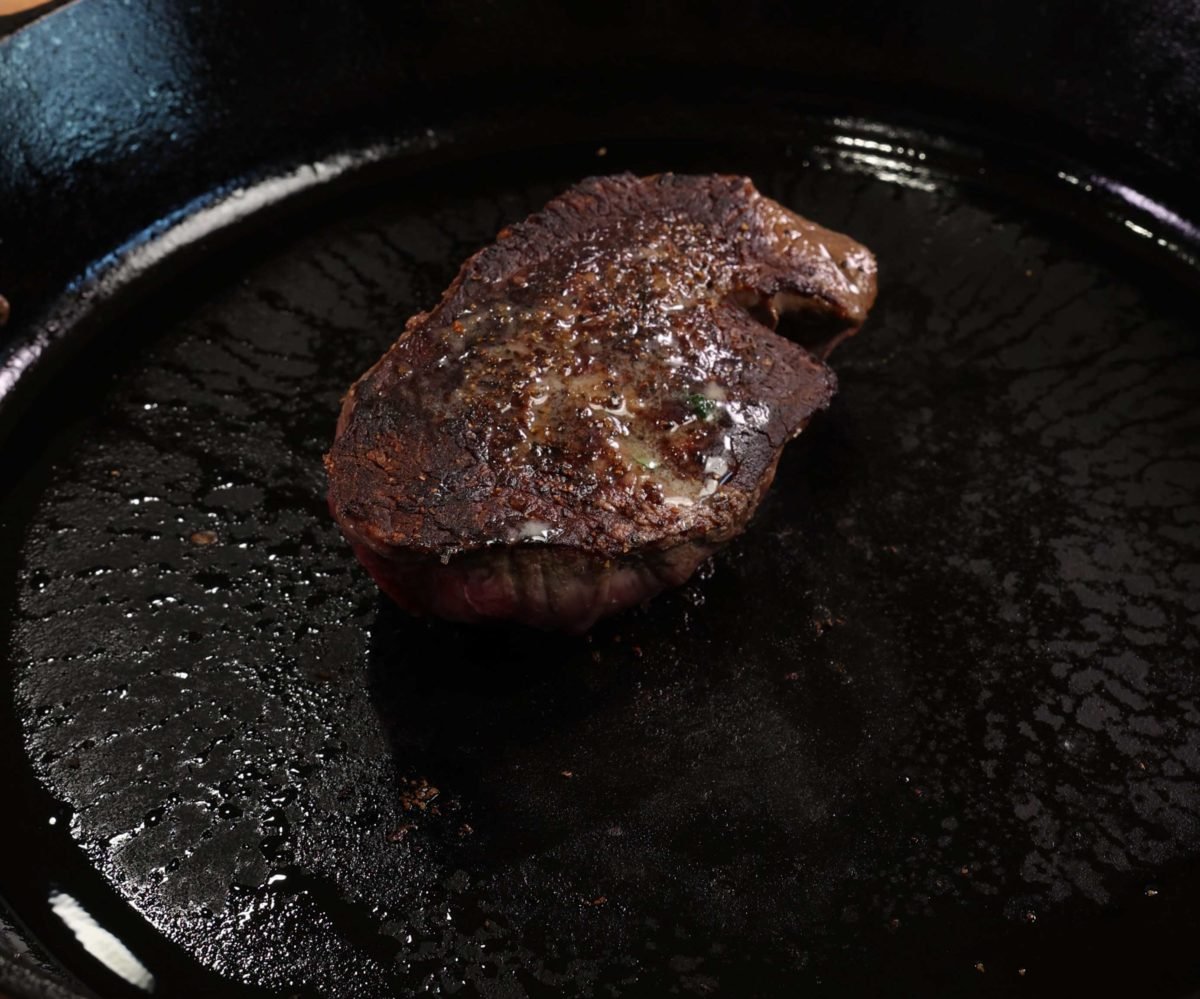
- Rest with butter. Place a pat of butter on top of the steak, cover the skillet loosely with foil, and let it rest for 5 minutes before slicing.
Pro Tip: The rest is non-negotiable. Cutting into the steak immediately lets the juices run out onto the cutting board instead of staying in the meat.
Expert Tips
Dry brine for a better crust. If you have 45 minutes to spare (or up to overnight), salt the steak and leave it on a plate in the fridge. The salt pulls moisture from the surface, then reabsorbs it with the salt dissolved in, giving you a drier exterior and seasoning all the way through.
Bring the steak to room temperature. Take the steak out of the fridge 30 minutes before cooking. A cold steak won’t sear as evenly and takes longer in the oven, which risks overcooking the edges while the center catches up.
Use a cast iron skillet. Cast iron holds heat better than stainless or nonstick, so the steak keeps searing instead of cooling the pan when it hits the surface. A heavy stainless skillet works as a backup.
Insert the thermometer correctly. Push the probe into the thickest part of the steak from the side, stopping in the center. Don’t let the tip touch the pan or it will read hot and give you an undercooked steak.
Rest on a warm surface, not a cold plate. A cold plate pulls heat out of the steak and stops the juices from redistributing. Rest the steak in the hot skillet or on a warm plate.
Beef Tenderloin Cooking Times By Doneness
Cooking times below are for a 6-ounce beef tenderloin steak about 1 inch thick. Sear for 4 minutes per side in a hot cast iron skillet, then finish in a 400°F oven using the oven times below. Pull the steak from the oven 5°F before your target temperature, since it will continue to cook as it rests.
| Doneness | Internal Temperature | Oven Time After Sear |
|---|---|---|
| Rare | 120 to 125°F | 3 minutes |
| Medium-Rare | 125 to 130°F | 5 minutes |
| Medium | 135 to 140°F | 7 minutes |
| Medium-Well | 145 to 150°F | 9 minutes |
| Well done | 155°F+ | 10+ minutes |
Troubleshooting
A few common issues and how to fix them.
Why is my beef tenderloin tough and dry?
Tenderloin is a lean cut with almost no fat, so even 5 or 10 extra degrees can turn it chewy. Use an instant-read thermometer and pull the steak 5°F before your target. If it’s already overcooked, slice it thin against the grain and spoon the pan butter over each slice.
Why didn’t my steak form a crust?
Usually the pan wasn’t hot enough or the surface was too wet. Pat the steak completely dry with paper towels right before seasoning, and wait for the oil to shimmer before the steak goes in.
Why did my steak stick to the pan?
You tried to flip too early. A properly seared steak releases cleanly from a hot cast iron skillet. If it’s sticking, give it another 30 to 60 seconds and try again. Pulling at it breaks the crust before it sets.
Why does my beef tenderloin taste bland?
Tenderloin has a mild, buttery flavor compared to cuts like ribeye, so it needs more salt than you’d think. Season both sides generously with kosher salt before searing. A pinch of flaky sea salt on top before serving adds one more hit of flavor.
Frequently Asked Questions
Beef tenderloin and filet mignon come from the same muscle. Beef tenderloin is the whole long cut, and filet mignon is the smaller, round center section of the tenderloin. A tenderloin steak cut from any part of the tenderloin is tender, flavorful, and cooks quickly.
A 6-ounce, 1-inch-thick beef tenderloin steak takes about 13 to 18 minutes total: 4 minutes per side in a hot cast iron skillet, then 3 to 10 minutes in a 400°F oven depending on your preferred doneness, plus a 5-minute rest.
Use an instant-read meat thermometer inserted into the thickest part of the steak from the side. Pull the steak 5°F below your target temperature, since it will keep cooking as it rests. Rare is 120 to 125°F, medium-rare is 125 to 130°F, medium is 135 to 140°F.
Yes, if your steak is no more than 1 inch thick. Sear 4 minutes per side over medium-high heat, then reduce the heat to low and cook another 2 to 3 minutes per side until the internal temperature reaches 5°F below your target. An oven gives you more even cooking, especially for thicker steaks.
Any heavy, oven-safe skillet works. Stainless steel is a good second choice because it holds heat well. Avoid thin nonstick pans, which don’t get hot enough for a proper sear and can release fumes at searing temperatures.
Store sliced leftovers in an airtight container in the fridge for up to 3 days. To reheat, warm slices gently in a covered skillet over low heat with a splash of broth, or enjoy them cold on a salad or sandwich. Avoid microwaving, which toughens cooked tenderloin.
Yes. Slice the cooked, cooled tenderloin and wrap tightly in plastic wrap or freezer paper, then store in a freezer bag for up to 3 months. Thaw overnight in the fridge and enjoy cold on salads or sandwiches. Reheating frozen cooked tenderloin tends to dry it out, so cold use is best.
Ways To Use Leftover Ingredients
If you have any ingredients leftover from this recipe, check out our Leftover Ingredients Recipe Finder or you might like to consider using them in any of these single serving and small batch recipes:
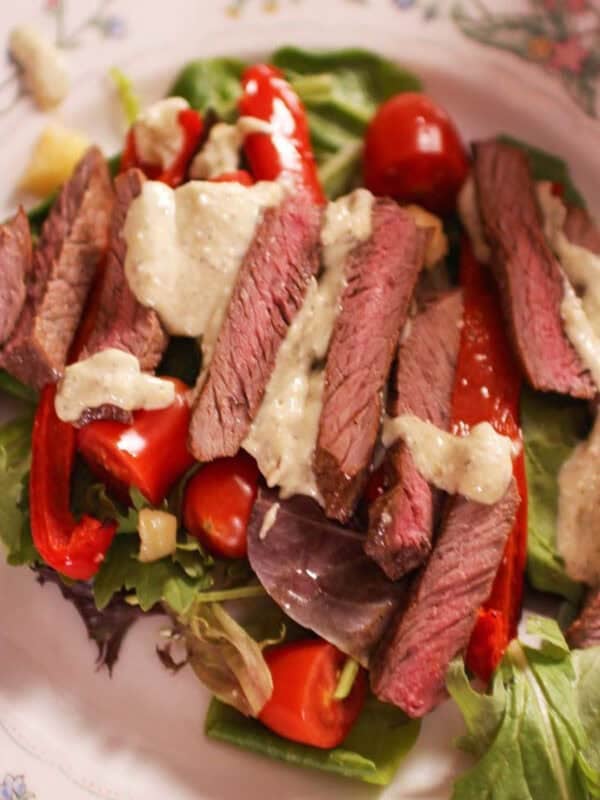
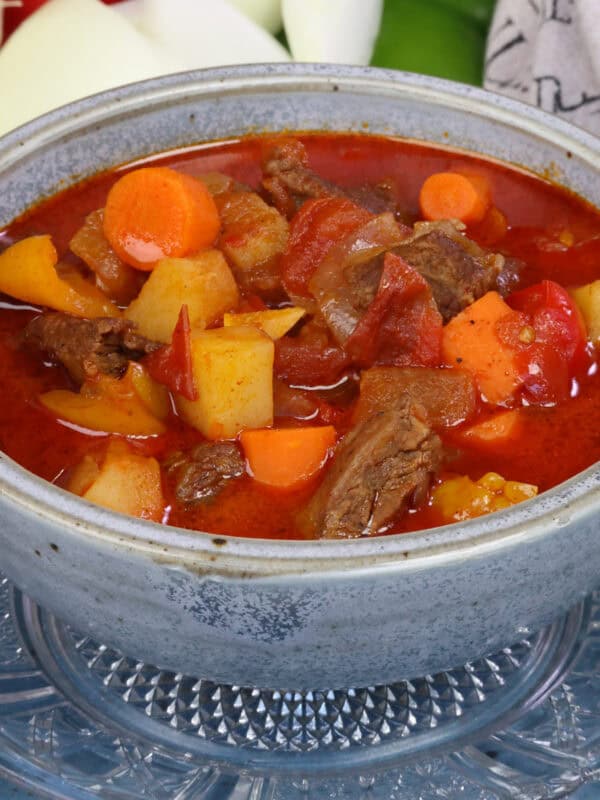
If you’ve tried this tenderloin steak recipe or any recipe on One Dish Kitchen, please let me know how you liked it by rating the recipe and leaving a comment below.
And if you take a picture please tag us on Instagram (@onedishkitchen) we’d love to see it!
Beef Tenderloin Steak
Ingredients
- ½ tablespoon olive oil
- 1 (6-ounce) beef tenderloin steak
- ⅛ teaspoon kosher salt
- ⅛ teaspoon coarsely ground black pepper
- ½ tablespoon butter
Instructions
- Preheat the oven to 400°F (200°C). Heat the olive oil in a cast iron or oven-safe skillet over medium-high heat for about 30 seconds, until the oil shimmers.Pro Tip: Cast iron works best for searing and oven-roasting. Any heavy, oven-safe skillet will work as a substitute.
- Pat the steak dry with a paper towel and season both sides generously with salt and pepper.Pro Tip: A dry surface is what creates a crisp brown crust. A wet steak steams instead of sears.
- Sear the steak for 4 minutes per side in the hot skillet, until a deep golden crust forms. Don't move the steak while it sears.
- Roast in the oven for 3 to 10 minutes, depending on your preferred doneness (see the chart in the notes). Pull the steak when the internal temperature reads 5°F below your target, since it will keep cooking as it rests.
- Rest with butter. Place a pat of butter on top of the steak, cover the skillet loosely with foil, and let it rest for 5 minutes before slicing.
Notes
Beef Tenderloin Cooking Times By Doneness
Cooking times below are for a 6-ounce beef tenderloin steak about 1 inch thick. Sear for 4 minutes per side in a hot cast iron skillet, then finish in a 400°F oven using the oven times below. Pull the steak from the oven 5°F before your target temperature, since it will continue to cook as it rests.| Doneness | Internal Temperature | Oven Time After Sear |
|---|---|---|
| Rare | 120 to 125°F | 3 minutes |
| Medium-Rare | 125 to 130°F | 5 minutes |
| Medium | 135 to 140°F | 7 minutes |
| Medium-Well | 145 to 150°F | 9 minutes |
| Well done | 155°F+ | 10+ minutes |
Nutrition
The information shown is an estimate provided by an online nutrition calculator. It should not be considered a substitute for a professional nutritionist’s advice.

When cooking steak per side did you also sear on sides of steak? Recipe 5 minutes in oven, after resting will this steak be rare or med rare? Thks Joanie
I only sear the steak on the two flat sides, not the edges. After resting, it comes out medium-rare for me. I’ve included internal temperature guidelines in the recipe for medium-rare, medium, and beyond, which are the best way to judge doneness. If you have a meat thermometer, it’s the most accurate way to check, but you can also go by the temperature guide and visual cues if you’re comfortable doing that.
Absolutely delicious!
Thank you!
So easy and so perfect! I’m not a big meat eater and 6 ounces seemed like too much. I ate half the night I cooked it and had sliced the remaining 1/2 for a salad the next night. It was so good! I’m going to do 2 tenderloins next time and freeze one after I cook it so I can use it for salads. I am wondering if I should freeze slices or the whole steak. If you have a suggestion about that, I’d welcome it.
Thank you, again, for doing the hard work for us!
Thank you for your comment! I’m so glad you enjoyed the recipe. For freezing, I recommend slicing the cooked steak before freezing—it makes it much easier to use later for salads or other dishes.
I am not a confident cook, but this…THIS I can do! It was so tender, so delicious! The 5 minutes brought the inside to slight pink, so next time I will take my husband’s out at 3-4 minutes. So thrilled to have found this gem of a recipe! Thank you!
Hello,
I am going to try this for the first time this weekend. I never have cooked a steak..what do you suggest to serve with it?
By the way, thank you for your recipes! I have just discovered this site. I am by myself and its hard to learn to cook for one so Thank You!
I’m so happy you are enjoying our recipes. I love a good filet with just about anything, but you might like to make our risotto – https://onedishkitchen.com/how-to-make-risotto-for-one/ – or our garlic smashed potatoes – https://onedishkitchen.com/smashed-potatoes-recipe/. If you’d like to enjoy vegetables on the side, our roasted brussels sprouts are absolutely delicious – https://onedishkitchen.com/smashed-brussels-sprouts-recipe/
Can you preheat a baking dish instead while the steak is cooking?
Hi Barbara, if you don’t have a cast iron skillet or an oven-safe skillet, a baking dish can be used. In this recipe, we sear the steak first on the stovetop and then place it in the oven to finish cooking. You can sear the steak in a skillet and then place it in a baking dish that can withstand heat up to 400°F to finish the cooking process.
I am 63 years old and have never cooked a piece of red meat that tasted good until now! This recipe is easy to follow and the outcome is tender, juicy and delicious! Will be making this again and trying a bunch of your recipes. Thanks for sharing it.
Excellent technique. I cooked mine five minutes longer as I cut my own piece off the loin. Was perfect! Thank you.
I made this once. Directions are spot on. Guaranteed I’m making it again! It Was So Darn Good! It really felt good to spoil myself some. Thank you for your recipes!!! I’m sure that others will all agree, we can now have old favorites plus lots of new ones.
Thank you so much, Lisa. I’m so happy to know you loved this beef tenderloin recipe.
I made this twice it’s wonderful I never got a steak cooked properly. Now I know the secret
The ONLY way to cook this cut of meat. Do not even try any others!!! Awesomely Delicious…….
I would like to make this part of meal prep for beef- normally freeze (2) 1/2s & roast; If dividing from whole tenderloin, how thick to slice to equal a 6 oz steak?
I recommend slicing the tenderloin into 1 to 1 1/2-inch pieces.
Joanie’s recipes one dish kitchen are the best
Another brilliant recipe.