This post may contain affiliate links. Please read our disclosure policy.
Reading a recipe well means reading it all the way through before you start, understanding what each part tells you, and knowing what the terms and abbreviations mean. Here’s how to work through a recipe so it turns out the way it should.
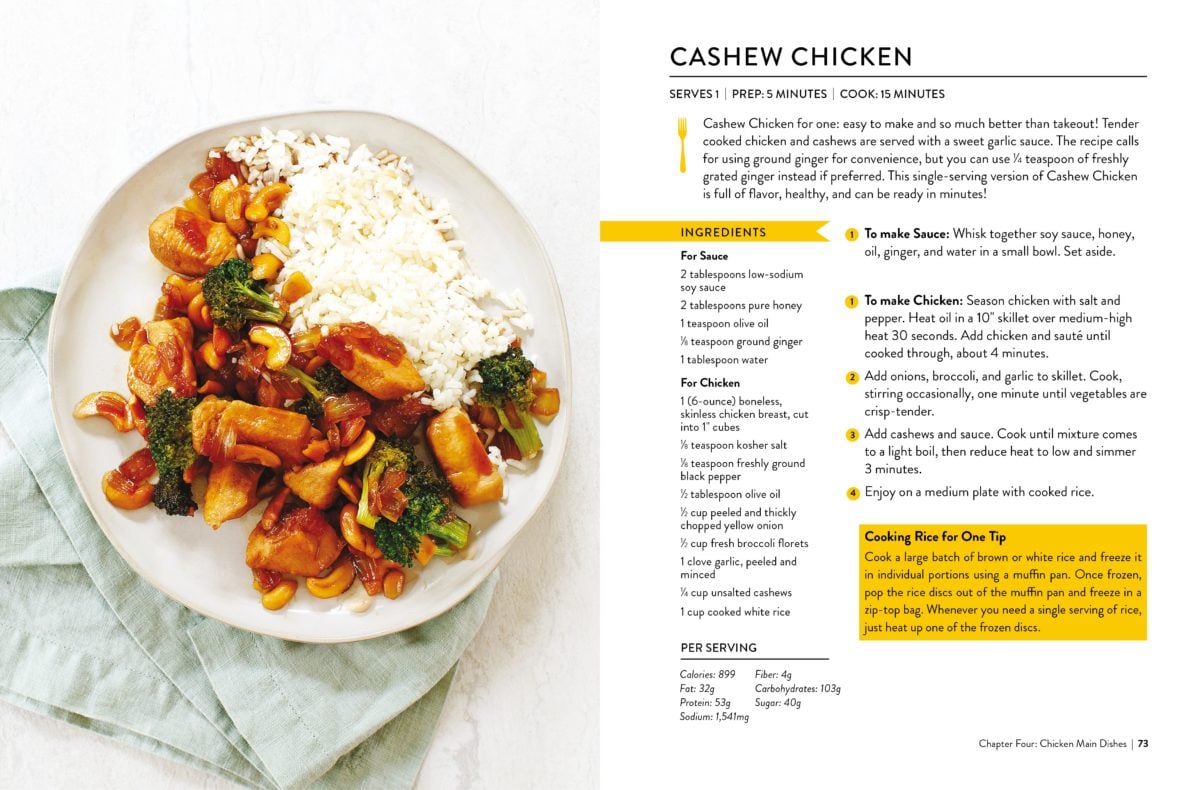
Table of Contents
What I Think About When I Write A Recipe
I’ve spent years writing recipes, and every part of one is doing a job. The pan size is there because it’s what I tested in. The doneness cue is there because your oven isn’t my oven.
Even the punctuation is deliberate. There’s a real difference between “½ cup flour, sifted” and “½ cup sifted flour,” and I think about which one I’m writing.
Reading a recipe well is just picking up on all of that. Here’s how I do it.
Why Reading The Whole Recipe First Matters
Most recipes that fail weren’t followed all the way through. I do it myself. You find something that looks good, skim the ingredients, and start cooking. Then you’re halfway in when you hit the step that says the butter should be softened, or the dough needs an hour in the refrigerator.
Reading the whole thing first tells you what you’re in for. You find the steps that take time, the ingredients that need to come to room temperature, and the equipment you’ll need before any of it matters.
It takes two minutes and it’s the difference between cooking calmly and scrambling.
The Parts Of A Recipe
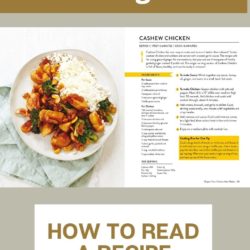
Most recipes are laid out the same way, and each part tells you something before you start cooking.
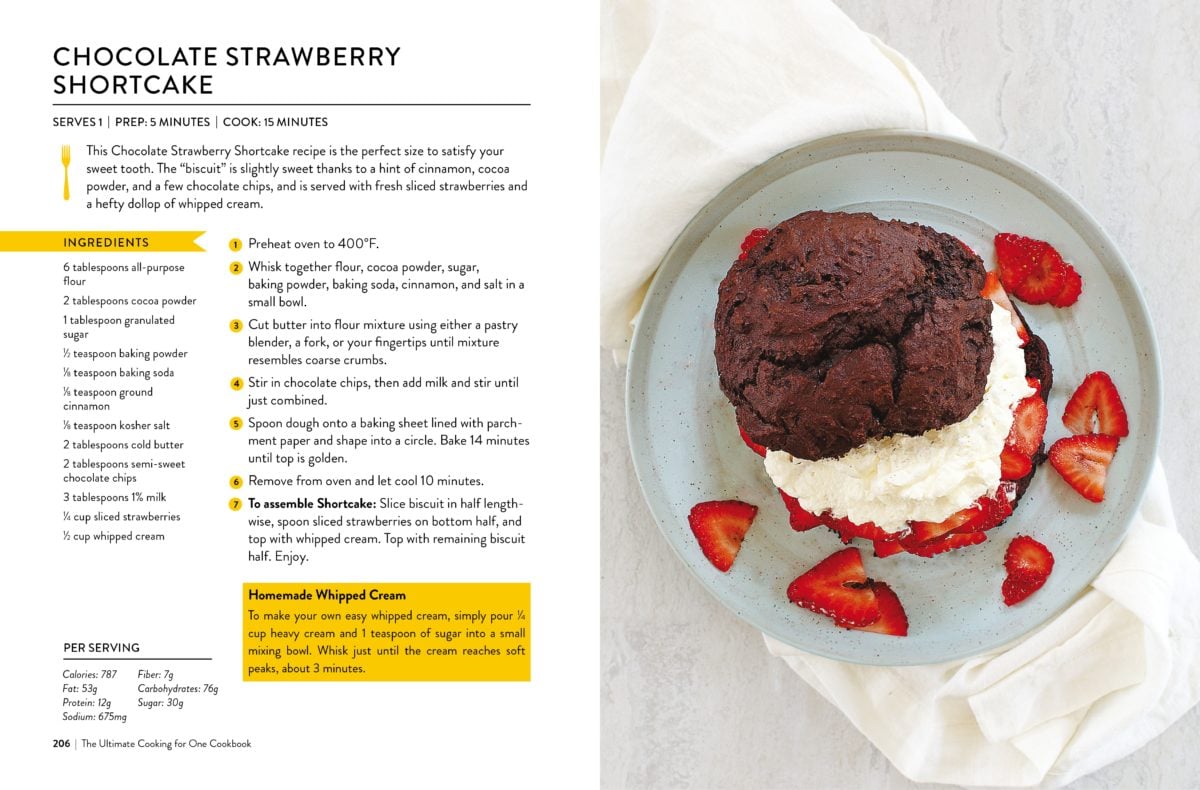
Yield or servings. How much the recipe makes. On this site it’s almost always one serving, but a recipe written for four means you’ll need to scale it or plan for leftovers.
Prep time and cook time. Prep is the hands-on work, chopping, measuring, mixing. Cook time is what happens after that, on the stove or in the oven. Total time adds them together, though it doesn’t always include chilling or resting, so read the instructions for those.
Ingredient list. Usually in the order you’ll use them, with the amount, the ingredient, and any prep the ingredient needs. That last part matters. “1 egg, room temperature” and “2 tablespoons butter, melted” are telling you to do something before you start.
Equipment. The pan, dish, or tool the recipe was tested in. For anything baked, this is part of the recipe rather than a suggestion, since the size of the dish changes how the food cooks. Our recipes name the exact size for that reason.
Instructions. The numbered steps, in order. Read them straight through before you begin, since a step often contains a small instruction you’d miss on a skim.
Notes and tips. Where you’ll find substitutions, storage, make-ahead guidance, and the details on any step that tends to trip people up. Worth reading even when the recipe seems simple.
How To Read A Recipe Step By Step
Reading a recipe well comes down to six steps: read it through twice, find the steps that need time, gather your ingredients and equipment, keep them in the order you’ll use them, watch the punctuation in the measurements, and judge doneness by more than the clock.
Read It Twice
Read the whole recipe from start to finish, then read it again. The first pass tells you what you’re making. The second tells you how the steps fit together and where you’ll need to move quickly. Make notes if it helps.
Look For Steps That Take Time
Some steps have to happen well before you cook. Dough that chills, beans that soak, butter that softens, meat that comes to room temperature. These are easy to skim past and they’ll stop you mid-recipe if you miss them, so find them before you start.
Gather Everything First
Set out every ingredient and every piece of equipment before you turn on the stove. It’s the habit that separates a calm hour in the kitchen from a frantic one, and it catches the problem of a missing ingredient while you can still do something about it.
Keep The Ingredients In Order
Ingredient lists are usually written in the order you’ll use them. I line mine up that way on the counter and group them by how they’ll be combined. When you get to a step, the next thing you need is right in front of you.
Pay Attention To The Comma
The comma changes what a measurement means. “½ cup flour, sifted” and “½ cup sifted flour” are different amounts.
For “½ cup flour, sifted,” you measure half a cup of flour, then sift it.
For “½ cup sifted flour,” you sift the flour first, then measure out half a cup.
Sifted flour holds more air, so it weighs less by volume. Measuring first gives you more flour than sifting first does.
Don’t Cook By The Timer Alone
Times in a recipe are a guide, and they assume your oven runs true, which most don’t. When a recipe says to bake until golden brown, about 20 minutes, the golden brown is the instruction and the 20 minutes is the estimate. Use your eyes and your nose along with the timer.
Common Recipe Abbreviations
Recipes shorten measurements, and the two that cause the most trouble are teaspoon and tablespoon. A tablespoon is three times a teaspoon, so mixing them up is the kind of mistake you taste.
| Abbreviation | Means |
|---|---|
| tsp or t | teaspoon |
| tbsp or T | tablespoon |
| c | cup |
| oz | ounce (weight) |
| fl oz | fluid ounce (volume) |
| lb or # | pound |
| pt | pint |
| qt | quart |
| g | gram |
| kg | kilogram |
| ml | milliliter |
| l | liter |
| °F | degrees Fahrenheit |
| °C | degrees Celsius |
A few of these are worth knowing by heart:
3 teaspoons = 1 tablespoon
4 tablespoons = ¼ cup
8 tablespoons = ½ cup
16 tablespoons = 1 cup
8 fluid ounces = 1 cup
Ounces and fluid ounces are not the same thing. Ounces measure weight and fluid ounces measure volume, so 8 ounces of flour and 8 fluid ounces of flour are different amounts. When a recipe calls for ounces of a dry ingredient, it usually wants a scale.
Common Cooking Terms
Recipes assume you know what these mean, and most of the time the difference between two similar-sounding terms is the difference between the texture you wanted and the one you got.
Mixing and combining
Fold. Combine gently with a spatula, cutting down through the middle and lifting from the bottom, turning the bowl as you go. Used when you want to keep air in something like whipped cream or beaten egg whites. Stirring would flatten it.
Cream. Beat softened butter and sugar together until light and fluffy. It’s what puts air into cake and cookie batter, so it isn’t a step to rush.
Whisk. Beat with a wire whisk to blend and add air, as with eggs or a dressing.
Beat. Mix quickly and vigorously, by hand or with a mixer.
Sift. Pass dry ingredients through a fine sieve to break up lumps and add air.
Knife work
Chop. Cut into rough, bite-size pieces. Precision isn’t the point.
Dice. Cut into even cubes, usually about a quarter inch, so everything cooks at the same rate.
Mince. Cut as finely as you can, the way you would garlic.
Julienne. Cut into thin matchsticks.
Heat
Sauté. Cook quickly in a little fat over fairly high heat, moving the food as it cooks.
Sear. Brown the surface of meat over high heat for color and flavor.
Simmer. Cook in liquid just below boiling, with small bubbles breaking the surface now and then.
Boil. Cook in liquid at a full, rolling bubble.
Braise. Brown first, then cook slowly in a small amount of liquid in a covered pot.
Blanch. Boil briefly, then plunge into cold water to stop the cooking.
Other terms you’ll see
Room temperature. Left out until it’s no longer cold, usually 30 to 60 minutes for butter or eggs. It matters most in baking, where cold ingredients don’t combine evenly.
Preheat. Bring the oven to temperature before the food goes in. Most ovens need 15 to 20 minutes, longer than the beep suggests.
Divided. The ingredient gets used in more than one place in the recipe, so don’t add it all at once.
To taste. Add a little, taste it, add more if it needs it.
What To Watch For When Cooking For One
Reading carefully matters more when you’re cooking a single serving, because there’s less room to correct a mistake. An extra quarter teaspoon of salt disappears in a pot for six. In one bowl of soup, you taste it.
Measure small amounts accurately. When a recipe calls for a tablespoon of flour rather than a cup, being a little heavy changes the result. Spoon dry ingredients into the measuring cup and level the top with the flat edge of a knife, rather than dipping the cup into the bag, which packs it down and gives you more than the recipe calls for.
Check the yield before anything else. Recipes are usually written for four to six people. If you’re cooking for one and don’t notice, you’ll end up with a full-size dish and days of leftovers. Every recipe on One Dish Kitchen makes a single serving, so the yield line tells you what you’re getting before you start.
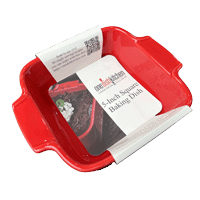
Treat the dish size as an ingredient. Baking recipes are tested in a specific dish, and the size affects how the food cooks. A single serving spread across a large dish bakes faster and dries out. We name the exact size in every recipe, and I go through the three sizes we use in our guide to small baking dishes for one.
Watch the timing on small portions. A small amount of food cooks faster than a large one, so times written for a full-size recipe won’t hold if you’ve scaled it down. Start checking early and go by the doneness cues.
If you’re working from a full-size recipe and want to make it for one, our guide on how to reduce a recipe covers the measurements and the cookware.
Frequently Asked Questions
Usually because of oven temperature, ingredient measurement, or pan size. Most home ovens run hotter or cooler than the dial says, so an oven thermometer is worth the few dollars. Packed flour, a different pan, or an ingredient at the wrong temperature will all shift the result even when you followed every step.
It means leave the food alone for a set time after cooking. Meat rests so the juices settle back through it instead of running out when you cut. Baked goods rest so they finish setting. Skipping it is the most common reason a dish that cooked correctly still disappoints.
Yes, make it as written the first time. The amounts and timing were tested together, so you learn what the recipe is supposed to be before you change it. Once you’ve made it once, you know where your own taste differs and what’s safe to adjust.
Look for signs it was actually tested. Specific pan sizes, doneness cues rather than times alone, and notes about what can go wrong are all good indicators. Reader comments help too, especially ones from people who made it rather than ones saying it looks good.
It means the recipe works without it. Optional ingredients usually add flavor or texture rather than structure, so leaving out a garnish or a spice is fine. Anything affecting how the dish sets or rises, like eggs or leaveners, won’t be listed as optional.
Reading a recipe well is a habit more than a skill. Read it through, understand what each part is telling you, and you’ll spend less time scrambling and more time cooking. When you’re ready to put it to use, every recipe on One Dish Kitchen is written for a single serving, with the pan size, timing, and doneness cues spelled out.
You’ve been a big help Joanie.
Your recipe wording does help my brain “to think”. Adjusting to cooking for one isn’t difficult..I made it difficult because I didn’t like being “one”.
Thank you.