This post may contain affiliate links. Please read our disclosure policy.
Freezing ingredients in small amounts is one of the best ways to cook for one without waste. This guide covers what freezes well, how to freeze proteins, vegetables, and broth in single serving amounts, and how long they keep, so you can cook from scratch any night.
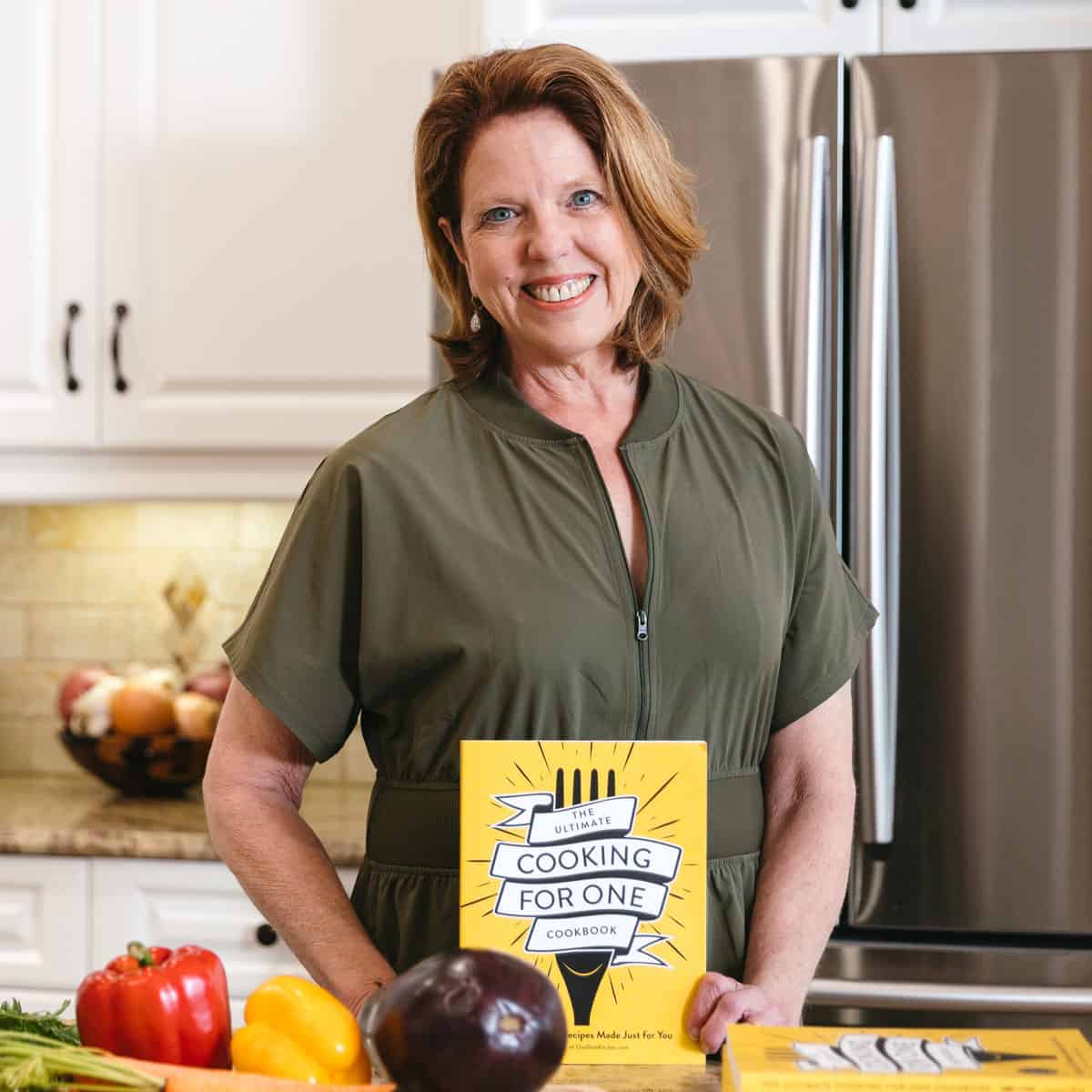
A Note From Joanie

Cooking for one means the store is working against you. Ground beef comes by the pound, herbs by the bunch. You use what one recipe needs and the rest sits in the fridge until you feel guilty throwing it out.
I’ve been building single serving recipes for years, so I hit this every week. The freezer is how I get around it. I split the package the day I buy it, freeze what I’m not cooking, and pull out one portion when I need it.
What I like most is not having to plan. There’s chicken in there, and broth, and herbs I chopped weeks ago. I can make myself a real dinner without a trip to the store, and nothing I bought goes in the trash.
Why Freeze When You Cook For One
The hardest part of cooking for one is that ingredients don’t come in single serving sizes. Ground beef comes by the pound, herbs by the bunch, bread by the loaf, broth by the carton. You use a little, and the rest sits in the fridge until it goes bad. Freezing fixes that. You freeze the extra in small amounts and pull out just what a single serving recipe needs.
Nothing goes to waste. Freeze the extra half pound of ground beef, the second chicken breast, or the herbs you bought for one recipe, and they keep for weeks instead of spoiling in a few days.
You can buy what only comes in big sizes. Some things only sell in a full package, like a pound of ground beef or a whole bag of peas. Freeze what you don’t cook now, and none of it goes to waste.
You always have ingredients ready. With proteins, vegetables, and broth in the freezer, you can put together a single serving whenever you want, without a trip to the store.
Freezing ingredients this way takes a little prep up front, but it means you can cook for one from scratch any night, with nothing thrown out. It’s one piece of a bigger habit, and I cover the rest in how to cook for one without wasting food.
What Freezes Well, What Doesn’t
It mostly comes down to water. When food freezes, the water inside forms ice crystals that break down its texture, so low-moisture ingredients freeze cleanly and high-moisture ones can turn limp or watery. The USDA notes you can safely freeze almost any food. It’s the quality after thawing that varies.
Ingredients That Freeze Well
- Proteins. Raw or cooked, meat and poultry freeze well, and raw actually holds its quality longer than cooked, since cooking removes moisture. Freeze chicken breasts, chops, or portions of ground beef individually so you can grab one at a time.
- Vegetables. Most freeze well but need a quick blanch first, a brief boil then a plunge into cold water, to hold their color and texture. Freeze in small amounts sized for one. A few, like onions and peppers for cooking, can go in without blanching.
- Broth and stock. Freeze in an ice cube tray or small containers so you can pull out just what a recipe needs.
- Sauces. Tomato-based sauces freeze well in small portions.
- Herbs and aromatics. Chop and freeze herbs in olive oil in an ice cube tray, and freeze extra garlic, ginger, or diced onion so a whole bunch or knob doesn’t go to waste. If you’re not sure what to make with what’s left, our Leftover Ingredient Recipe Finder will show you single serving recipes that use it.
- Butter and hard cheese. Both freeze well, and shredded cheese goes straight from the freezer into cooking.
- Bread. Freeze slices from a loaf you won’t finish and toast them as needed.
Ingredients That Don’t Freeze Well
- Lettuce and watery vegetables. Lettuce, cucumbers, and celery are mostly water and turn limp once thawed. Celery is the exception if you’re cooking with it, since it works fine frozen when you’re adding it to a soup or stew where it softens anyway.
- Mayonnaise and mayo-based dishes. Mayonnaise is a food that separates and curdles after freezing.
- Cream sauces and soft dairy. Cream sauces, sour cream, and yogurt tend to separate or turn grainy.
- Cooked egg whites. They turn tough after freezing.
- Plain cooked pasta. On its own it goes mushy, though pasta baked into a sauced dish freezes fine.
- Fried foods. They lose their crisp coating and come out soggy.
- Fresh citrus, melon, and avocado. Their high water content leaves them mushy, or with avocado, brown and soft.
If part of a recipe doesn’t freeze well, freeze the parts that do and add the rest fresh. Freeze the broth and cooked chicken for a soup, then stir in cream or fresh pasta when you cook.
How To Freeze In Single Portions
The key to freezing for one is breaking things into small amounts before they go in, so you can pull out exactly what a recipe needs without thawing the whole batch.
Cool food first. Let cooked food come to room temperature before freezing. Putting warm food in the freezer raises the temperature inside and can partly thaw whatever is around it. Don’t leave it out longer than two hours, though, and get it into the freezer before then.
Portion before you freeze. Divide things into single servings first. Freeze broth or sauce in an ice cube tray, then pop the cubes into a bag once solid. Freeze ground beef in patty-sized amounts, and lay berries or chopped vegetables flat on a tray so they freeze loose instead of in one clump.
Split large packs into singles. Buying a value pack of chicken breasts, thighs, or pork chops is cheaper per pound, but only if the rest doesn’t freeze into one solid brick. Separate the pieces, wrap each one, and freeze them individually so you can grab a single portion at a time. Freezing them flat and not touching also helps them thaw faster. One frozen chicken breast is all you need for a baked chicken breast, and a portion of ground beef makes a meatloaf for one.
Get the air out. Air is what causes freezer burn. Press it out of freezer bags before sealing, wrap solid items snugly, and fill containers close to the top with as little space as possible.
Use freezer-safe containers. Choose bags or containers made for the freezer, since regular ones crack or let air in. Flat, stackable bags save space and thaw faster than a thick block in a tub.
Label everything. Write the contents and the date on every bag or container. It’s the difference between using what you froze and finding a mystery lump in three months.
How Long Food Keeps In The Freezer
For the best quality, use frozen ingredients within a few months. Kept steadily at 0°F they stay safe longer than that, but the flavor and texture fade, so these windows are about eating them at their best, not about safety.
How long each keeps for best quality:
Raw:
Chicken and turkey pieces: 9 months
Whole chicken or turkey: 9 months
Ground beef, turkey, and other ground meat: 3 to 4 months
Steaks, chops, and roasts: 4 to 6 months
Bacon: 1 month
Fatty fish like salmon or tuna: 2 to 3 months
Lean fish like cod or flounder: 4 to 6 months
Shrimp: 3 to 6 months
Cooked:
Soups and stews: 2 to 3 months
Cooked meat and poultry: 2 to 3 months
How To Thaw And Reheat Safely
How you thaw matters as much as how you freeze. Frozen food is safe, but once it warms past 40°F, the bacteria that were dormant start multiplying again. So the rule is to thaw it cold and never on the counter.
Thaw in the refrigerator. This is the safest way and the one to plan for. Move what you need from the freezer to the fridge the night before. Single portions thaw overnight, and a thicker piece may take a full day. Food thawed this way keeps in the fridge for a day or two before you cook it.
Thaw in cold water when you’re short on time. Seal the food in a leak-proof bag and submerge it in cold tap water, changing the water every 30 minutes so it stays cold. A single portion thaws in under an hour. Cook it right after, since this method starts to warm the outer surface.
Thaw in the microwave in a pinch. Use the defrost setting, then cook it right away. The microwave can begin to cook the edges, so it isn’t for food you want to thaw and hold for later.
Reheat until steaming hot. Bring cooked food back to 165°F, and bring soups, sauces, and broth to a rolling boil. Covering it helps it heat evenly and hold moisture.
Frequently Asked Questions
Keep air away from it. Freezer burn is what happens when air reaches the surface and dries it out, leaving grayish patches. Press the air out of freezer bags, wrap solid pieces snugly, and fill containers close to the top. If it does happen, trim those spots off and use the rest, since it’s a quality problem and not a safety one.
Yes, as long as you’re using the oven, stovetop, or grill. Frozen chicken takes about 50% longer to cook, so use a thermometer and cook it to an internal temperature of 165°F. Don’t cook frozen chicken in a slow cooker, since it warms too slowly and sits in the range where bacteria grow.
Overnight in the refrigerator for most single portions, and a thicker cut may need a full day. If you’re short on time, seal it in a leak-proof bag and submerge it in cold water, changing the water every 30 minutes, and a single portion usually thaws in under an hour.
Freezer bags work better for most single portions. They press flat, stack easily, take up less space, and thaw faster than a thick block in a tub. Use rigid containers for liquids like soup or broth, and leave a little room at the top since liquid expands as it freezes.
Freezing takes a few minutes when you get home from the store, and it means the ingredients you buy get used instead of thrown out. When you’re ready to cook what you’ve stashed, every recipe here makes a single serving, so browse our recipes for one or use the Leftover Ingredient Recipe Finder to see what you can make with what’s already in your freezer.