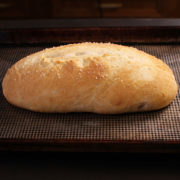
Small Loaf French Bread
This small loaf French bread recipe makes one perfectly sized loaf with a crisp crust and soft, airy center using simple pantry ingredients.
Servings: 12 slices
Equipment
Ingredients
- 10 ounces all purpose flour or bread flour - (2 ¼ cups for a single loaf. If doubling the recipe, use 4 ½ cups)
- 1 teaspoon kosher salt -plus ½ teaspoon for sprinkling on top
- 1 tablespoon honey
- ½ tablespoon olive oil - plus 1 tablespoon for brushing over top.
- 6 fluid ounces warm water
- ½ teaspoon active dry yeast
Instructions
- Mix the Ingredients: In a large bowl, combine the flour, salt, honey, olive oil, and warm water. Sprinkle the yeast over the water to dissolve.
- Knead the Dough: Using a stand mixer with the paddle attachment, mix on medium speed until the dough starts to come together. Switch to the dough hook and knead for about 10 minutes until the dough is smooth and pulls away from the sides of the bowl. If kneading by hand, work the dough on a floured surface for 15–20 minutes until smooth and stretchy.
- First Rise: Cover the bowl with plastic wrap and let the dough rise in a warm spot for about 1 hour, or until it doubles in size. Press a finger into the dough. If the indent stays, it's ready.
- Deflate and Rest: Turn the dough onto a lightly floured surface and gently knead 4–5 times to push out the air. Cover with a dish towel and let it rest for 10–15 minutes.
- Shape the Dough: Form the dough into a round boule, an oval, or a 6x3-inch rectangle for a baguette shape. If making a baguette, press the ends down with the heel of your hand to seal them. Place on a baking sheet, cover with a towel, and let rise for about 1 hour until puffy.
- Score and Prep: Preheat the oven to 400°F (200°C). Use a sharp knife to score one slash across the top of the loaf. Brush with 1 tablespoon of olive oil and sprinkle with 1/2 teaspoon of kosher salt.
- Bake: Bake for 18–20 minutes until the crust is golden brown. Tap the bottom of the loaf. It should sound hollow when it's done.
- Serve: Let cool for a few minutes, then slice and enjoy warm.
Video
Notes
-
- Measure flour by weight. Weigh your flour (10 ounces or 285 grams) if you can. If you don't have a kitchen scale, fluff the flour with a fork, spoon it into the measuring cup, and level it off with a knife. Scooping directly from the bag packs in too much and makes the bread dense.
- Check your yeast. Active dry yeast needs warm water (90–100°F) to activate. If it doesn't foam after a few minutes, it's probably expired. Start fresh with a new packet.
- Try the windowpane test. After kneading, pull off a small piece of dough and stretch it thin. If you can see light through it without it tearing, you're good. If it rips, knead for another 2–3 minutes.
- If your dough isn't rising. A cold kitchen is usually the problem. Place the covered bowl in your oven with just the light on. That little bit of warmth makes a big difference.
- Check for doneness. The bread is done when the crust is golden and the bottom sounds hollow when you tap it. If the center still seems doughy, bake for another 3–5 minutes.
- Handle sticky dough gradually. If the dough sticks to your hands or the counter, sprinkle a little flour and keep working it. Add flour one tablespoon at a time rather than dumping in extra all at once.
- Stir all the ingredients together in a large bowl with a spoon until combined.
- Turn the dough out onto a lightly floured surface and shape it into a rough ball.
- Using the heel of your hand, push the dough away from you, then fold the far edge back toward you and press down. Repeat.
- If the dough gets sticky, sprinkle a little flour as you go. After about 3 minutes it should start to smooth out.
- Keep kneading for 15–20 minutes total until the dough is smooth and stretchy.
Nutrition
Serving: 1slice | Calories: 78kcal | Carbohydrates: 16g | Protein: 2g | Fat: 1g | Saturated Fat: 1g | Sodium: 156mg | Potassium: 24mg | Fiber: 1g | Sugar: 1g | Calcium: 3mg | Iron: 1mg
QR code
Scan this QR code with your phone's camera to view this recipe on your mobile device.
