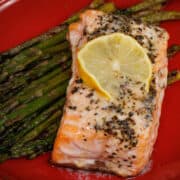
Sheet Pan Salmon And Asparagus for One
This sheet pan salmon and asparagus is a single serving dinner made with one salmon fillet and asparagus spears, roasted together with garlic butter and dried basil. Ready in 20 minutes.
Servings: 1 serving
Equipment
Ingredients
- 1 tablespoon salted butter -softened
- 1 teaspoon olive oil -divided
- ¼ teaspoon dried basil
- ¼ teaspoon kosher salt
- ⅛ teaspoon garlic powder
- ⅛ teaspoon coarsely ground black pepper
- 7-8 thin asparagus spears
- 1 (4 to 5-ounce) salmon fillet
- 1 tablespoon lemon juice
Instructions
- Preheat the oven to 425°F (220°C).
- Make the garlic butter mixture. In a small bowl, stir together the softened butter, ½ teaspoon olive oil, dried basil, garlic powder, kosher salt, and black pepper until evenly combined.
- Prepare the asparagus. Rinse the asparagus under cold water and pat it dry. Trim the tough woody ends by lining up the stalks and cutting them off with a knife, or by bending each stalk until it naturally snaps at the tender point.
- Arrange on the sheet pan. Lightly coat one side of a rimmed baking sheet with olive oil and place the salmon fillet skin-side down. Spoon the garlic butter mixture evenly over the top of the salmon. Place the asparagus on the other side of the pan, drizzle with the remaining ½ teaspoon olive oil, and spread the spears in a single layer.
- Bake. Place the sheet pan in the oven and bake for 12 to 15 minutes, until the asparagus is tender and the salmon flakes easily with a fork. For tender, moist salmon, pull it from the oven when an instant-read thermometer reads 135°F at the thickest part. If the asparagus needs an extra minute or two, transfer the salmon to a plate, cover it loosely to keep it warm, and return the asparagus to the oven.
- Finish and serve. Drizzle 1 tablespoon of fresh lemon juice over the salmon and asparagus before serving.
Notes
Use a rimmed baking sheet. A rim catches any escaping butter or oil. It also makes the pan easier to lift in and out of the oven.
Place the salmon skin-side down. The skin acts as a barrier between the fillet and the hot pan, which protects the flesh from drying out.
Let it rest 5 minutes. The internal temperature rises about 5 degrees as the salmon sits, finishing the cook gently.
Use an instant-read thermometer. A fork test tells you when the salmon flakes, but a thermometer tells you exactly where you are on the doneness spectrum. Insert the probe into the thickest part of the fillet. See the salmon doneness chart below.
Match the asparagus thickness to the cook time. Thin pencil spears cook fast and can go limp by minute 12. Thicker spears need an extra minute or two. Check at the 10-minute mark and spread them in a single layer so they roast instead of steam.
Nutrition
Serving: 1serving | Calories: 395kcal | Carbohydrates: 1g | Protein: 3g | Fat: 27g | Saturated Fat: 8g | Polyunsaturated Fat: 1g | Monounsaturated Fat: 6g | Trans Fat: 1g | Cholesterol: 31mg | Sodium: 672mg | Potassium: 38mg | Fiber: 1g | Sugar: 1g | Vitamin A: 404IU | Vitamin C: 6mg | Calcium: 6mg | Iron: 1mg
QR code
Scan this QR code with your phone's camera to view this recipe on your mobile device.
