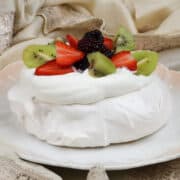
Pavlova For One
This single serving pavlova is made with one egg white for a crisp meringue shell with a soft center. Top with whipped cream and fresh fruit for a dessert that serves one or two.
Servings: 1 serving
Equipment
- Parchment paper
Ingredients
- 1 large egg white -room temperature
- ¼ cup sugar
- ¼ teaspoon cornstarch
- ⅛ teaspoon cream of tartar
- ¼ teaspoon vanilla extract
- ⅛ teaspoon lemon juice
For the whipped cream
- ¼ cup heavy cream
- 1 teaspoon sugar
- ¼ teaspoon vanilla
Toppings
- fresh berries or sliced fruit
Instructions
- Preheat the oven to 225°F (107°C).
- Beat the egg white with an electric hand mixer on high until foamy, about 20 seconds. Make sure no yolk or grease is in the bowl before starting.
- Whisk together the sugar, cornstarch, and cream of tartar in a small bowl.
- Add the sugar mixture gradually to the egg white while beating on medium speed. Once combined, increase to high and beat until stiff peaks form and the meringue is thick and glossy, about 10 minutes. The meringue is ready when the peaks hold their shape and don't flop over when you lift the beater.
- Mix in the vanilla and lemon juice on low speed for about 10 seconds. Do not overbeat.
- Shape the meringue into a round on a parchment-lined baking sheet. You can use a spoon or pipe it with a large round or star tip. Use the back of a spoon to create a shallow well in the center for the whipped cream. Smooth the edges or leave them rustic.
- Bake for 1 hour. Turn the oven off and let the pavlova cool inside with the door closed for another hour. Do not open the oven during this time. The pavlova is done when the shell is dry to the touch and lifts easily off the parchment. Once cooled, serve immediately or store covered at room temperature for up to 2 days.
- Make the whipped cream by beating the heavy cream, sugar, and vanilla on medium speed until soft peaks form. The cream should thicken and leave trails when you drag the beater through it. Soft peaks curl down slightly when you lift the beater. For a sweeter whipped cream, add an extra teaspoon of sugar.
- Spoon the whipped cream into the center of the cooled pavlova.
- Top with fresh fruit or berries and serve.
Notes
Use a room-temperature egg white. Cold egg whites don't whip as fast or hold as much air. Take the egg out of the fridge at least 20 minutes before starting. If you forget, place the whole egg in a bowl of warm (not hot) water for 5 minutes.
Wipe your bowl and beaters with a little lemon juice or white vinegar before you start. Even a trace of grease left from a previous recipe can stop the egg white from reaching stiff peaks.
Add the sugar mixture slowly. Dumping it in all at once can deflate the egg white and prevent the sugar from dissolving. Undissolved sugar causes the meringue to weep and bead during baking.
Check for stiff peaks before shaping. The meringue should be thick enough to hold its shape when you lift the beater. If the peaks flop over, keep beating. Underwhipped meringue will spread flat in the oven.
Don't skip the parchment paper. Meringue sticks to unlined baking sheets and greased pans. Parchment is the only reliable nonstick surface. Do not use wax paper.
Check the weather. Humidity is the biggest environmental threat to pavlova. Moisture in the air can prevent the shell from crisping and cause the meringue to weep. Avoid making pavlova on rainy days, and don't boil water or cook steamy foods at the same time.
Nutrition
Serving: 1serving | Calories: 429kcal | Carbohydrates: 56g | Protein: 5g | Fat: 22g | Saturated Fat: 14g | Polyunsaturated Fat: 1g | Monounsaturated Fat: 5g | Cholesterol: 67mg | Sodium: 71mg | Potassium: 112mg | Sugar: 56g | Vitamin A: 875IU | Vitamin C: 1mg | Calcium: 42mg | Iron: 0.1mg
QR code
Scan this QR code with your phone's camera to view this recipe on your mobile device.
